
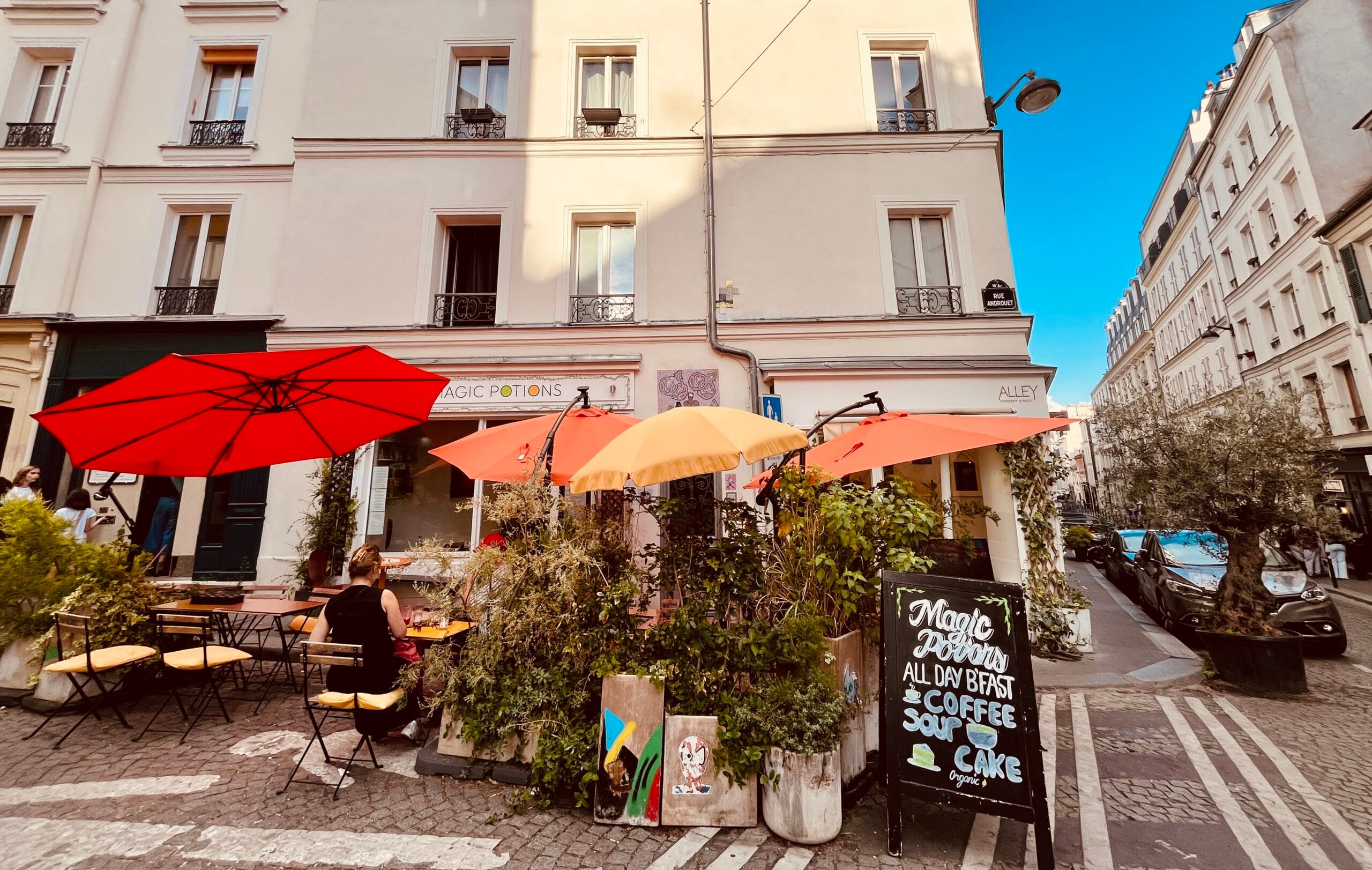
The worst meals in Montmartre are served 50 metres from the Sacré-Coeur. The best meals are served 10 minutes’ walk away, on streets where the menus are handwritten and the wine list fits on a single page. This guide covers the latter.
All recommendations below are based on neighbourhood knowledge, not sponsored content. Prices quoted are 2026 averages. For everything else on the hill, see our complete Montmartre guide. Looking for a base near the good restaurants? See our Montmartre hotels.
The Golden Rule: Avoid the Tourist Axis
The tourist restaurant belt runs from the Moulin Rouge up through Place du Tertre to the base of the Sacré-Coeur. Every restaurant on this axis is optimised for one-time visitors who won’t return. The giveaways: menus in 6 languages with photos, aggressive touts outside, and wine lists where the cheapest option is €12 a glass. Stay off this strip entirely.
The restaurants worth eating in are concentrated in three areas: Rue Lepic, Rue des Abbesses, and Rue Caulaincourt (the northern slope). These are where the neighbourhood actually eats.
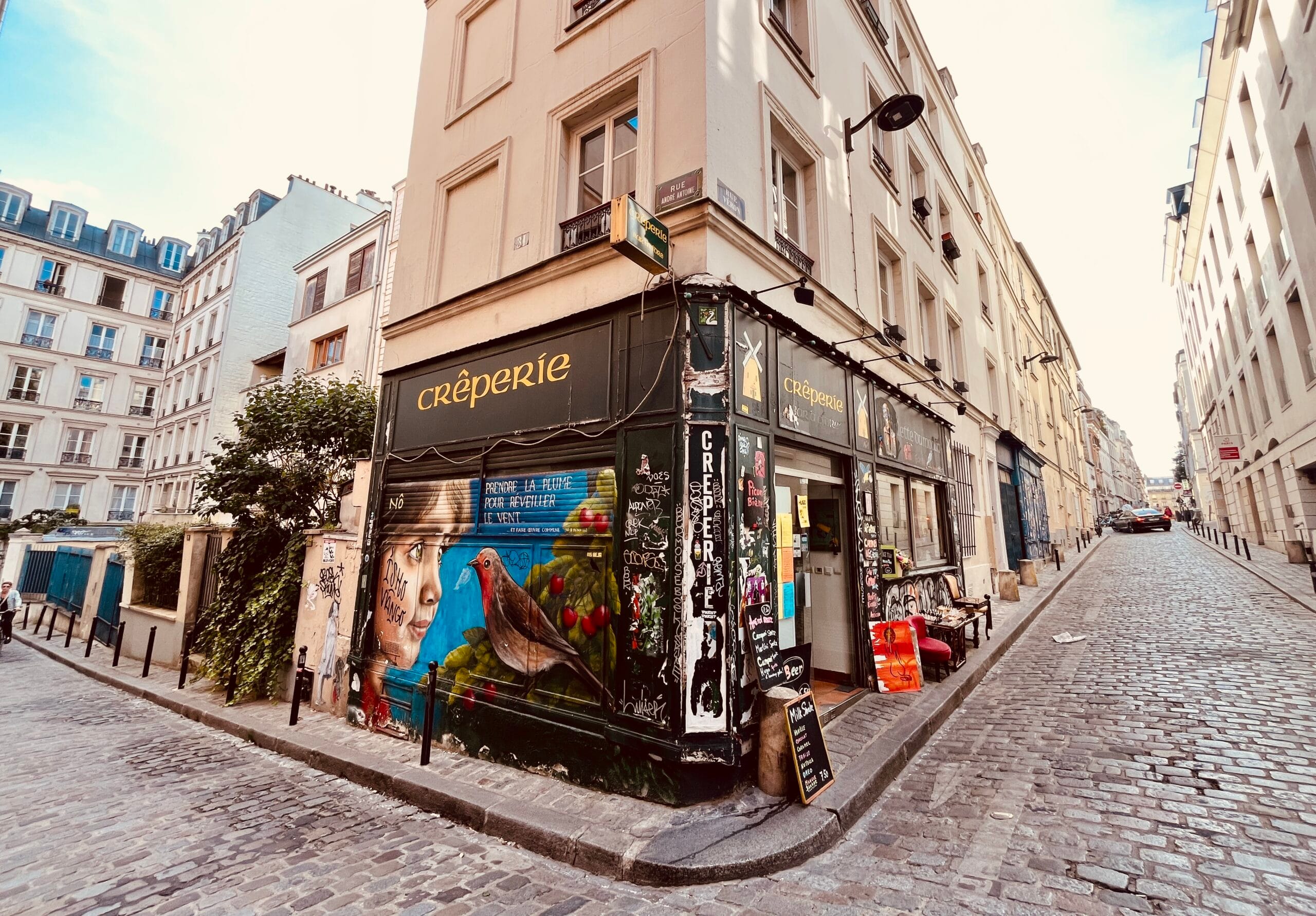
The streets below the Sacré-Coeur — where the genuine neighbourhood restaurants are concentrated © montmartre-in-paris.com
French Bistros: The Montmartre Classics
Montmartre has a strong bistro tradition that pre-dates its tourism. The format is consistent: a chalkboard menu that changes with the market, a wine list weighted toward natural and biodynamic producers, and a room small enough that the owner knows most of the tables. Steak frites, duck confit, omelettes, and seasonal vegetable dishes are the backbone of most menus.
What to look for when choosing: a handwritten or chalkboard menu (not laminated), staff who speak to each other in French (not English), and a room where more than half the tables are occupied by people who don’t have cameras out. These are reliable indicators of a genuine neighbourhood restaurant.
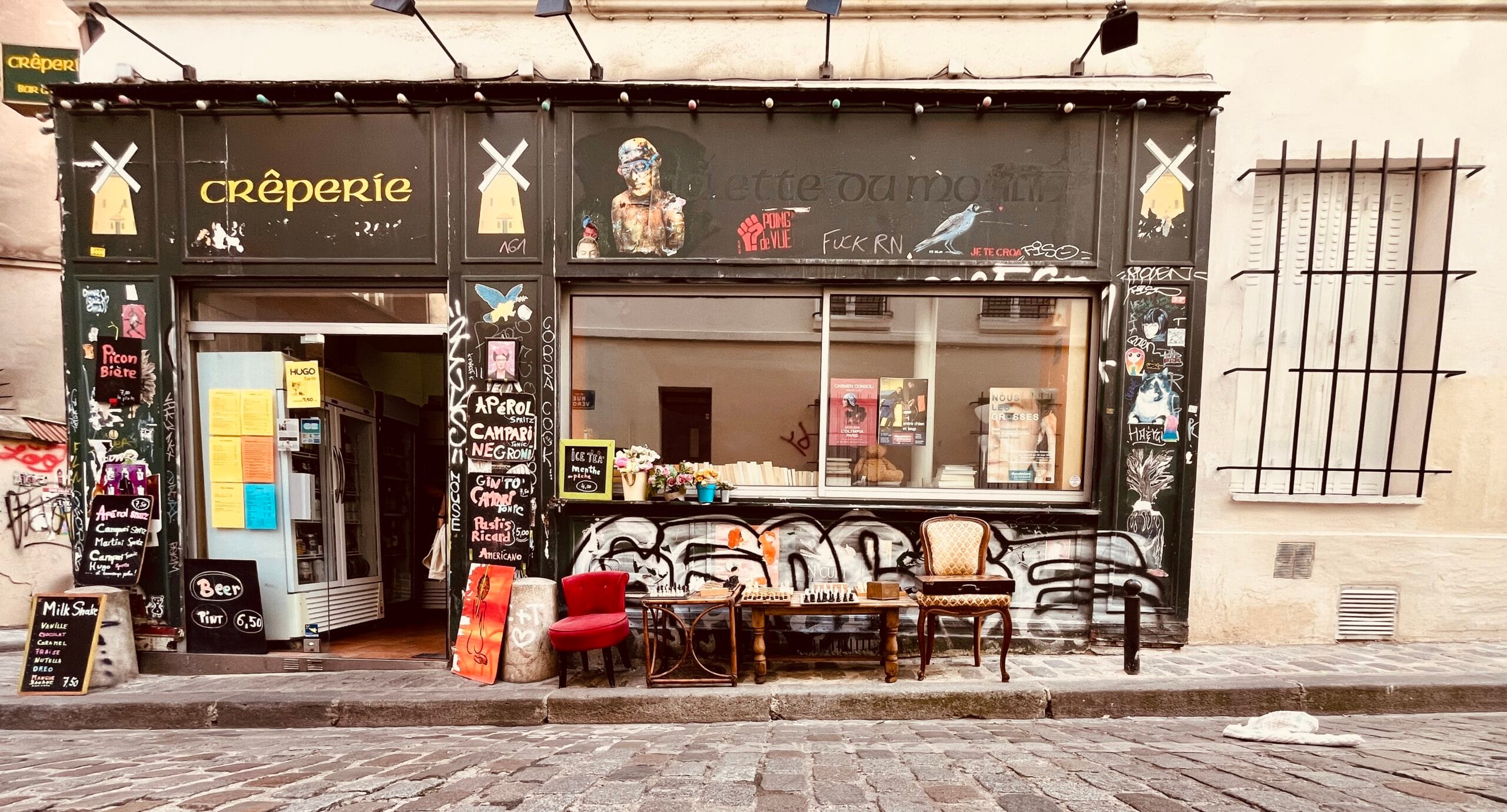
Rue Lepic — the market street that anchors the neighbourhood’s best eating © montmartre-in-paris.com
Natural Wine Bars: The Neighbourhood’s New Wave
The natural wine bar movement has taken hold in Montmartre over the past decade, and the neighbourhood is now one of the better places in Paris to drink biodynamic and low-intervention wines by the glass with food. The format is typically counter or communal table seating, a rotating list of producers, and a small plates menu — charcuterie, cheese, tartines, seasonal vegetables.
These places fill up early — arrive by 7pm for a counter seat without waiting. Most don’t take reservations for small groups, so showing up is the strategy.
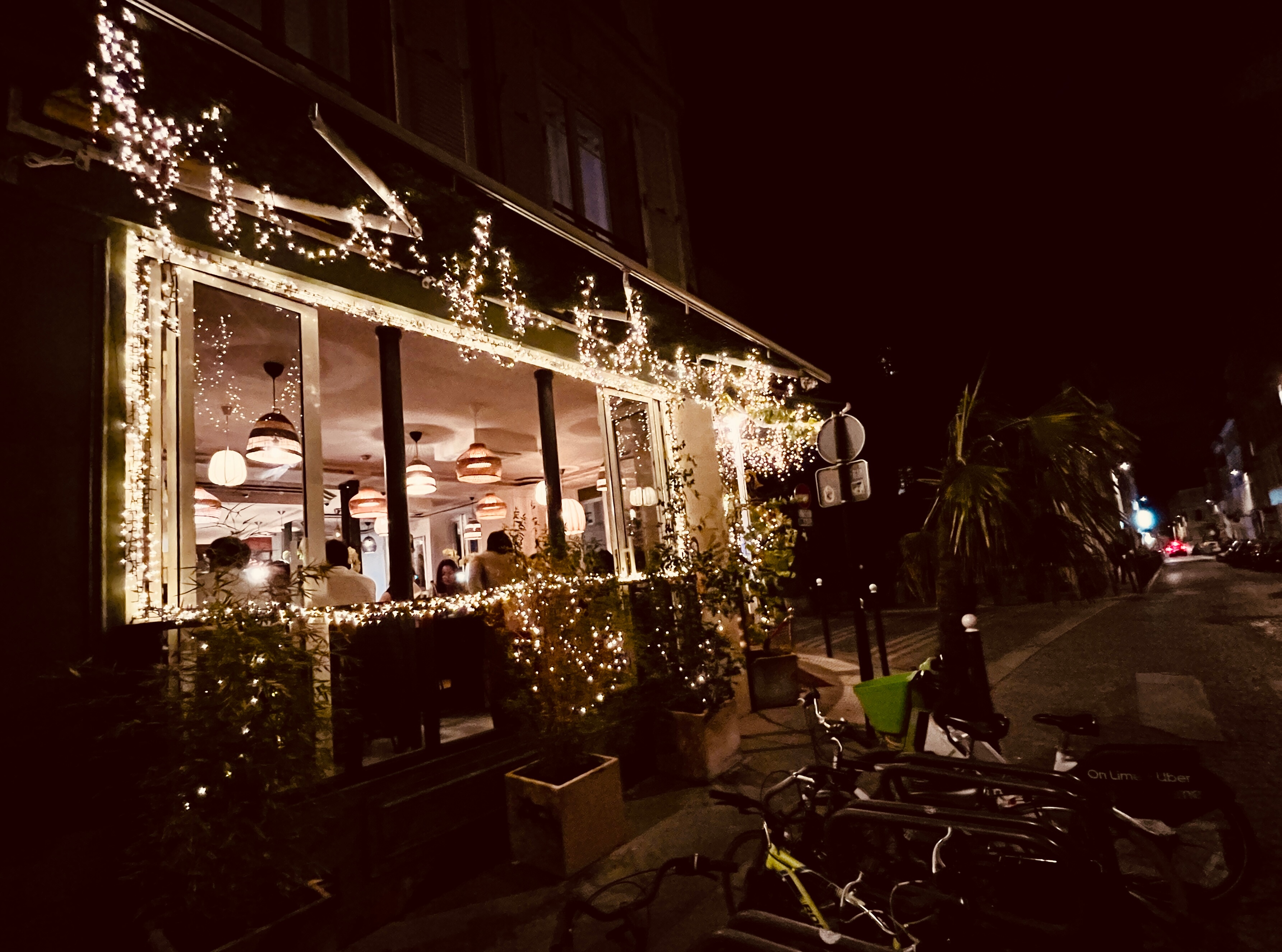
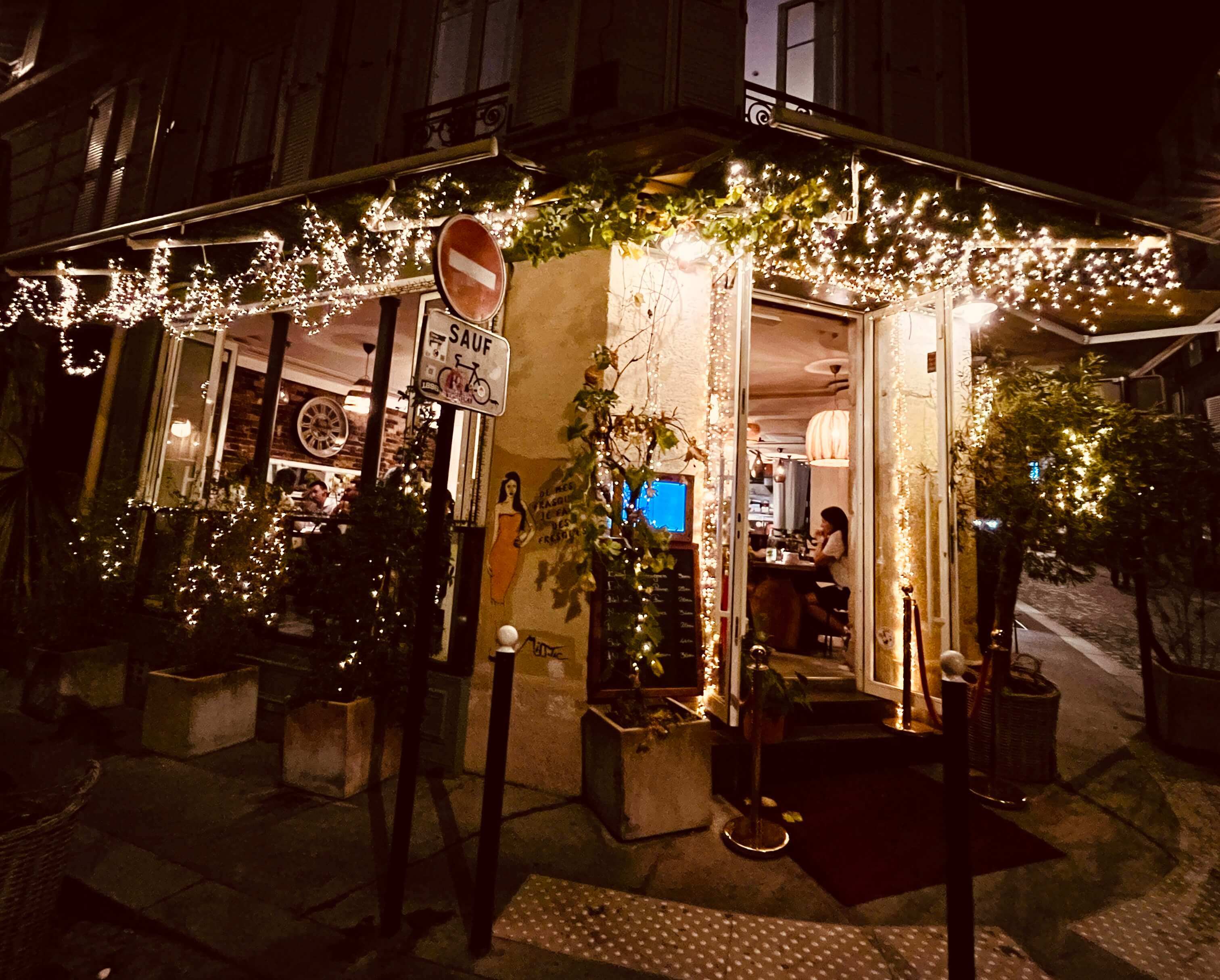
Rue des Abbesses on a weeknight — these terrace tables fill before 8pm. © montmartre-in-paris.com
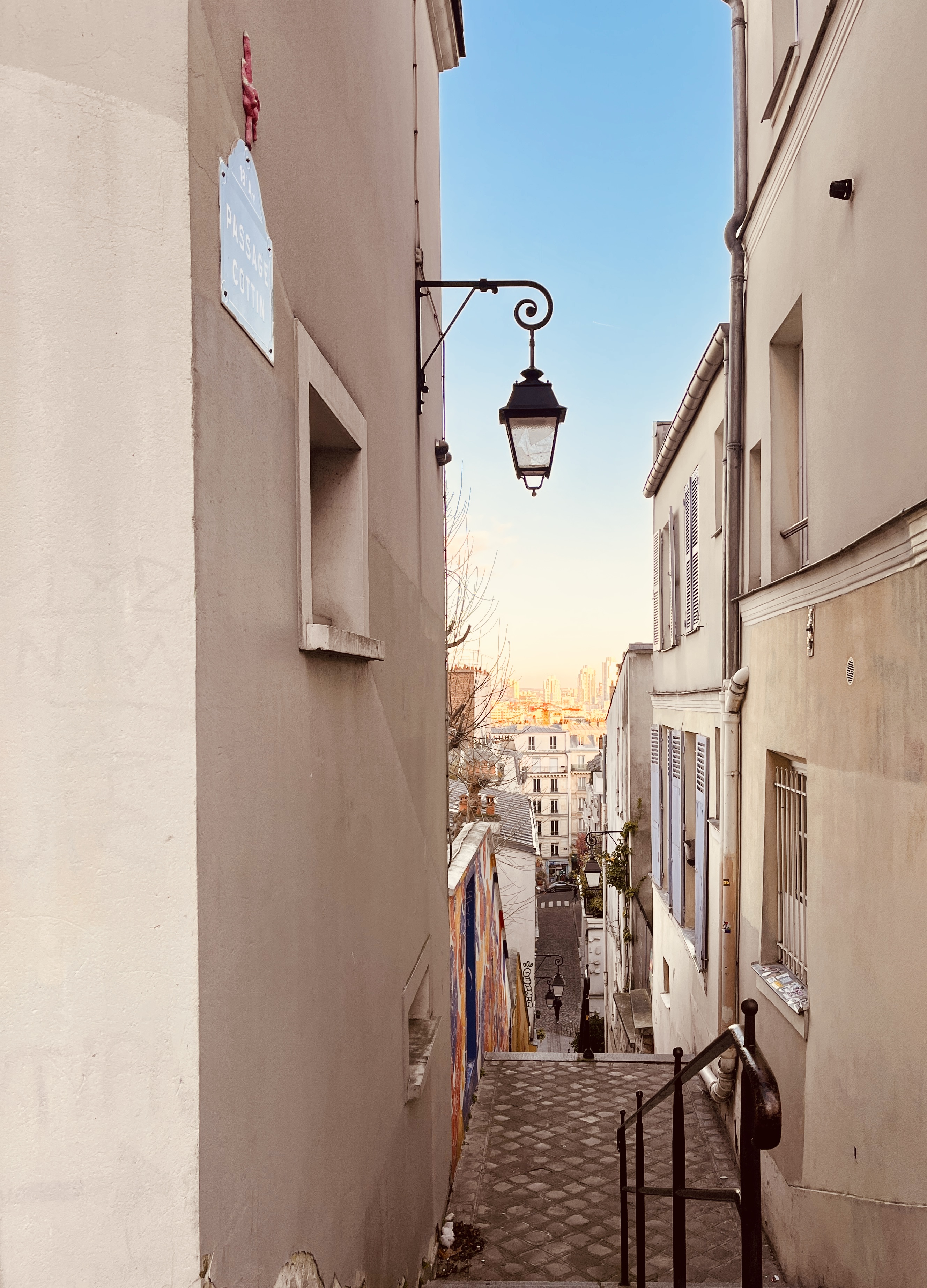
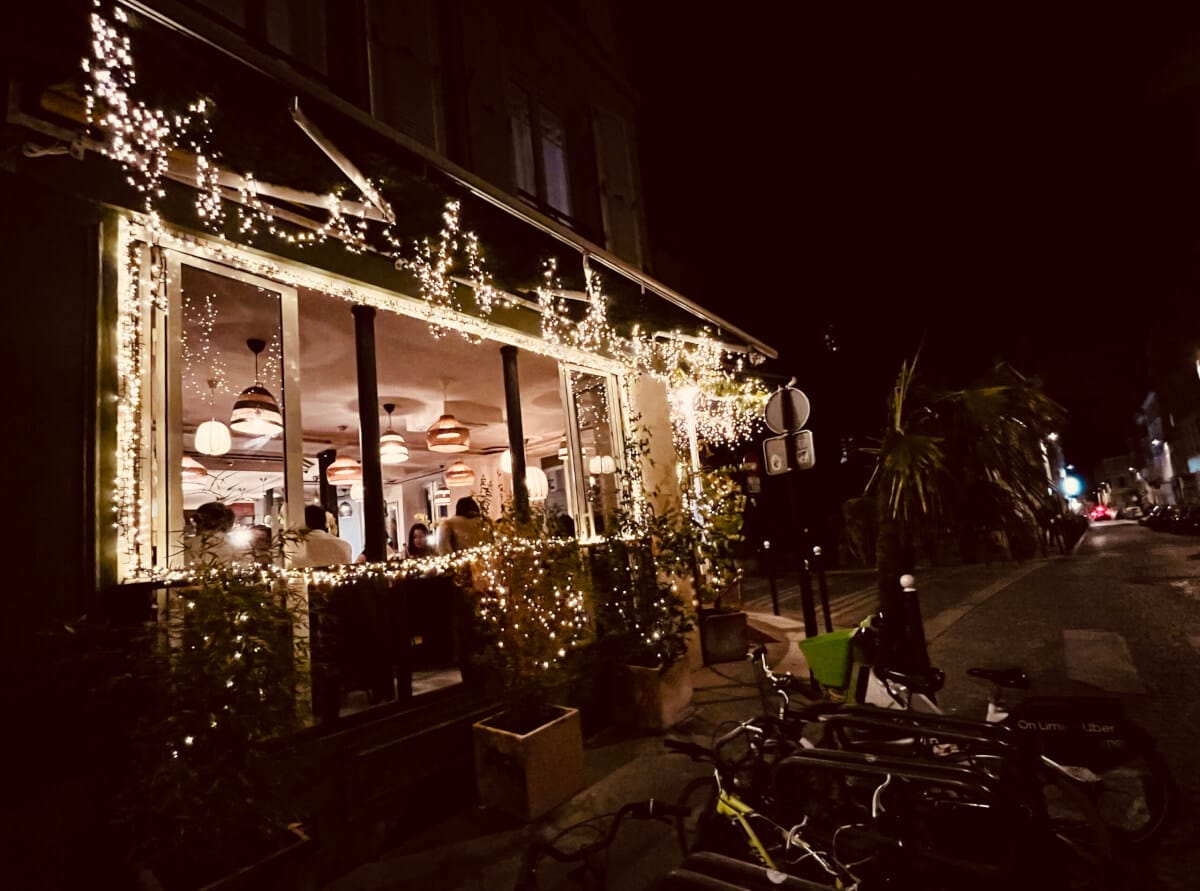
The natural wine bar scene around Abbesses — arrive by 7pm for a counter seat © montmartre-in-paris.com
Lunch: The Best Value in Montmartre
Lunch is where Montmartre eating makes the most financial sense. Most neighbourhood bistros offer a two-course formule (starter + main, or main + dessert) for €15–22 at lunch — the same kitchen, the same produce, roughly half the dinner price. The tourist restaurants don’t do this; it’s another useful filter.
The best lunch spots are usually full by 12:30pm and done by 2pm. Arrive early or late. Rue Lepic market street is particularly good for lunch — the proximity to the daily market means the produce is genuinely fresh.
La Maison Rose on Rue de l’Abreuvoir — a Montmartre lunch address with one of the most photographed facades in Paris © montmartre-in-paris.com
Cafés Worth Sitting In
Montmartre has some genuinely good café culture, concentrated around Place des Abbesses and along Rue Lepic. The best ones have outdoor terraces, strong espresso, and the patience to let you sit for an hour with a single coffee. They are not the tourist cafés near Sacré-Coeur charging €6 for a Nescafé.
The Café des Deux Moulins on Rue Lepic (the café from Amélie) is genuinely good and not as overrun with film tourists as you might expect. Worth a coffee. Place des Abbesses itself has several good terrace options — order a café allongé and watch the neighbourhood go by.
La Maison Rose — the pink café on Rue de l’Abreuvoir, open since the early 1900s © montmartre-in-paris.com
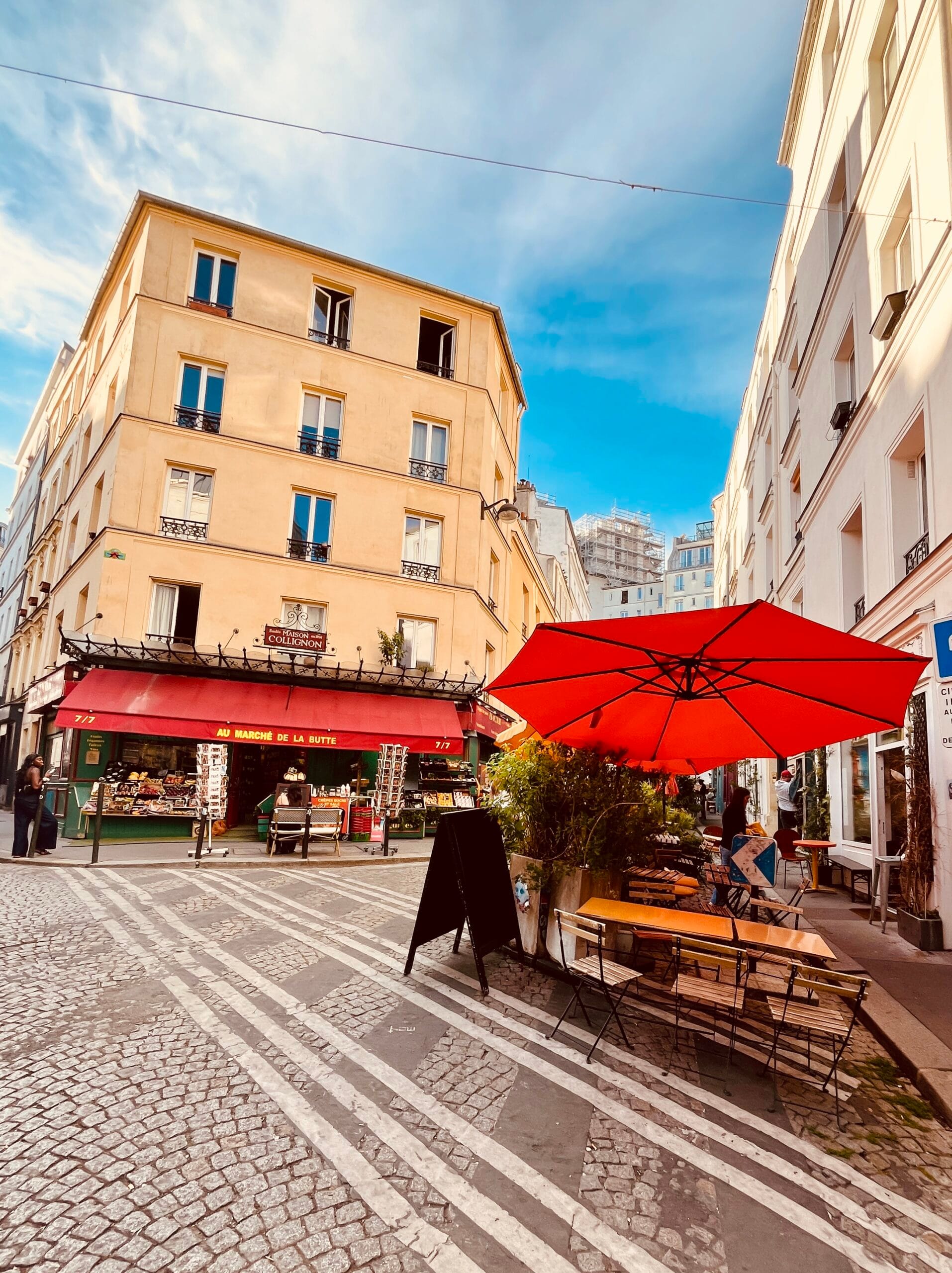
Place des Abbesses café terrace — the neighbourhood’s living room © montmartre-in-paris.com
Booking a Table: Practical Guide
Planning a romantic evening? Our Montmartre date night itinerary pairs a rooftop drink and a moonlit walk with five dinner options at different budgets.
Montmartre restaurants are small and popular. For weekend dinners at any well-reviewed address, book at least a week ahead in July and August. TheFork (La Fourchette) is the dominant booking platform in France and covers most of the neighbourhood’s restaurants — it often offers a 10–30% reduction on the à la carte price as an incentive to book online.
Book a Montmartre Restaurant
TheFork lists most Montmartre restaurants with real-time availability. Booking through the platform often gets you a 10–30% discount on the bill.
Book a Restaurant on TheFork \u2192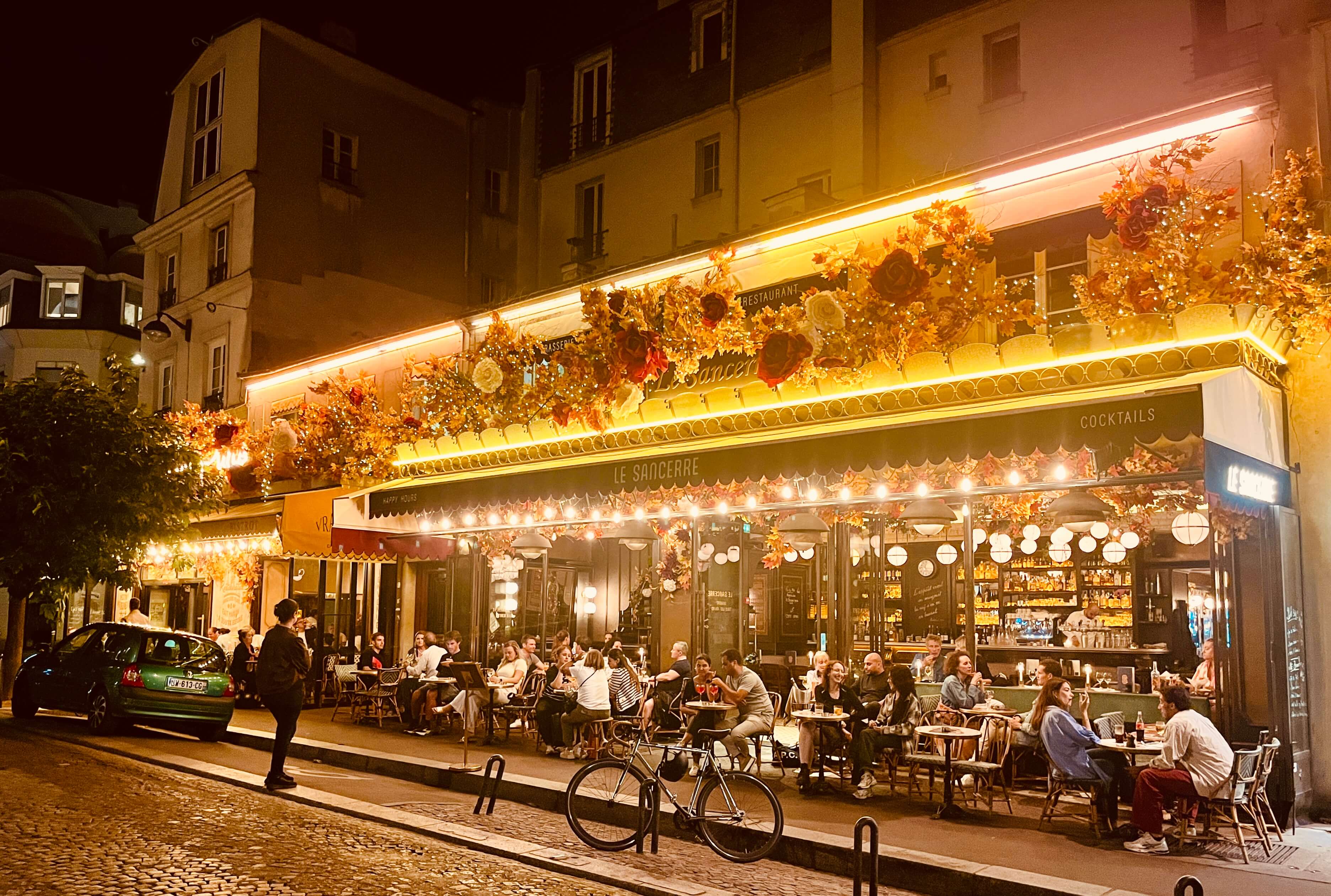
One of the landmark brasseries on rue des Abbesses — the golden facade is visible from the end of the street. © montmartre-in-paris.com