
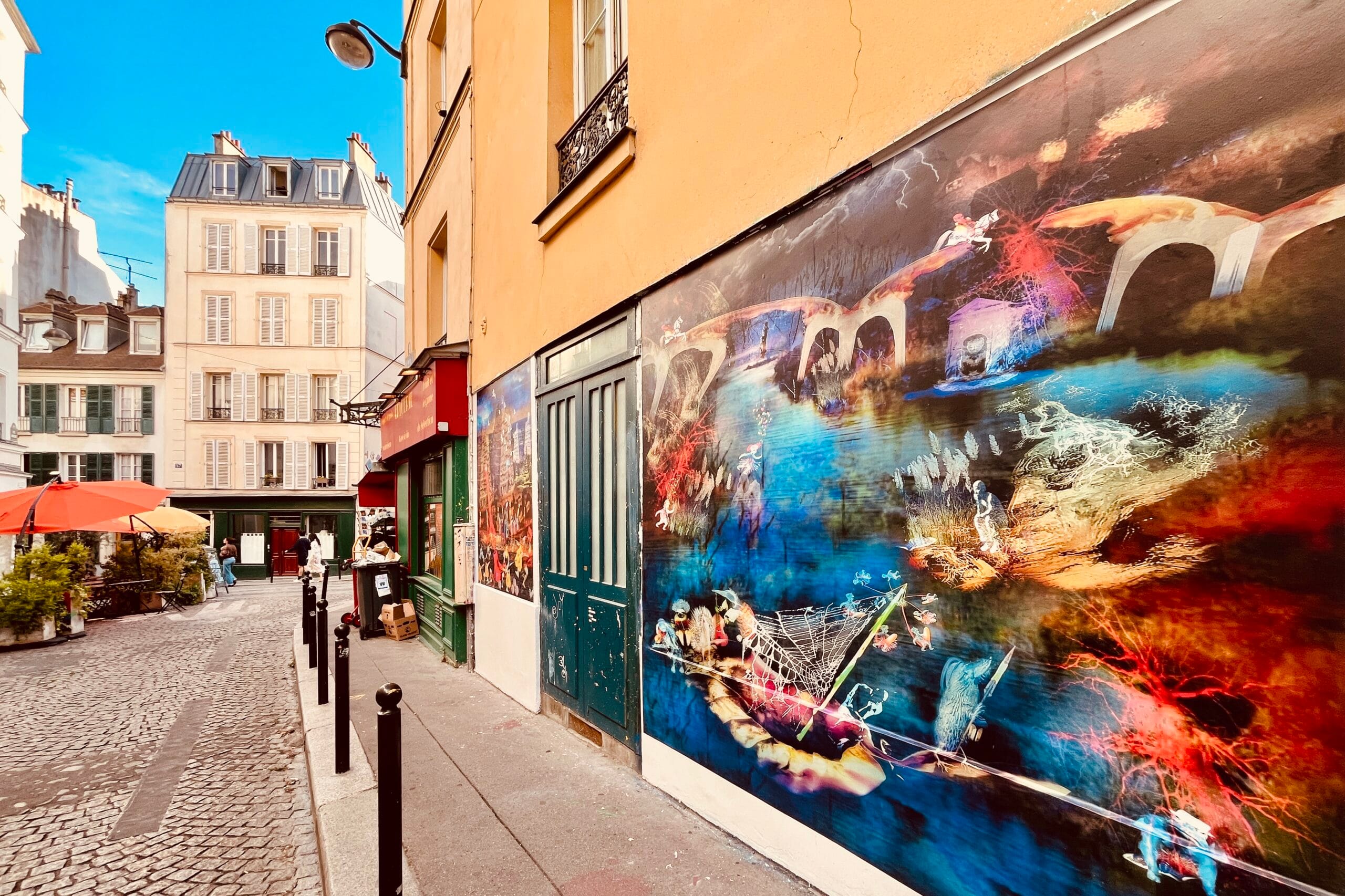

Picasso had his studio on Rue Ravignan. Van Dongen painted from a ramshackle building on the same street. Utrillo spent his life painting the lanes and walls of the butte. Montmartre has always been a place where people put marks on things — on canvas, on paper, on plaster. The medium has changed. The impulse has not.
Today the walls of Montmartre and the streets below toward Pigalle carry a different kind of art. Unsigned, unscheduled, appearing overnight and sometimes gone within weeks. Large murals next to tiny stencils. Paste-ups overlapping tags overlapping older paste-ups. A living, argumentative, constantly changing gallery that nobody curates and nobody owns.
A Neighbourhood That Has Always Attracted Artists
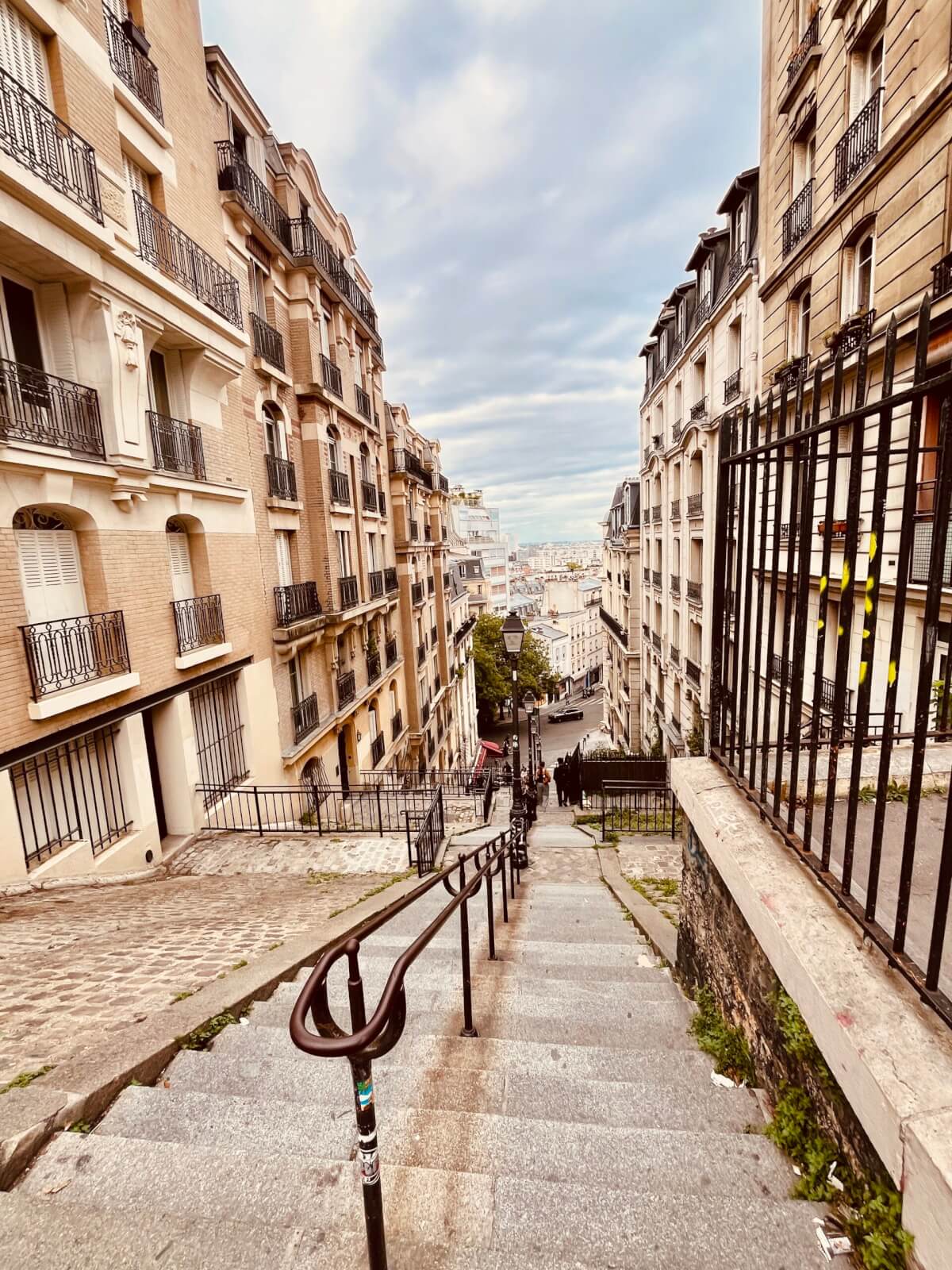
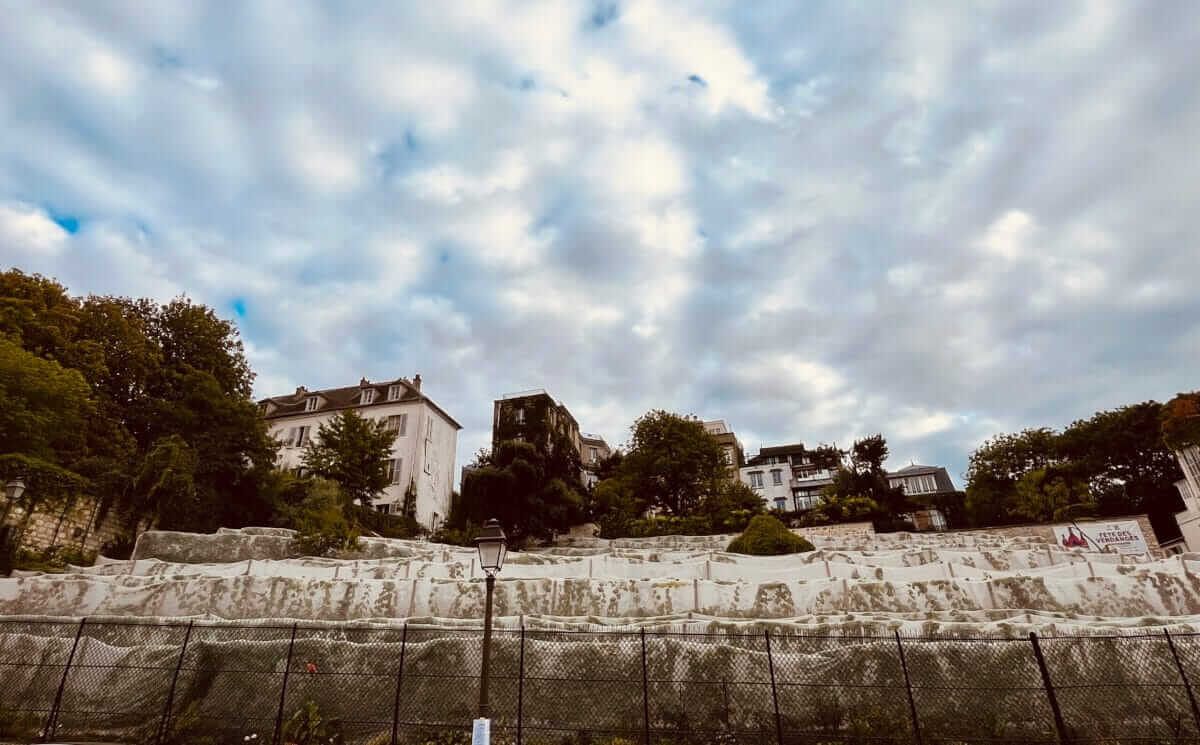
The connection between Montmartre and art is not nostalgia — it is structural. The neighbourhood sits above the rest of Paris, physically and socially separate. In the 19th century, rents were low and the bohemian atmosphere attracted artists who couldn’t afford the city below. The Bateau-Lavoir studios on Place Emile Goudeau housed Picasso, Braque, and Modigliani at various points. The Moulin de la Galette provided Renoir with his most famous subject. The vineyard, the windmills, the steep cobblestone lanes — these were the raw material of an entire generation of painters.
That generation is gone. The studios are now apartments. But the neighbourhood still attracts people who want to make things and put them somewhere visible. The wall is the cheapest canvas in the world.
What You Actually See on the Walls
Montmartre’s street art is not a single style or movement. It is an accumulation — years of work by different hands, different sensibilities, different intentions. Some of it is technically extraordinary. Some of it is a tag applied in thirty seconds. Most of it is somewhere in between.
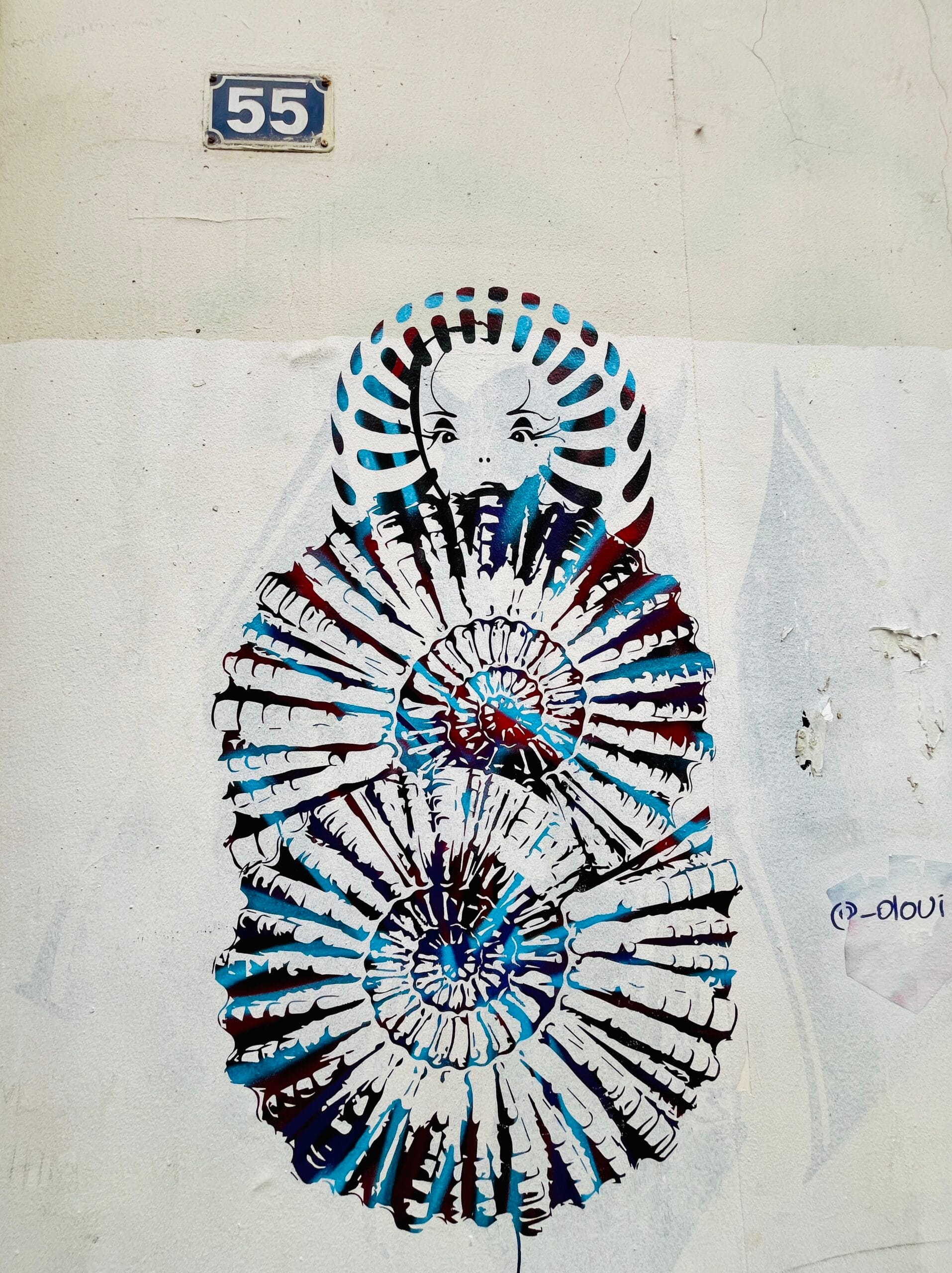
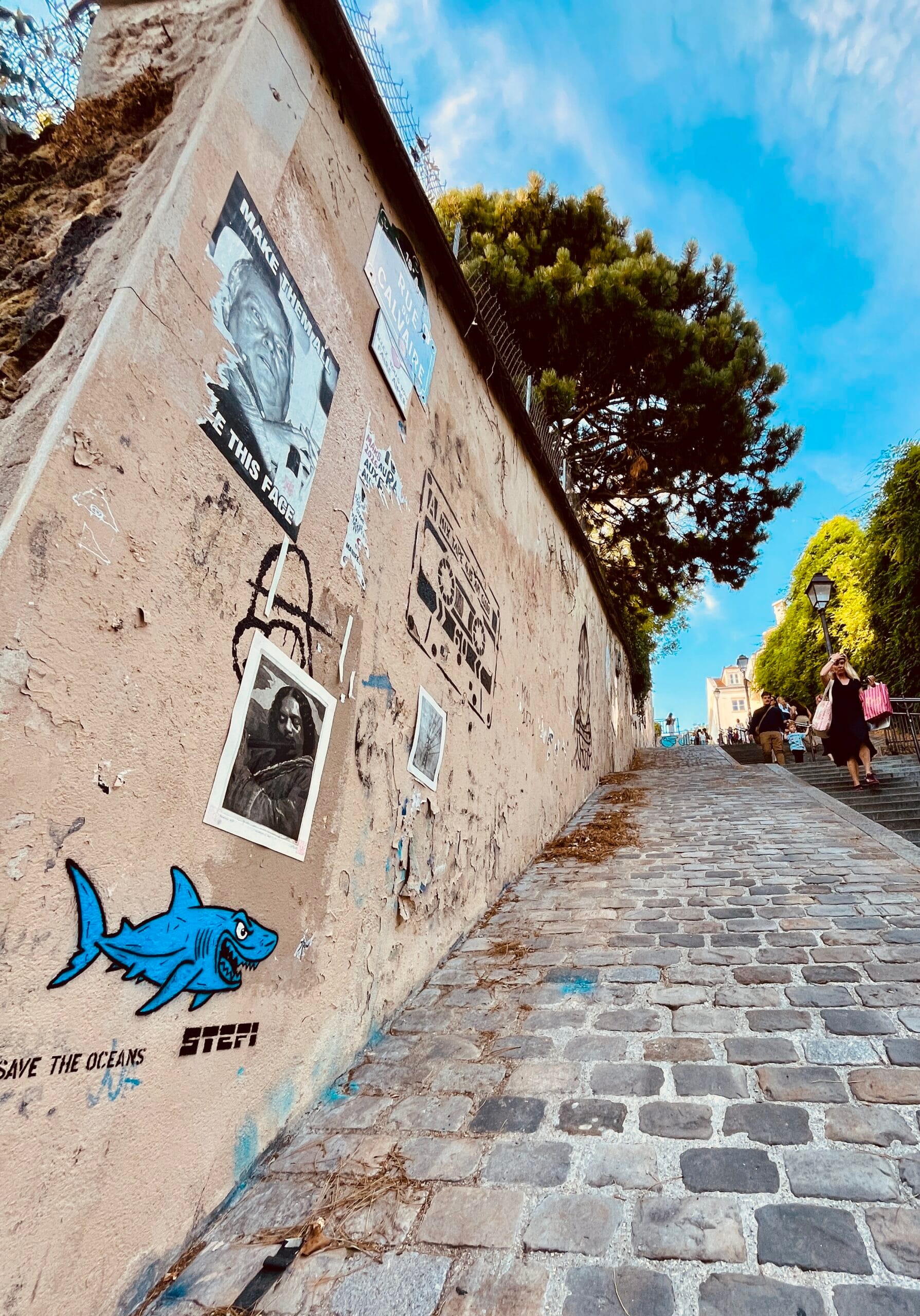
Large figurative murals dominate the lower streets — portraits, abstract shapes, characters that borrow from comic art and graphic design. Higher up the butte, the work becomes smaller and stranger: stencils on junction boxes, paste-ups on doorframes, stickers accumulating on lamp posts over years until the original surface is completely buried.
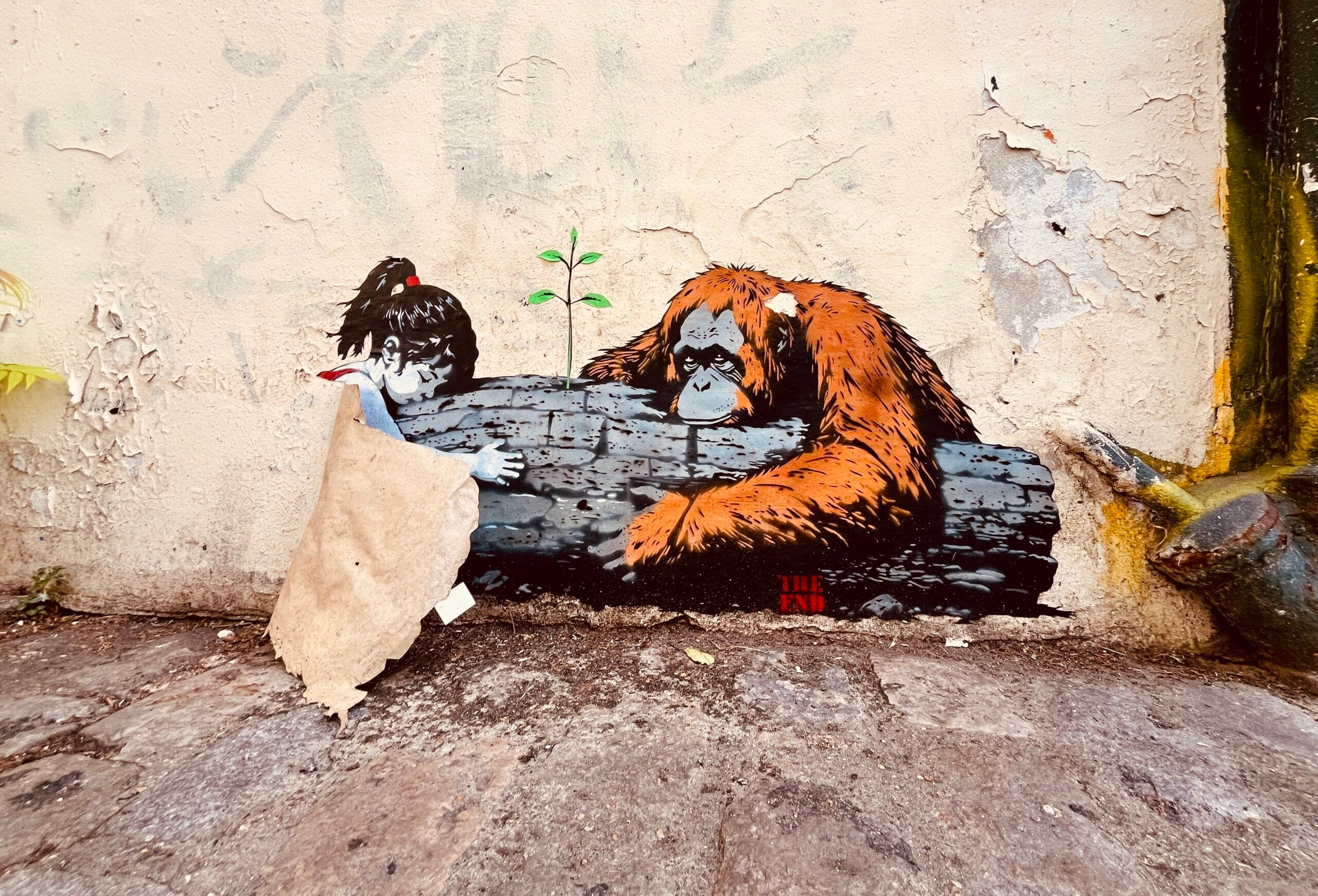
Then there are the pieces you only find by accident: a tiny character drawn on a drainpipe at ankle height, a sticker campaign that has been running for years across twenty blocks, a paste-up portrait of a woman on a wall that has been there long enough to start peeling at the edges.
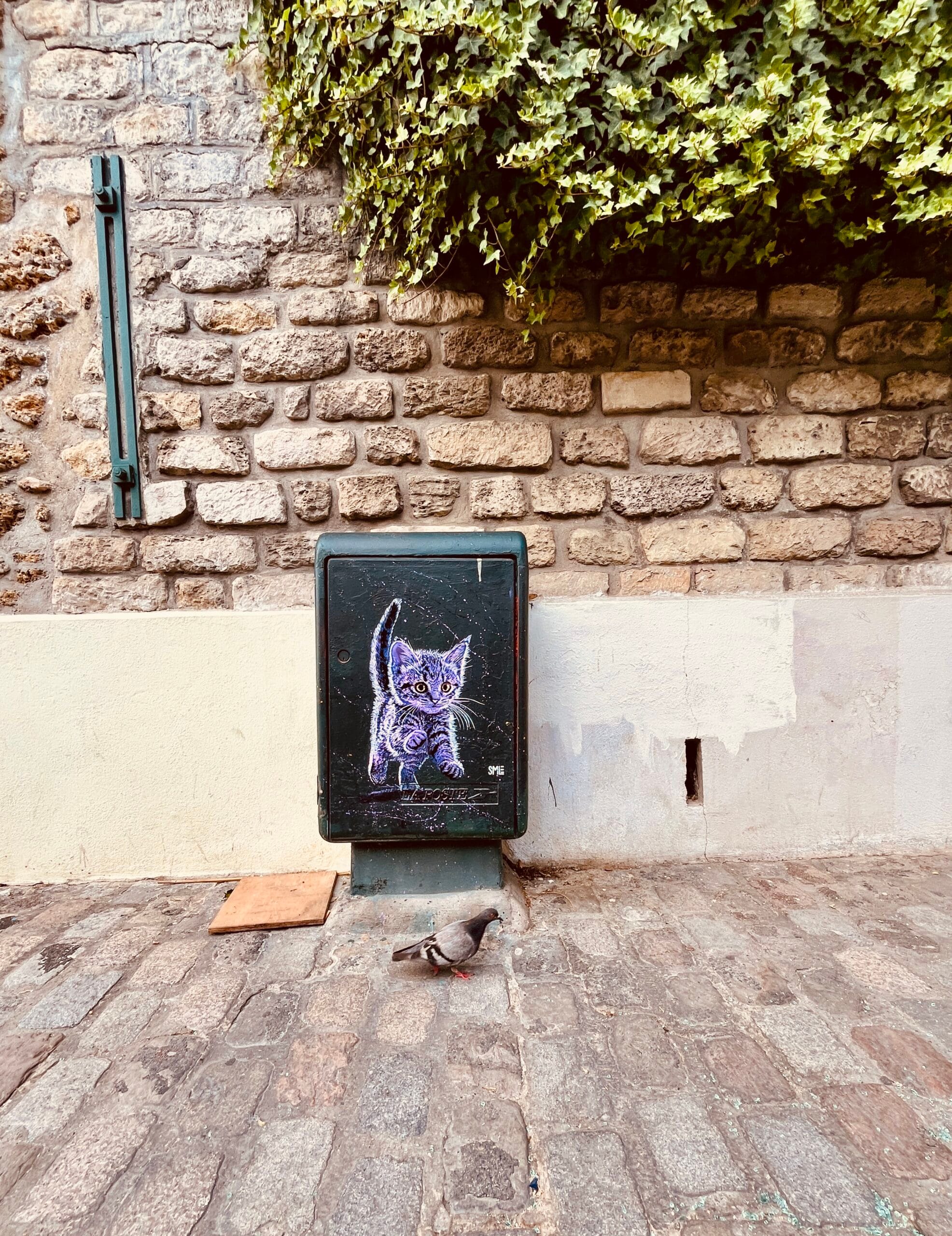
The Layered Walls
The most interesting surfaces in Montmartre are not the newest ones. Look for walls where the history is visible — where a large mural from five years ago has been partially covered by a paste-up, which has been tagged over, which has been worked around by a newer stencil. These are accidental collaborations across time. No artist planned the combination. Nobody is in charge of the result.
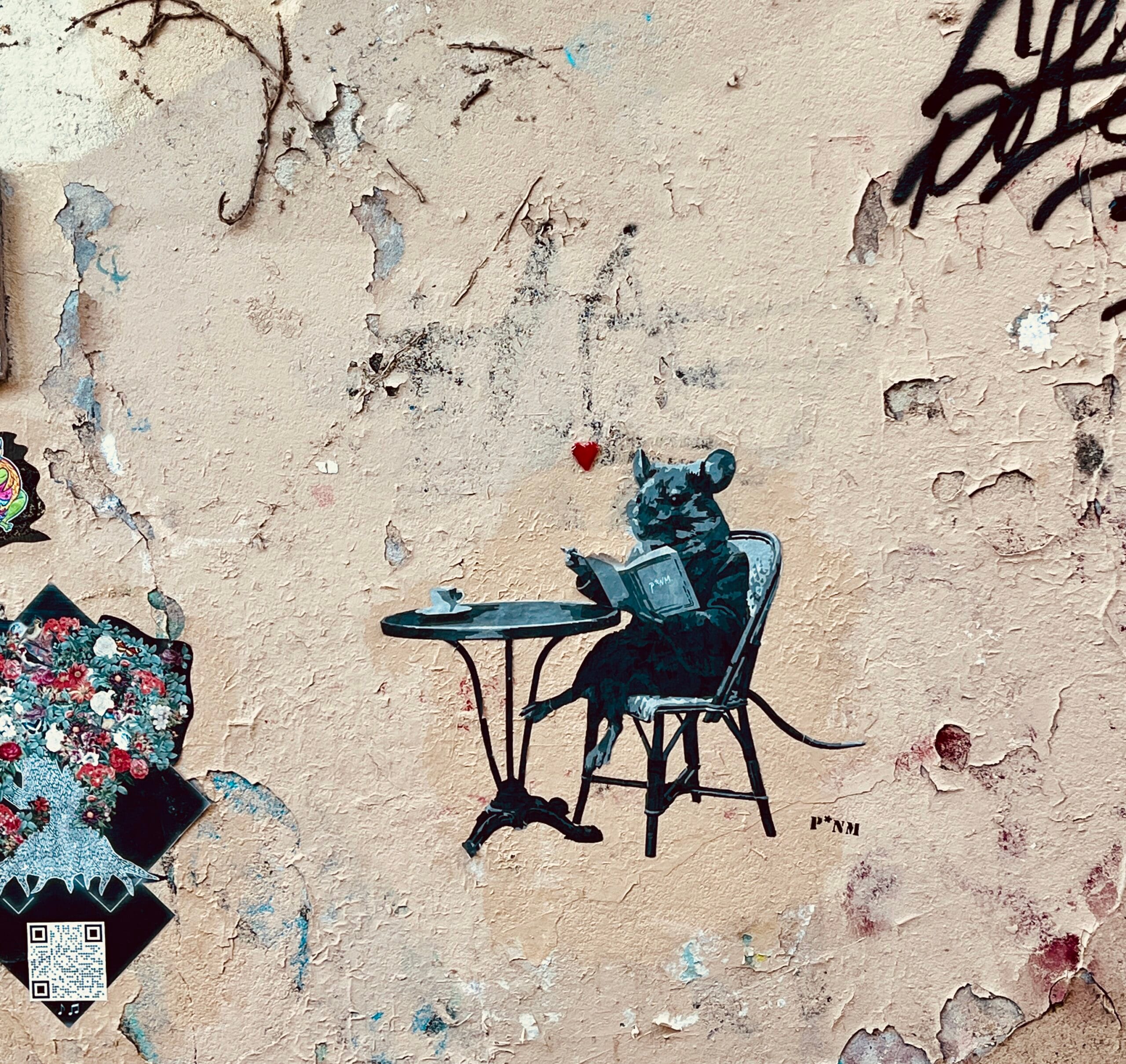
This is what makes Montmartre’s street art different from the curated mural districts elsewhere in Paris. The 13th arrondissement has large, planned commissions on clean walls. Belleville has a coordinated festival. Montmartre’s walls are messier, more contested, more alive. They look the way a neighbourhood looks when people have been arguing with each other’s art for decades.
The Portraits
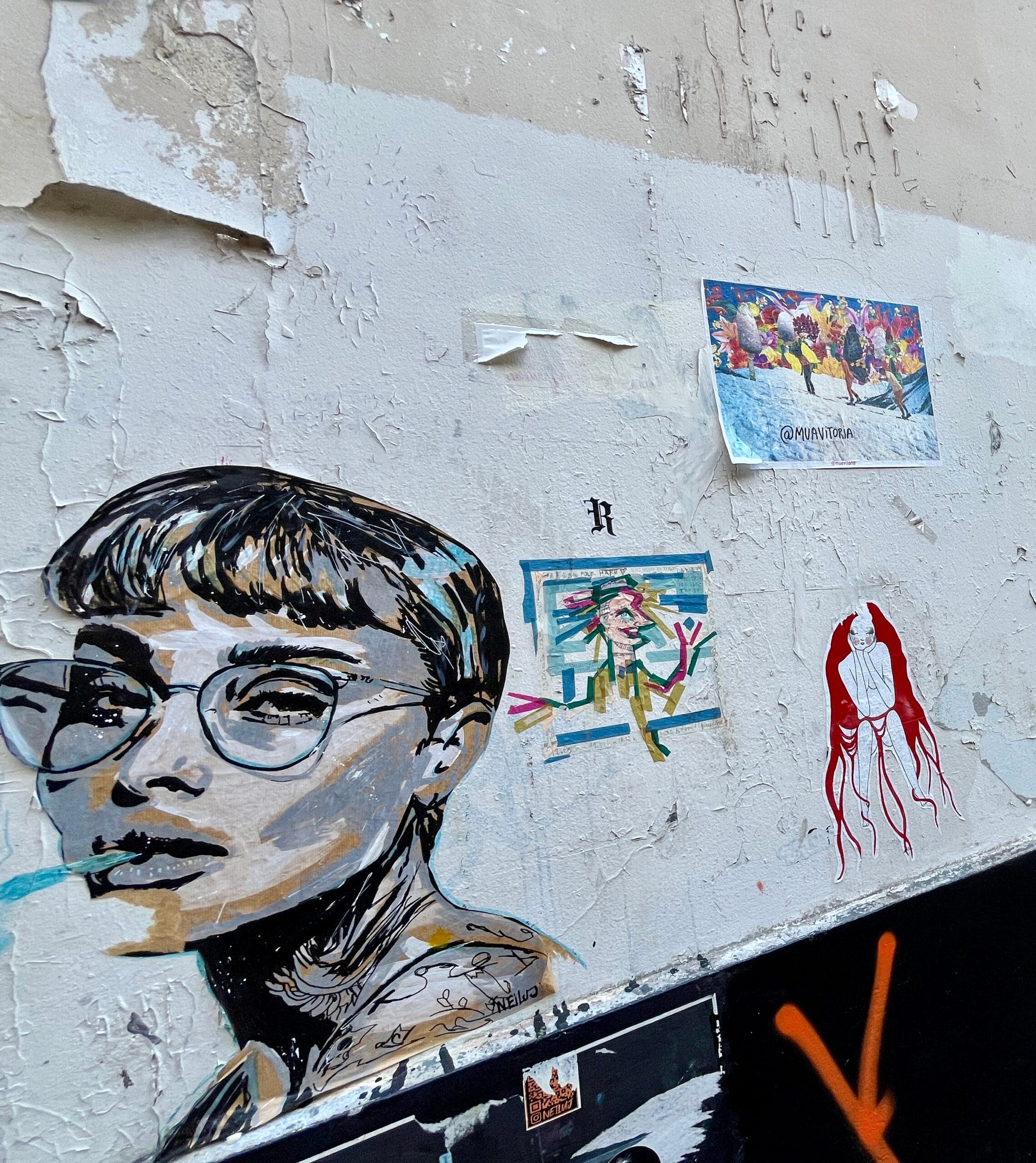
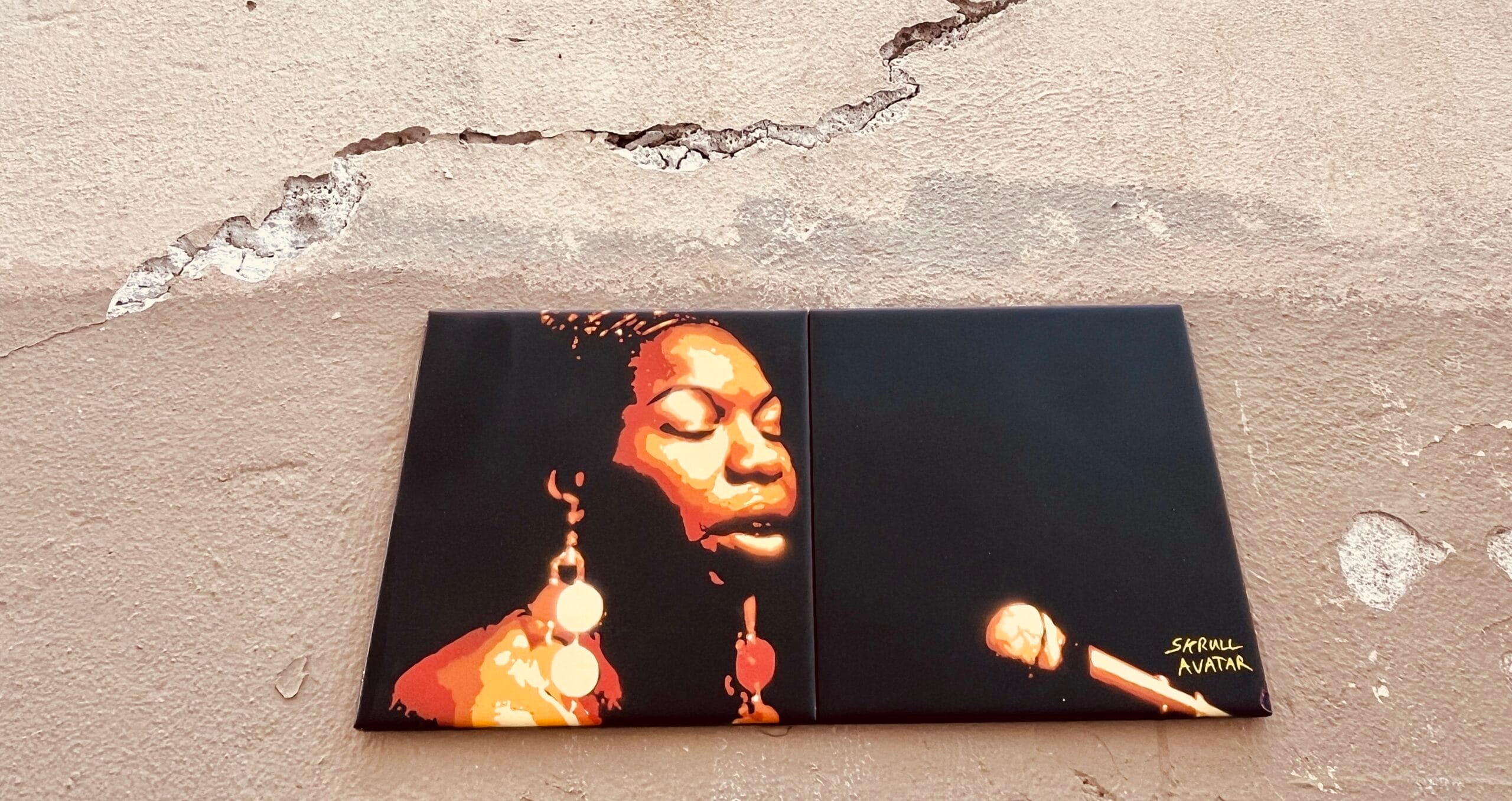
Montmartre has always been obsessed with faces. Toulouse-Lautrec painted the performers at the Moulin Rouge. Picasso painted everyone he knew. The street art follows the same instinct — portraits appear everywhere, sometimes photorealistic, sometimes barely more than a few lines, always looking out at whoever passes.
When to Go
Street art is best seen in daylight — the colours read better and the details are visible. Overcast days are actually ideal: no harsh shadows, no glare on painted surfaces, even light across the whole wall. Early morning gives you the streets to yourself. The lower streets toward Pigalle are quieter before 10am than at any other point in the day.
Come back after rain. Wet cobblestones and damp walls change the way painted surfaces look — colours deepen, reflections appear, the whole neighbourhood shifts register. Some of the best photographs of Montmartre street art were taken in the hour after a shower.
And come back in six months. The walls change. Pieces disappear under new work. New ones appear overnight. Montmartre’s street art is not a permanent exhibition — it is a process, and what you see today will not be exactly what you find next time.
Explore with a Local Guide
Walking tours of Montmartre often cover the street art alongside the neighbourhood’s artistic history — connecting the contemporary murals to the painters who made the hill famous. A good guide knows which walls are worth slowing down for and which streets most visitors never find.
Want the classic sights as well? Our complete Montmartre guide covers the rest of the hill.
💡 Frequently Asked Questions
Street art is spread across the whole neighbourhood, with the highest concentration in the lower streets between Pigalle and Abbesses. The density thins as you climb toward the butte, where the historic stone architecture takes over. Walk slowly and look at all levels — some of the best pieces are small and easy to miss.
Yes, entirely. The street art exists on public streets and building facades with no entrance fee, no booking required, and no fixed hours (more no-cost ideas are in our free and cheap things to do in Montmartre). It is also constantly changing — pieces appear, are painted over, and reappear on a rolling basis throughout the year.
Montmartre was the centre of the Parisian art world from the 1880s to the 1920s — Picasso, Renoir, Van Dongen, Utrillo all lived and worked here. The impulse to make art in this neighbourhood has never disappeared. Contemporary street artists work in the same streets, on the same walls, driven by the same need to put something visible in a place that has always been defined by people who make things.
Daytime in natural light, ideally on an overcast day when there is no glare on painted surfaces. Early morning before 10am gives you the streets largely to yourself, and our Montmartre photography spots guide lists the best times of day. After rain is particularly good — wet surfaces deepen colours and the neighbourhood is quieter than usual.