
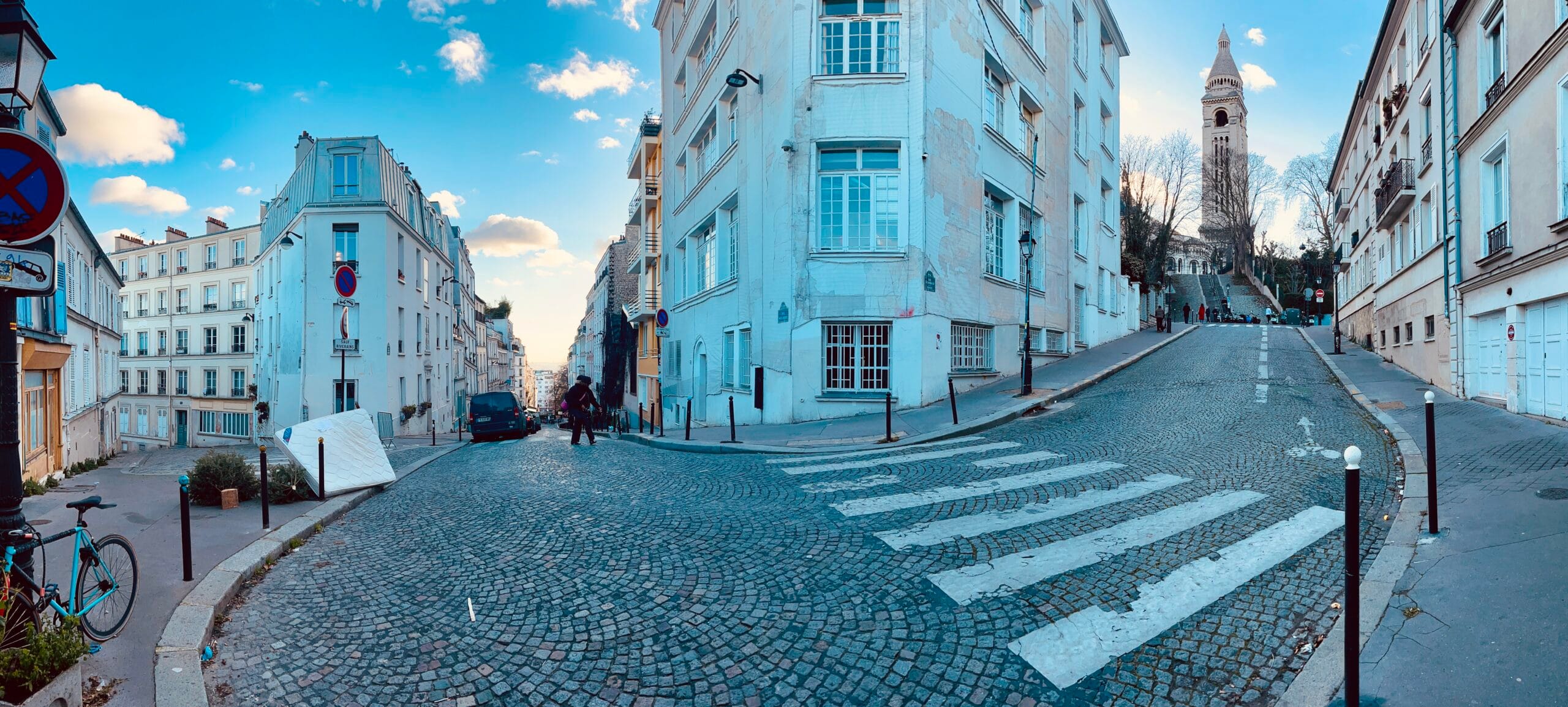

The short answer: choose the Latin Quarter or Le Marais if you want to be in the middle of the sights, and choose Montmartre if you would rather come home to a village than to a crowd. Montmartre is the most atmospheric of the three and the least central. Here is how they compare, so you can decide in a few minutes. If Montmartre wins, our complete Montmartre guide shows what to do there.
| Montmartre | Le Marais | Latin Quarter | |
|---|---|---|---|
| Feel | Hilltop village, cobbled, artistic | Historic, stylish, boutiques and galleries | Student, bookish, lively streets |
| Best for | Couples, repeat visitors, stays of 3+ nights | First visit, walkers, food and shopping | First visit, short stays, airport access |
| Terrain | Steep hill and stairs | Flat | Gentle slope |
| Main metro | Line 12 (Abbesses, Lamarck-Caulaincourt), Line 2 | Lines 1, 11, 8 | Line 10, Line 4, RER B and C |
| From CDG airport | RER B to Gare du Nord, then metro | RER B to Châtelet-Les Halles, then metro or walk | RER B direct to Saint-Michel |
Arriving from London? Eurostar reaches Gare du Nord, about 20 minutes on foot or two metro stops from Montmartre. See our London to Montmartre by Eurostar guide before you choose where to stay.
Book your trainAffiliate link. Prices and availability are shown on Eurostar.
Montmartre: Best for Atmosphere
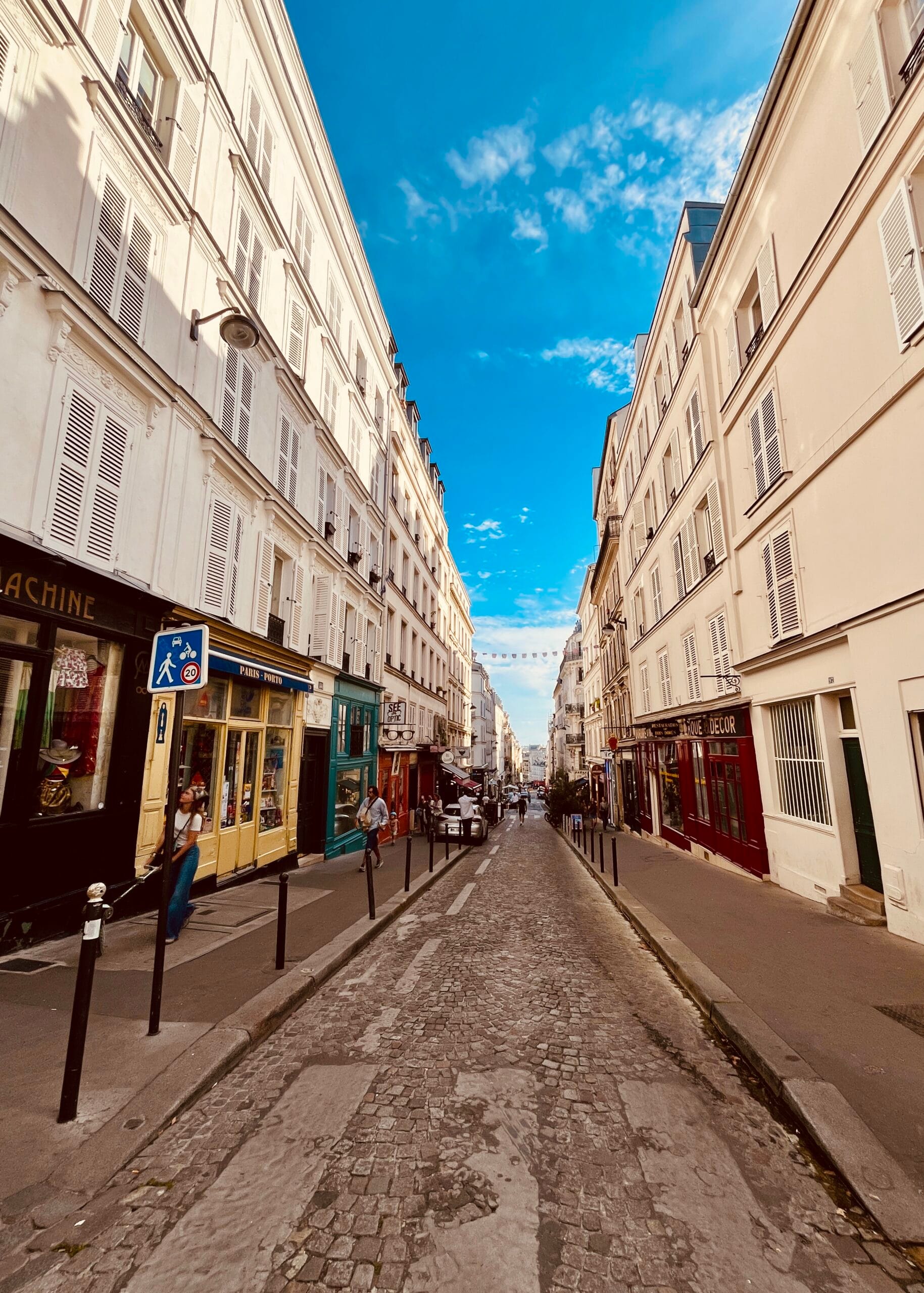
Montmartre is the neighbourhood people picture when they imagine Paris: cobbled lanes, steep staircases, the Sacré-Coeur above the rooftops, a working vineyard and café terraces that stay busy late into the evening. Away from the crowds around Place du Tertre, the residential streets around Abbesses and Lamarck-Caulaincourt feel like a village, with bakeries, a market street and locals going about their day.
Cons: it is a hill, it is further from the big museums, and the area right around Sacré-Coeur is crowded by day.
The trade-off is distance. Montmartre sits in the north of the city, so the Louvre, Notre-Dame and the Eiffel Tower all need a metro ride, often with a change of line. If you are staying only a night or two, that travel time adds up. Our guide to where to stay in Montmartre compares Abbesses, Lamarck and Pigalle, and this page covers how to reach the main sights from the hill.
Le Marais: Best for Walking and Boutique Stays
Le Marais covers parts of the 3rd and 4th arrondissements. It has some of the oldest streets in the city, Place des Vosges, the Musée Picasso and the Musée Carnavalet, plus a dense grid of independent shops, galleries, cafés and restaurants. It is flat, which makes it the easiest of the three to explore on foot, and it is one of the few central areas where many shops stay open on Sundays.
Cons: busy on weekends, rooms near the main streets can be noisy, and it is more of a destination for browsing than for views.
Metro access is good: Lines 1, 11 and 8 all serve the area, and the Louvre, Notre-Dame and the Seine are within walking distance or a short ride. It suits travellers who want to step out of the hotel and be in the middle of things.
Latin Quarter: Best for First Visits and Airport Access
The Latin Quarter, in the 5th arrondissement, is home to the Sorbonne, the Panthéon and Shakespeare and Company, with the Jardin du Luxembourg close by and Notre-Dame just across the water. Its streets are full of bookshops, small restaurants and student cafés, so it stays lively in the evening.
Cons: some streets near the river are very touristy, and the atmosphere is more student quarter than village.
How to Choose
- First visit, one or two nights: Latin Quarter or Le Marais. You spend less time on the metro.
- First visit, three nights or more: any of the three works. Pick Montmartre if atmosphere matters more than speed.
- Return visitor or couple: Montmartre. You have already seen the big sights, so the neighbourhood itself becomes the reason to stay.
- Arriving from CDG with heavy luggage: the Latin Quarter has the simplest route. Montmartre adds a metro change and a hill.
- Reduced mobility: Le Marais is the flattest. In Montmartre, check that your hotel has a lift.
- Nightlife and late dinners: all three have options. Montmartre is quieter on the hill and livelier around Pigalle.
💡 A good compromise: stay in Montmartre and plan your sightseeing days in batches, so you ride the metro south once in the morning and come back up in the evening for dinner on the hill.
If You Choose Montmartre
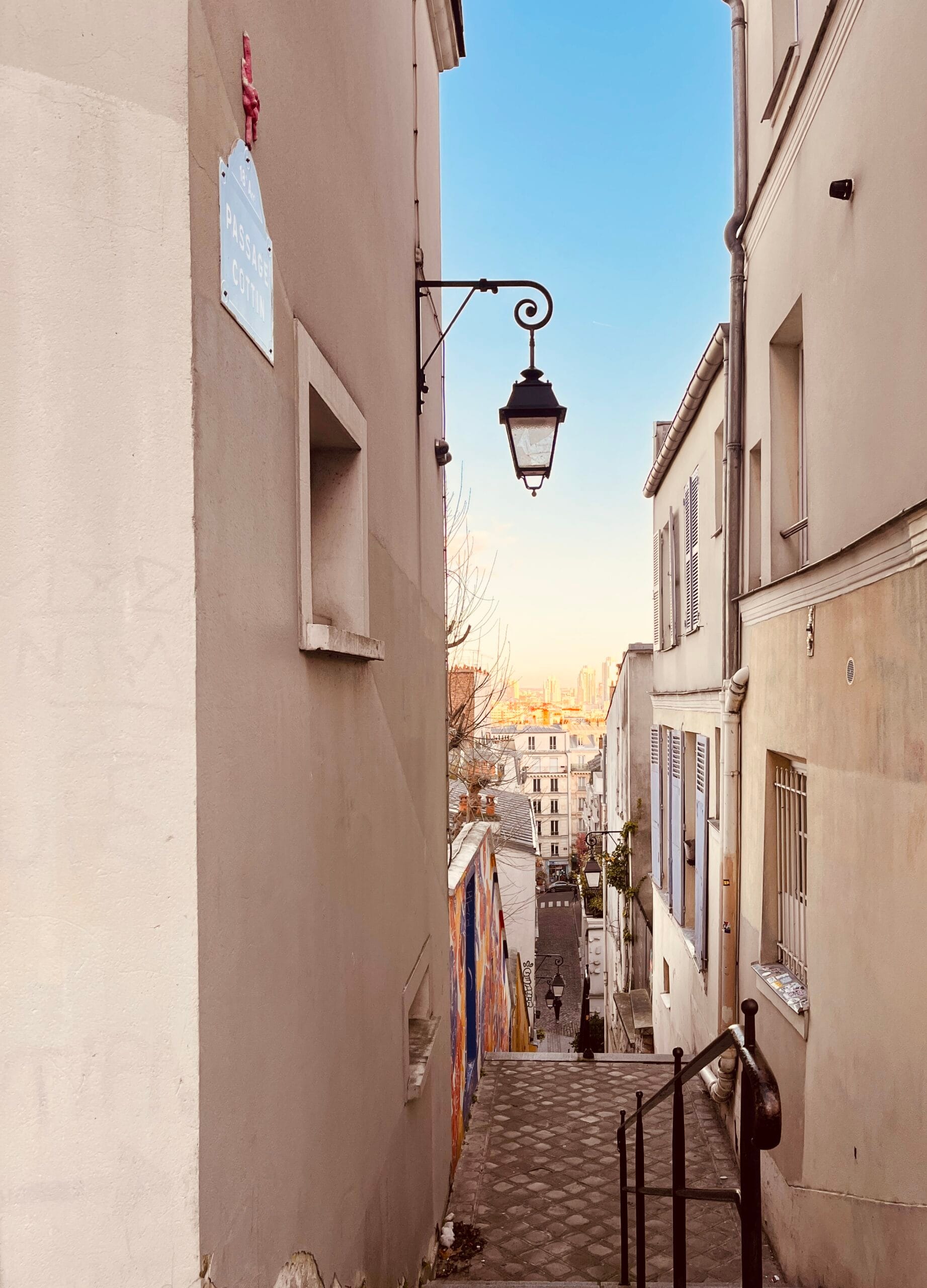
Stick to the streets around Abbesses and Lamarck-Caulaincourt for the best balance of quiet and metro access. You can see specific hotels, with indicative prices and what is nearby, in our best hotels in Montmartre list. Worried about the area after dark? Read is Montmartre safe first.
Hotels in Montmartre
Compare live availability and prices for Montmartre hotels on Expedia, then filter by area to match the neighbourhood you chose.
Search Montmartre hotels on Expedia →Affiliate link. We may earn a commission if you book, at no extra cost to you.
Getting Between the Three Areas
Whichever base you choose, the other two are a metro ride away, usually with one change of line. Allow extra time at rush hour. If you stay in Montmartre, the route in from the airport is covered in our how to get to Montmartre guide. To see the neighbourhood with a local guide on your first day, you can browse walking tours below.
Explore Montmartre with a Local Guide
Walking tours and food experiences that show you the side streets beyond the tourist circuit.
Browse Montmartre tours on GetYourGuide →Affiliate link. We may earn a commission if you book, at no extra cost to you.
💡 Frequently Asked Questions
Stay in Le Marais if you want a central base for museums and a flat, walkable neighbourhood. Stay in Montmartre if you care more about village atmosphere, quiet evenings and views than about being close to the Louvre. Montmartre is on a hill and further from the main sights, so expect a metro ride to most of them.
For a short first visit focused on Notre-Dame, the Louvre and the Seine, the Latin Quarter is the more convenient base, and the RER B runs from Charles de Gaulle airport straight to Saint-Michel. Montmartre suits travellers who want a neighbourhood with its own character and are happy to use the metro.
Montmartre is in the north of the city, on the 18th arrondissement hill. Metro Line 12 from Abbesses or Lamarck-Caulaincourt reaches central stations in roughly 10 to 20 minutes, but most sights south of the river need a change of line.
Montmartre and Le Marais are the two most popular choices for couples. Montmartre offers quiet cobbled streets, terraces and evening views, while Le Marais offers boutique hotels, cafes and galleries within easy walking distance.
Montmartre works best for stays of three nights or more, when you have time to enjoy the neighbourhood itself. For a one or two night stopover, a central area saves travel time.