

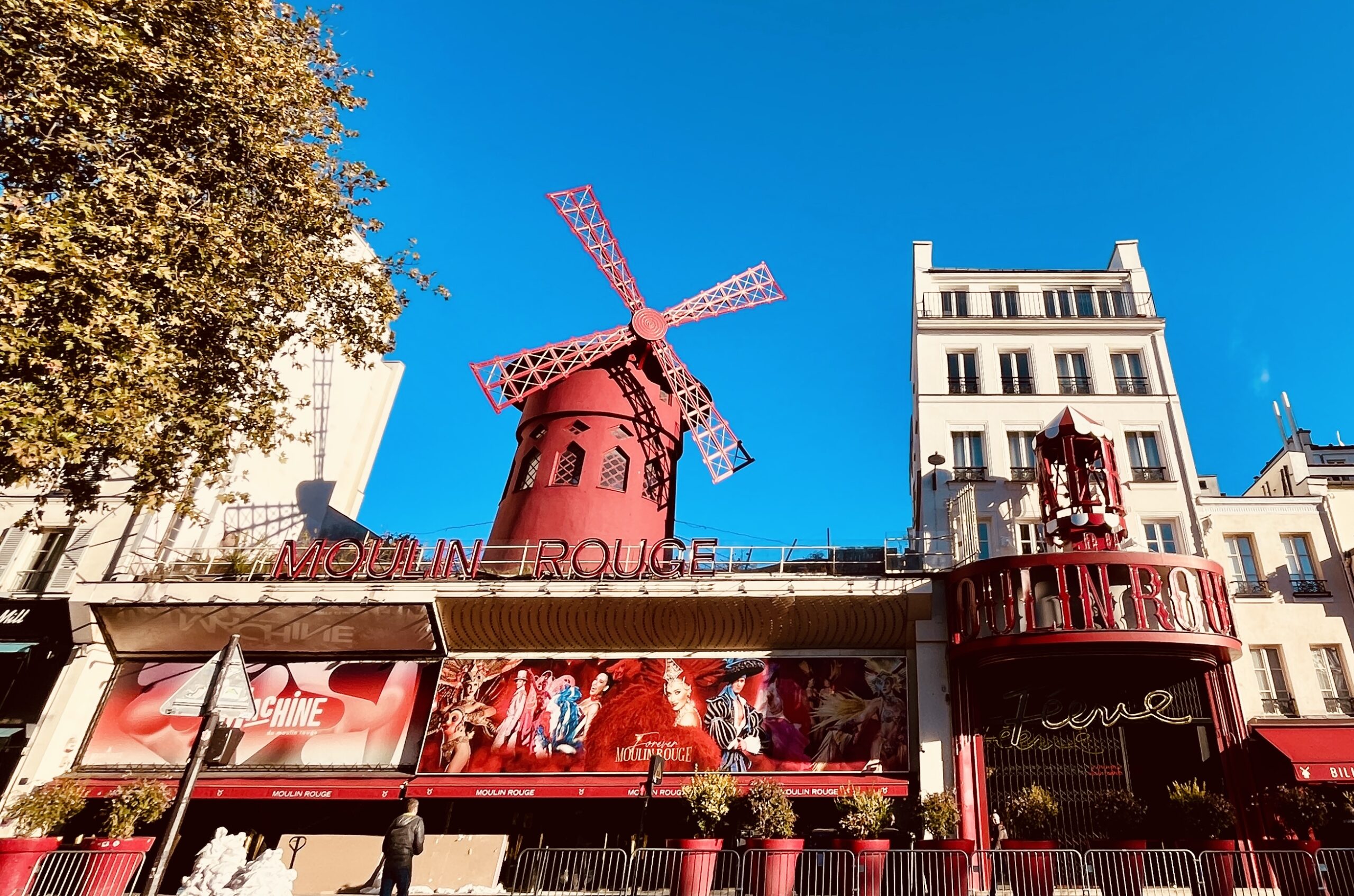
Yes, you will see them. Along Boulevard de Clichy, between Place Pigalle and the Moulin Rouge, sex shops sit next to bars, music stores and cabarets. Nothing is hidden and nothing is pushed on you: it is simply part of the street, and the walk takes roughly ten minutes at a relaxed pace.
What you will see on the boulevard
- Shopfronts with neon signs, mostly lit up after dark, along the stretch from Place Pigalle toward Place Blanche.
- Cabarets and theatres, with the Moulin Rouge at number 82 as the star attraction.
- Everyday Paris, since the boulevard also has bakeries, pharmacies, cafés and music shops. Side streets quickly turn residential.
- Tour groups, especially in the evening, when coaches stop in front of the Moulin Rouge.
📍 Nearest metro stops: Pigalle (lines 2 and 12) and Blanche (line 2). Both put you directly on the boulevard.
Where exactly is the “red district”?
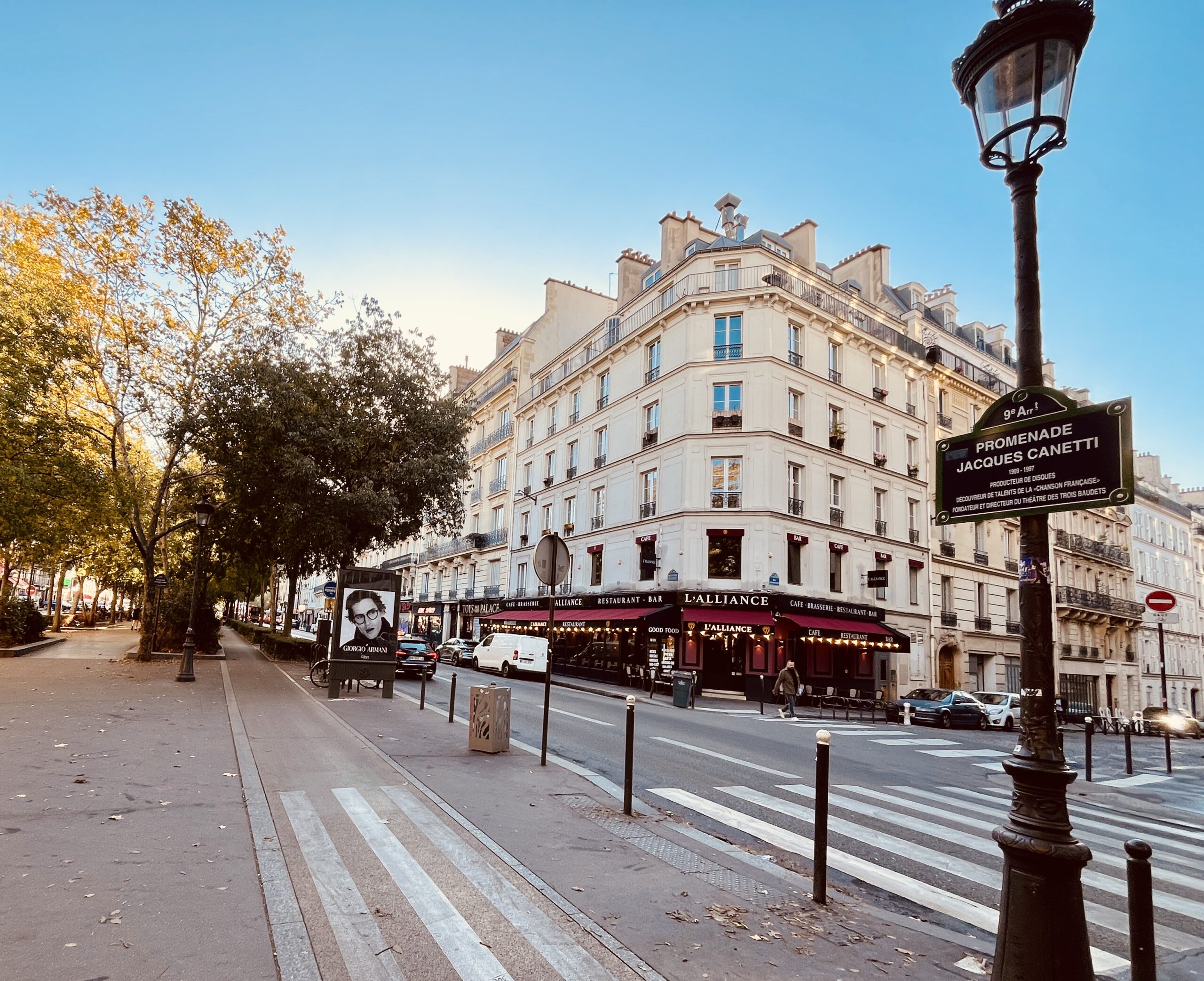
Paris has no officially defined red-light district like Amsterdam’s De Wallen. The name is simply used for the area around Boulevard de Clichy, a 935 metre avenue that marks the border between the 9th and 18th arrondissements, just below Montmartre hill. The adult shops are concentrated along this boulevard rather than spread across the whole neighbourhood. Most of Montmartre, from the Abbesses area to Sacré-Cœur, feels entirely different.
A short history: how a bohemian hill became the red district
Pigalle’s reputation did not start with shop windows. In the late 19th century, the foot of Montmartre was an artists’ playground: painters kept studios here, Van Gogh painted Boulevard de Clichy in 1887, the Chat Noir cabaret opened in 1881 and the Moulin Rouge followed in 1889.
The nightlife that grew around these cabarets shaped the area’s image for decades. In 1946, the Marthe Richard law closed France’s licensed brothels, and the neighbourhood’s character shifted again. Sex shops, adult cinemas and similar businesses arrived in the 1970s and gave the boulevard the look many visitors still associate with Pigalle.
One practical detail: the Museum of Eroticism, which opened in 1997 at 72 boulevard de Clichy, closed for good in November 2016. Ignore older guides that still list it as a visit.
How to walk it comfortably
- Go by day for a quiet look. The neon is designed for evening, so the street reads far calmer in daylight.
- Go after dark for the atmosphere. The boulevard is lively, well lit and busy with visitors, but the area is more rowdy late at night.
- Browsing is optional. You are free to just walk past. Staff generally do not expect you to go in.
- Watch your belongings. As in any busy tourist spot in Paris, keep your phone and bag secure, and politely decline anyone who offers you something on the street.
- Be respectful with your camera. Photograph the Moulin Rouge and the street scene, but avoid pointing your phone at people.
💡 Easy rule: start at Pigalle metro, walk east along the boulevard to the Moulin Rouge, then turn uphill toward Montmartre. You get the full contrast of the neighbourhood in one short loop.
Is it OK with kids?
Many travel guides advise against taking young children along the boulevard in the evening. In daytime, it is simply a busy Paris avenue, but some shopfronts and signs are adult-oriented. If you are travelling with children, you can skip the strip entirely and head straight uphill. The guide to Montmartre with kids has family-friendly routes.
Pigalle today: much more than neon
The neighbourhood has changed a lot in recent years. South Pigalle, nicknamed SoPi, now has cocktail bars, independent shops and coffee roasters, while Rue des Martyrs is one of the best food streets in Paris. A few doors from the boulevard, the quiet Cité Véron courtyard at number 94 is a reminder of the area’s artistic past, and it is covered in the guide to Montmartre after a concert.
Make the most of the evening
The Moulin Rouge is the one place on the boulevard that is worth planning ahead for. Shows are popular, so booking in advance is wise, especially on weekends and in high season.
Check Moulin Rouge show availability
Prefer something more relaxed? A guided evening walk is a good way to learn the history without wandering alone. The Montmartre tours page lists options, and the complete Montmartre guide covers the rest of a stay. For where to sleep, most Montmartre hotels sit higher up the hill, away from the boulevard, and the picks of hotels in Montmartre cover the options.
FAQ
Yes. They line Boulevard de Clichy between Place Pigalle and the Moulin Rouge, so you will notice them even if you are only walking to the cabaret.
The area is busy and well visited, and most travellers have no problem. Use the same caution as in any crowded part of Paris: watch your belongings and be careful late at night.
No. The museum that stood at 72 boulevard de Clichy closed in November 2016, even though some older travel guides still list it.
In daytime it is a busy Paris avenue, but some signage is adult-oriented and many guides advise against the evening with young children. You can easily avoid the boulevard and go straight uphill to Montmartre.