
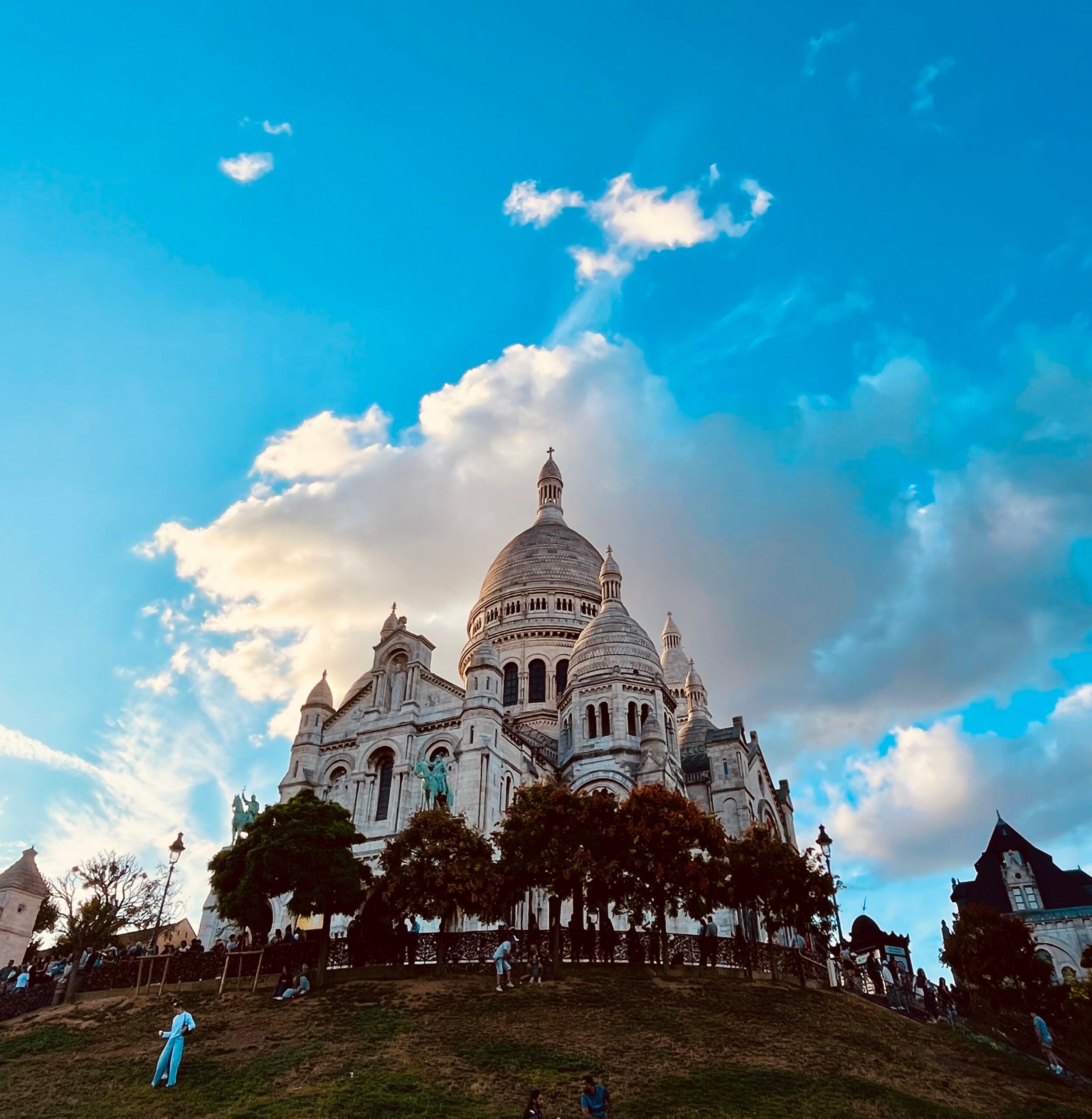

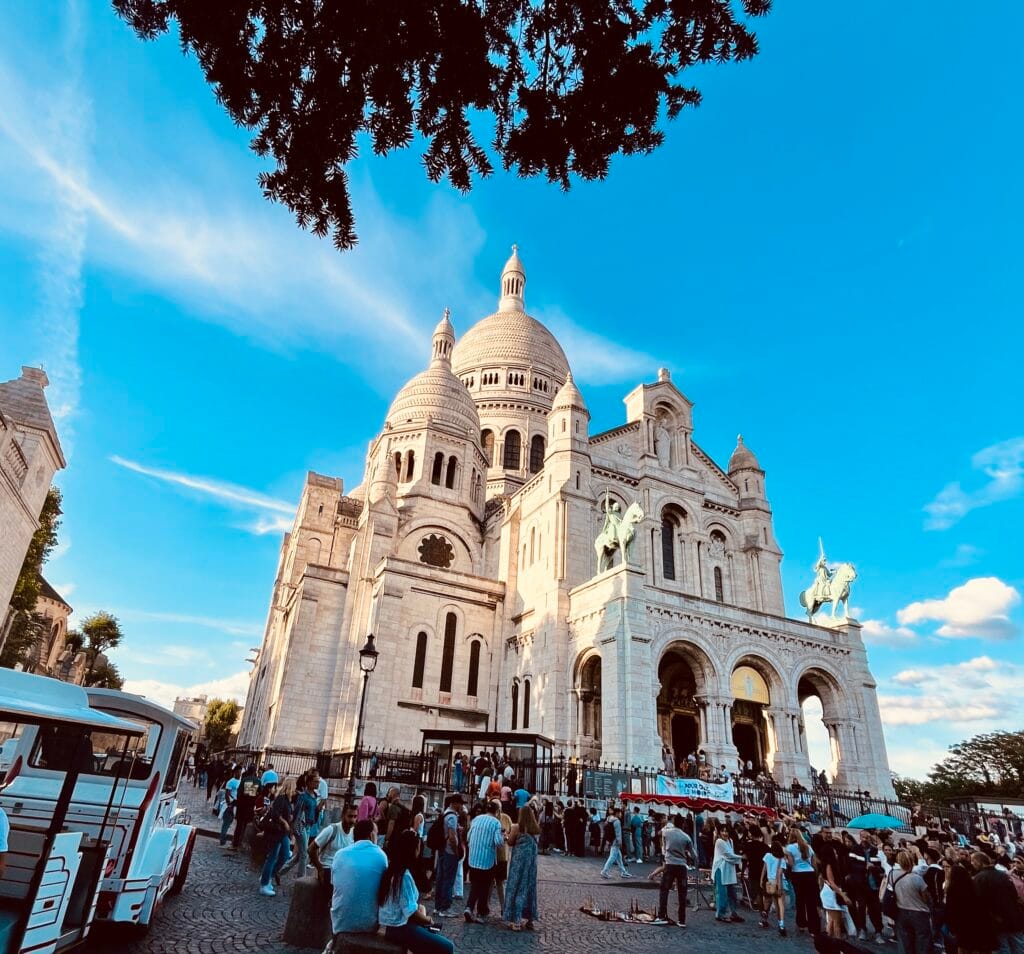
Sacré-Coeur is the reason most people look up when they arrive in Paris. The white domes are visible from half the city. Getting there involves a hill, 222 steps or a funicular, and a crowd at the top that is, depending on the time of day, either manageable or overwhelming. This guide tells you what is actually worth your time, what costs money, and what most visitors miss entirely.
The Essentials
| Basilica entry | Free, open daily 6:30am – 10:30pm |
| Dome visit | €8 adults (16+) / €5 children up to 15. Open 10:15am to 5:30pm, last entry 5pm (later in summer) |
| Funicular | €2.55 per ride (Métro-Train-RER ticket or bank card), no transfers to other lines |
| Steps to the top | 222 steps from Square Willette to the basilica entrance |
| Dome steps | 280 narrow steps, no elevator, no restrooms on route |
Sacré-Coeur Opening Hours
| Basilica | Every day of the year, 6:30am to 10:30pm. Free entry. |
| Dome | 10:15am to 5:30pm, last entry 5pm. Closed for a break around midday. Later in summer. |
| Step-free entrance (lift) | 8:30am to 7pm, at the rear of the basilica |
| Queue to get in | 10 to 15 minutes between 10:30am and 5pm |
What time does Sacré-Coeur close? The basilica closes at 10:30pm every day, Sundays included. It stays open later on a few feast days and until midnight on the first Thursday of each month. The dome closes much earlier, so plan the climb for earlier in the day. It can also shut for maintenance or bad weather, so check the official website the day before. The hours above follow the basilica’s official website, checked on 20 October 2026.
Getting There: Two Routes
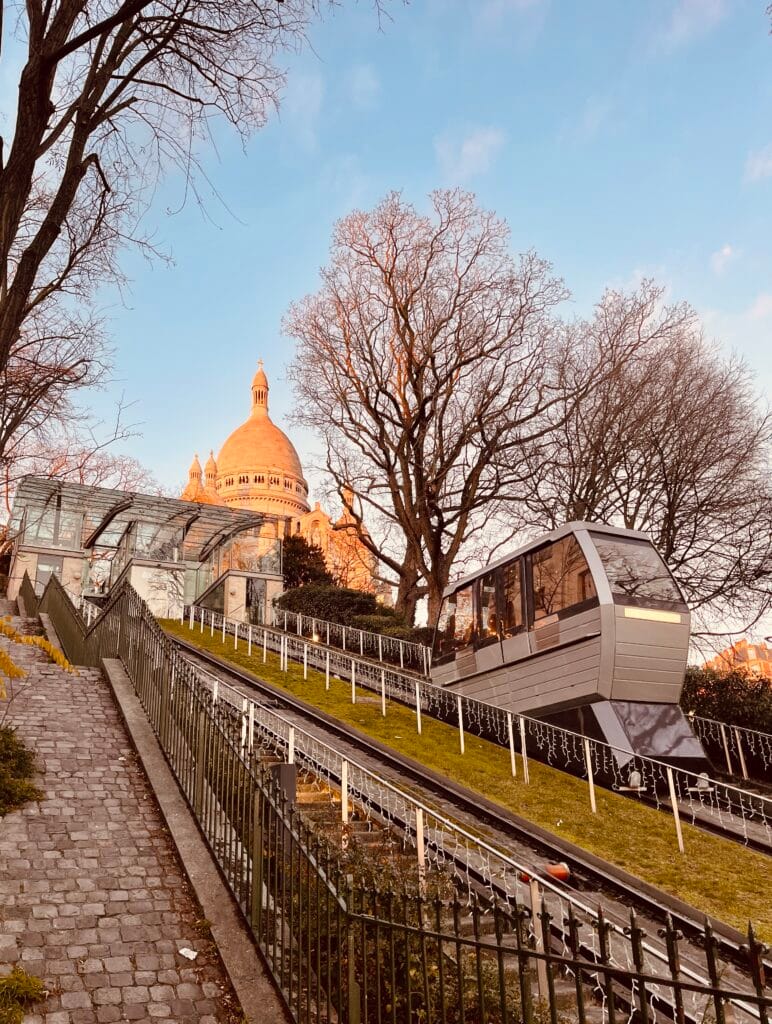
Via Anvers (Line 2): The classic tourist route. Exit Anvers, walk north up Rue de Steinkerque, arrive at Square Willette at the foot of the steps or the funicular. Straightforward, busy, and surrounded by souvenir shops on the approach. Allow 10 minutes from the metro exit.
Via Abbesses (Line 12): The better route. Exit Abbesses — one of the deepest stations in Paris, with lifts — walk through the village streets (Rue Lepic, Rue des Abbesses) and approach from the side of the Butte rather than straight up the tourist staircase. Takes 15 minutes but you arrive through Montmartre rather than past it. This is how locals do it. Other ways up the hill are covered in our guide to getting to Montmartre.
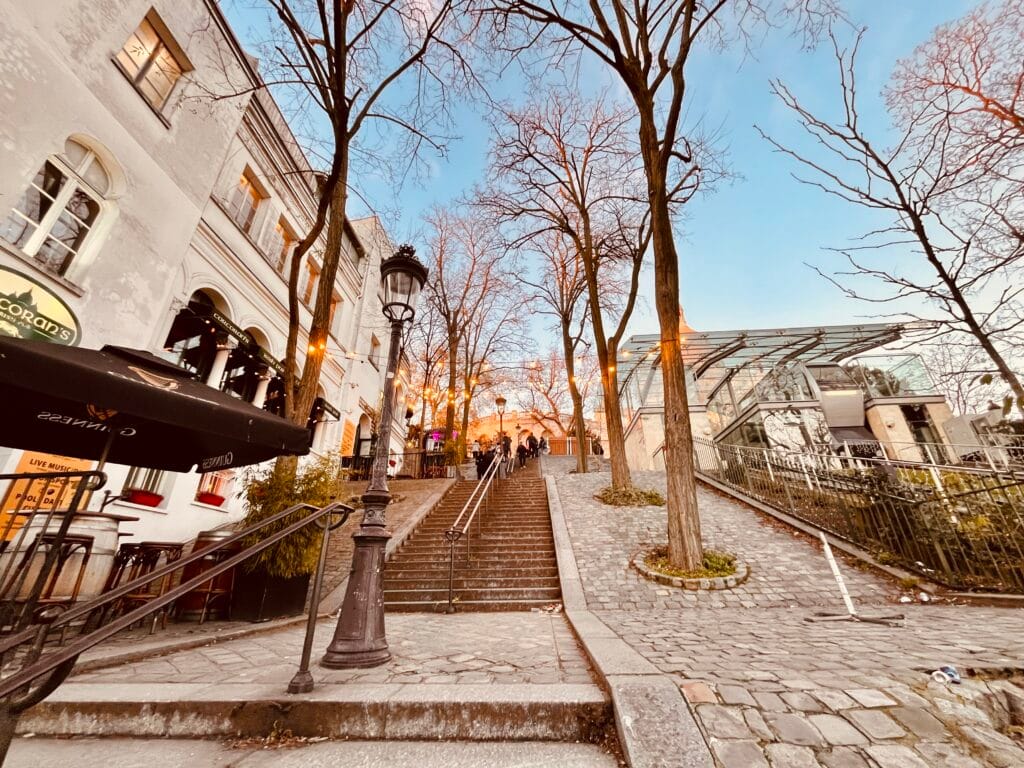
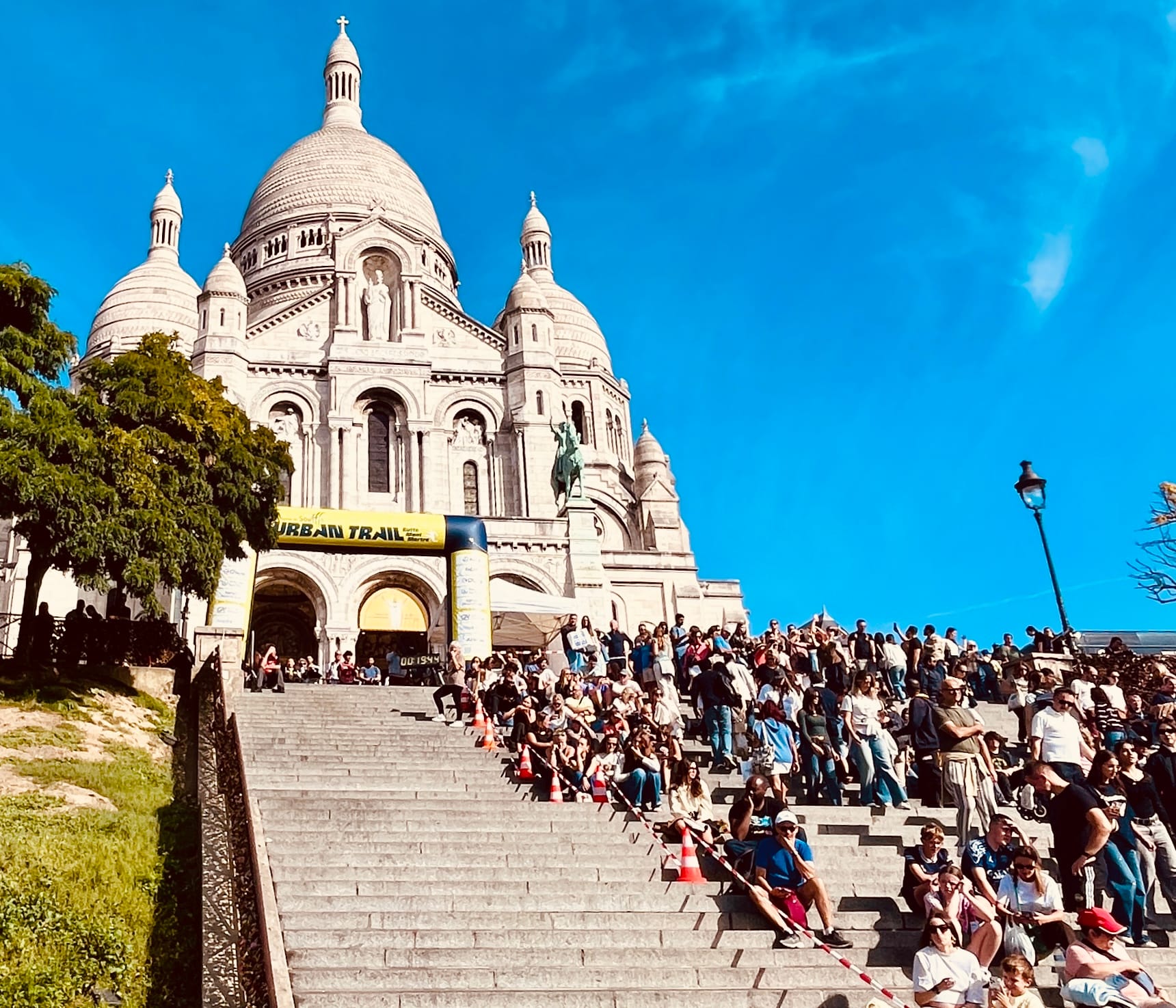
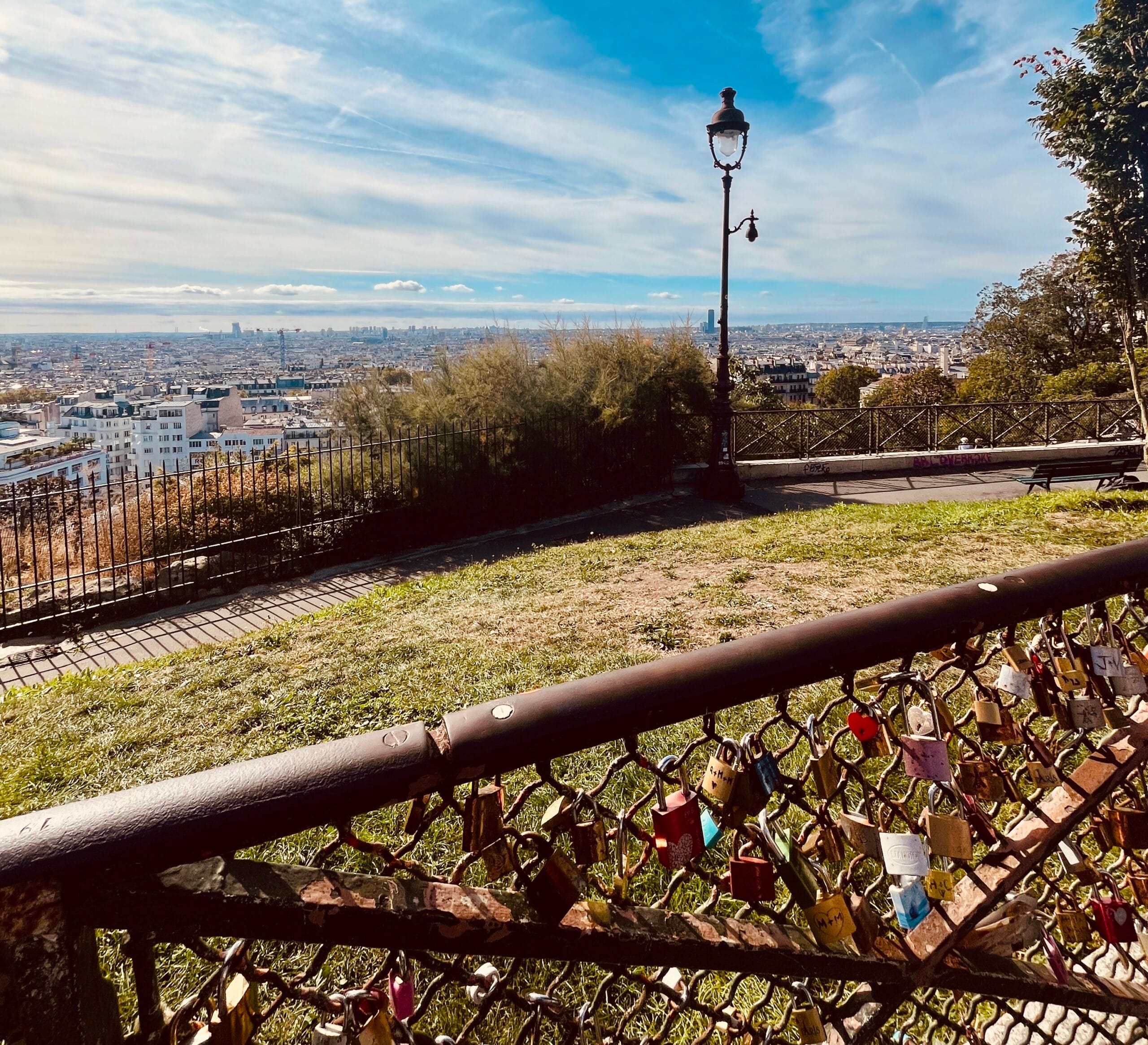
Left: the crowd on the Sacré-Cœur steps on a busy September day. Right: the panorama over Paris from the Montmartre hill. © montmartre-in-paris.com
The Basilica
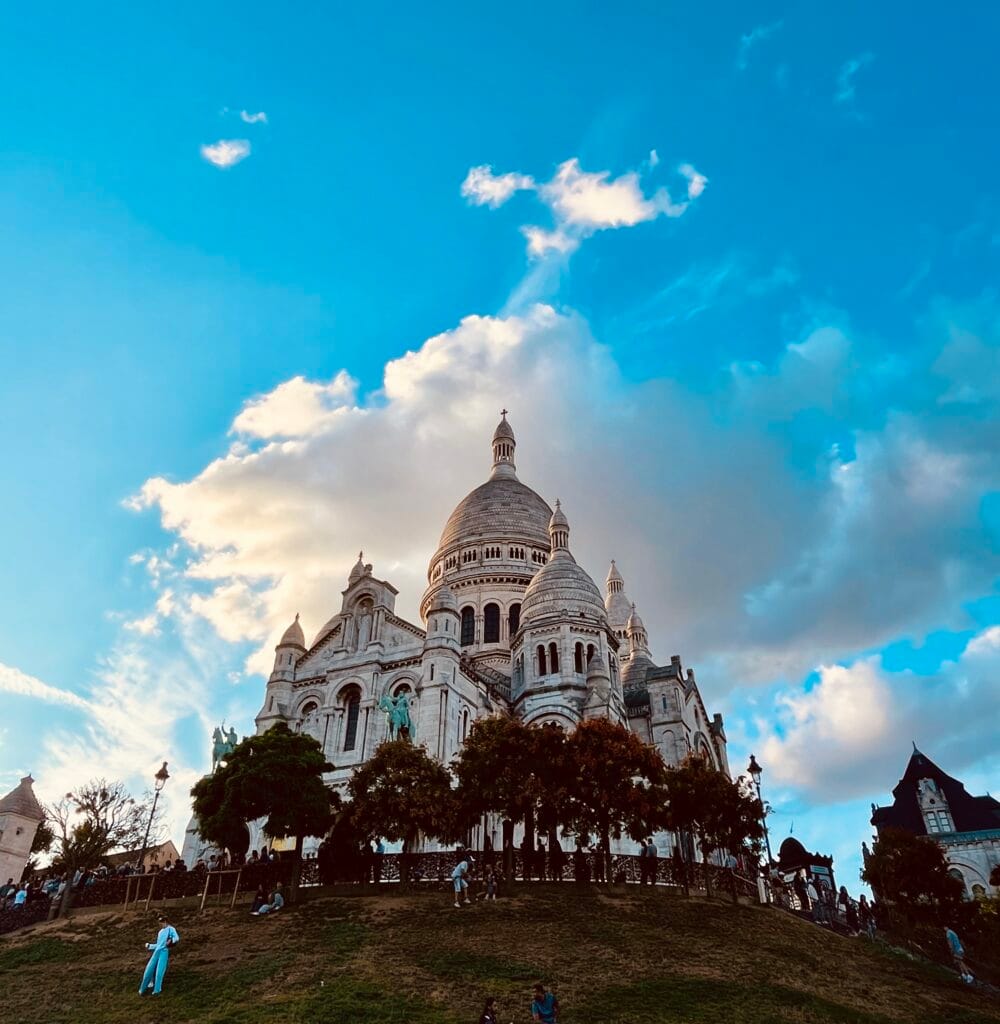
Construction began in 1875 and took 40 years — the foundation alone required 83 wells, each 30 metres deep, filled with rock and concrete to stabilise the gypsum subsoil. The entire project was funded by private donation; over a million contributors had their names inscribed on the interior walls. The basilica was completed in 1914 but not consecrated until 1919, delayed by the First World War. The full story is in our facts, history and architecture guide.
The white stone is travertine from Château-Landon in Seine-et-Marne. It releases calcite when wet — which means it gets whiter with rain rather than darker. After 150 years of Parisian weather, it still looks as bright as the day it was built.
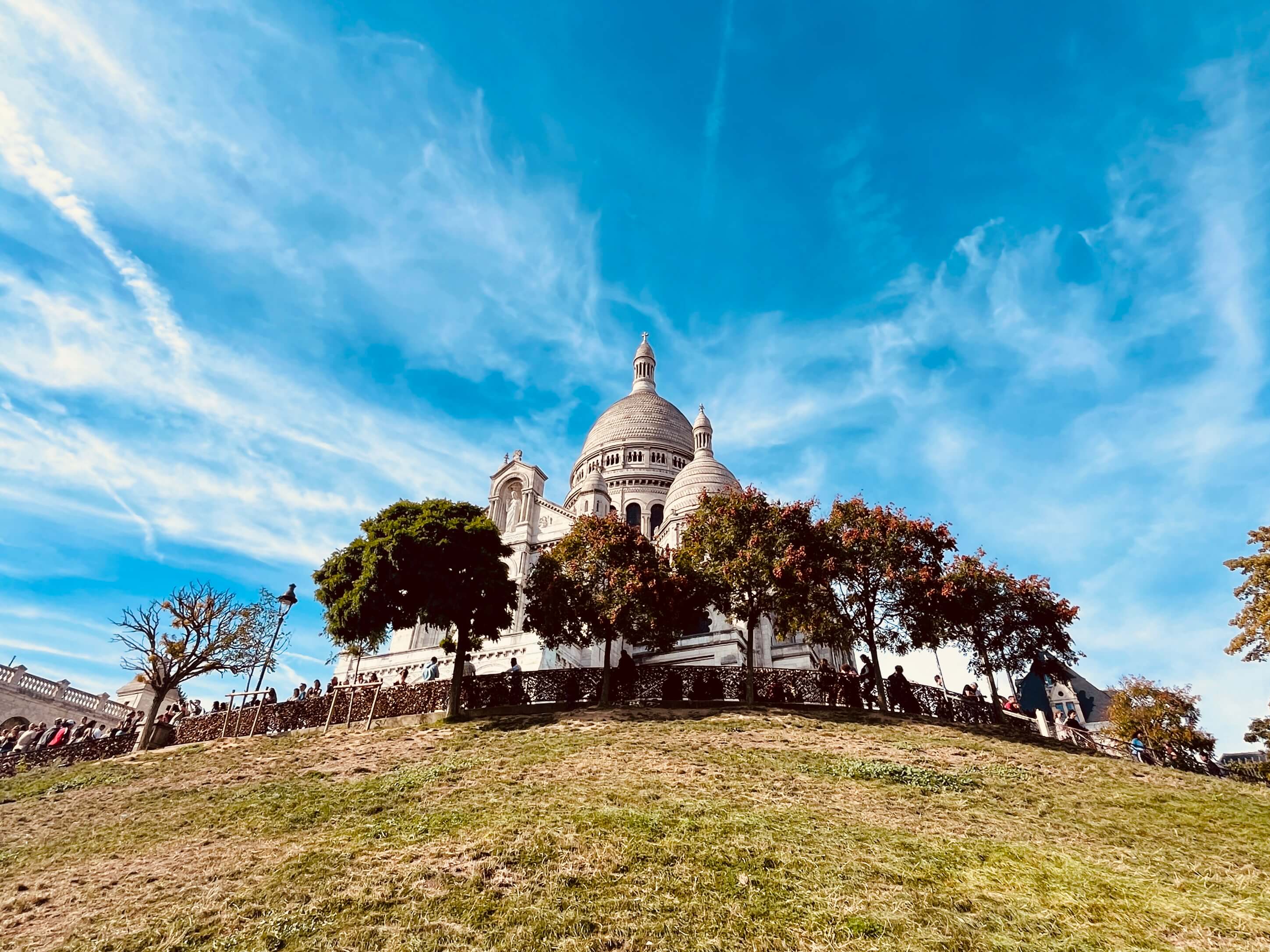
Sacré-Cœur seen from Rue Ravignan — the travertine stone turns whiter with every Parisian rain © montmartre-in-paris.com
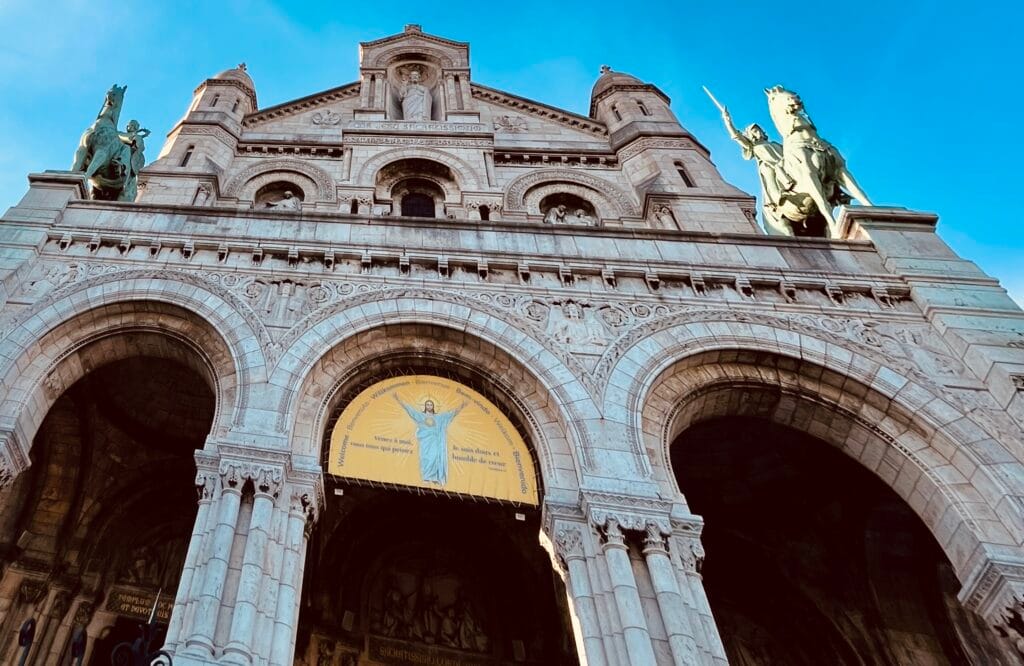
Event: Pope Leo XIV’s visit to Paris, September 2026
Pope Leo XIV made his first apostolic journey to France from 25 to 28 September 2026. The Paris programme included a Saturday morning in the 18th arrondissement, steps from the hill of Sacré-Cœur. Read the full schedule and what it meant for Montmartre visitors →
Inside the Basilica
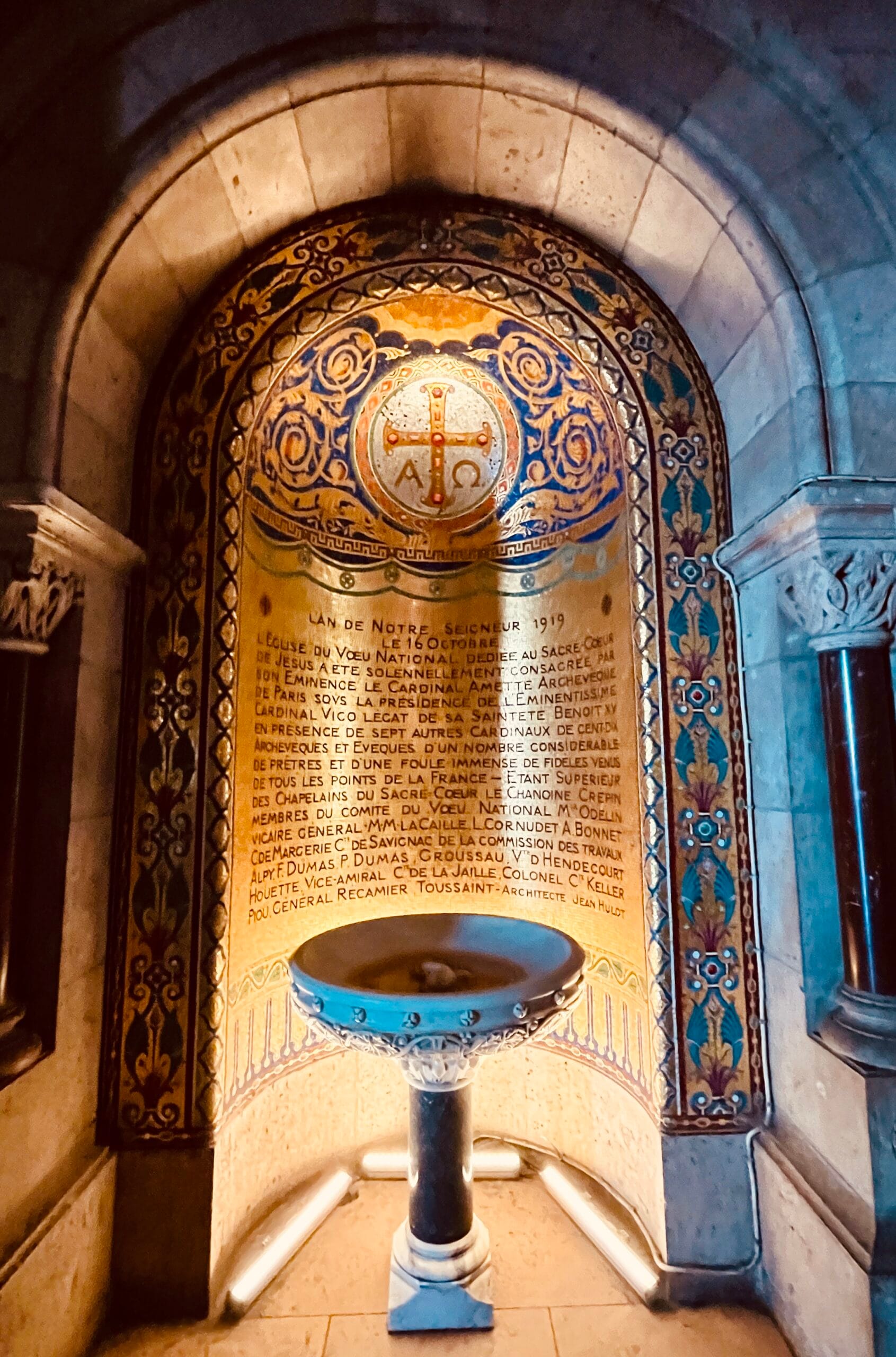
The interior is built for scale, not intimacy. The nave is 85 metres long; the choir mosaic covering the apse is 475 square metres — one of the largest mosaics in the world, depicting Christ in glory flanked by the Virgin, Joan of Arc, and Saint Michael. Entry is free. Photography is restricted in the nave — silence is enforced by staff, and it is a functioning place of worship throughout the day. See what you find inside in our guide to the interior of Sacré-Coeur.
Since 1 August 1885, Eucharistic adoration has been maintained continuously — day and night, without interruption, including during the German bombardments of April 1944. Over 140 years of unbroken prayer. The vigil passes between religious communities in shifts.
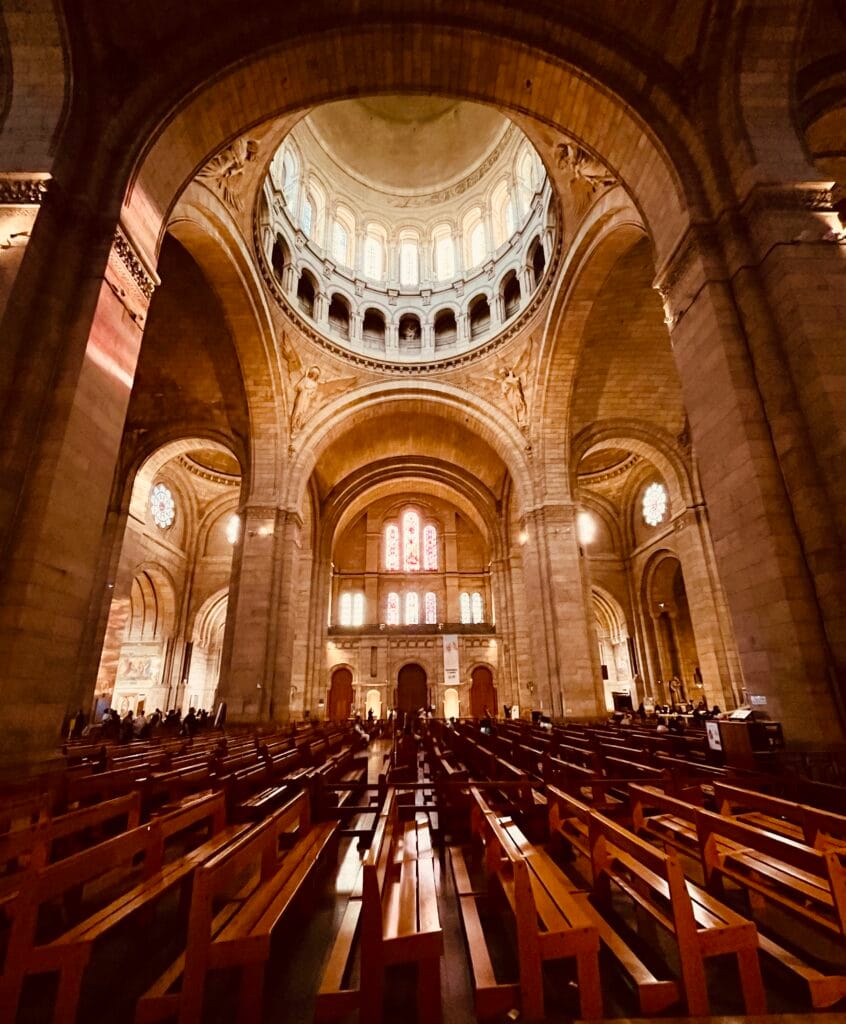
The Dome: Is It Worth It?
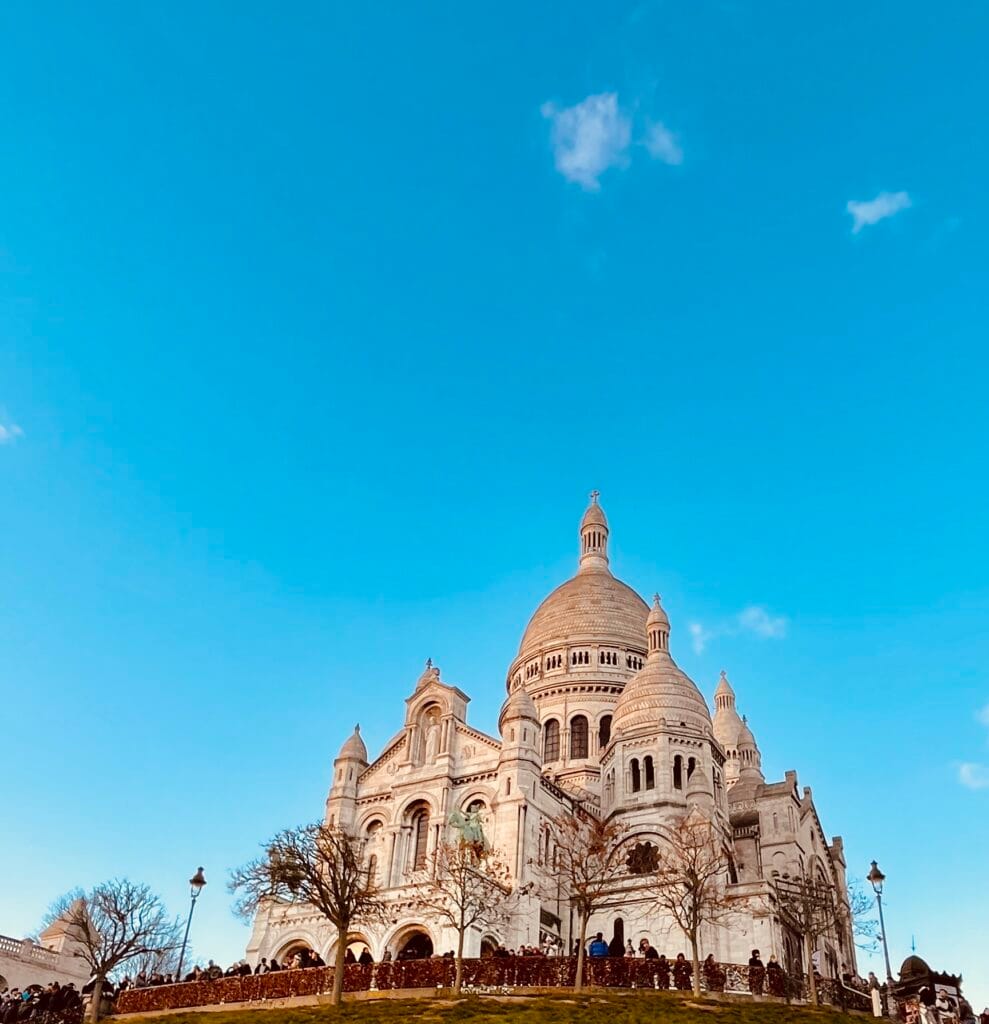
Yes, but only if you are comfortable with 280 narrow spiral steps, with no elevator, no restrooms, and no way back down except the same stairs. The viewing platform at the top gives a 360-degree panorama that includes the Eiffel Tower, Notre-Dame, the Louvre, and on clear days, the hills beyond the city. The entrance to the dome is separate from the basilica entrance. After the security check, take the stairs down on your left into the moat, and the ticket office (counter and machine) is about 20 metres on your right. Tickets: €8 adults, €5 children up to 15, bought on site. Open 10:15am to 5:30pm, last entry at 5pm, with a break around midday. The terrace below the basilica is free and already gives a substantial view.
Do You Need Tickets for Sacré-Coeur?
No ticket or booking is needed for the basilica, which is free for everyone. Only the dome has an entry fee: €8 for adults (16 and over), €5 for children up to 15, and €6 or €4 for groups of 20 or more. Dome tickets are sold on site at the dome ticket office. What you can book ahead is a guided visit, which adds the history and the route through the quieter streets. Our Sacré-Coeur tickets and tours guide compares the options, and the Montmartre tours and tickets page covers the wider hill.
Book a guided Montmartre tour including Sacré-Coeur
Local guides who know the history, the shortcuts, and the back streets. Skip the parvis crowds and see Montmartre properly.
Book the Sacré-Cœur Early Access Small Group TourAffiliate link. Prices and availability are shown on GetYourGuide.
The Bell: La Savoyarde
The bell in the campanile weighs 19 tonnes and is the heaviest bell in France. Cast by the Paccard foundry in Annecy and offered by the four dioceses of Savoie, it reached Paris in October 1895 and was hoisted into the campanile in March 1907. Its full name is Françoise Marguerite du Sacré-Cœur de Jésus. More in our guide to the facts, history and architecture of Sacré-Coeur.
When to Go
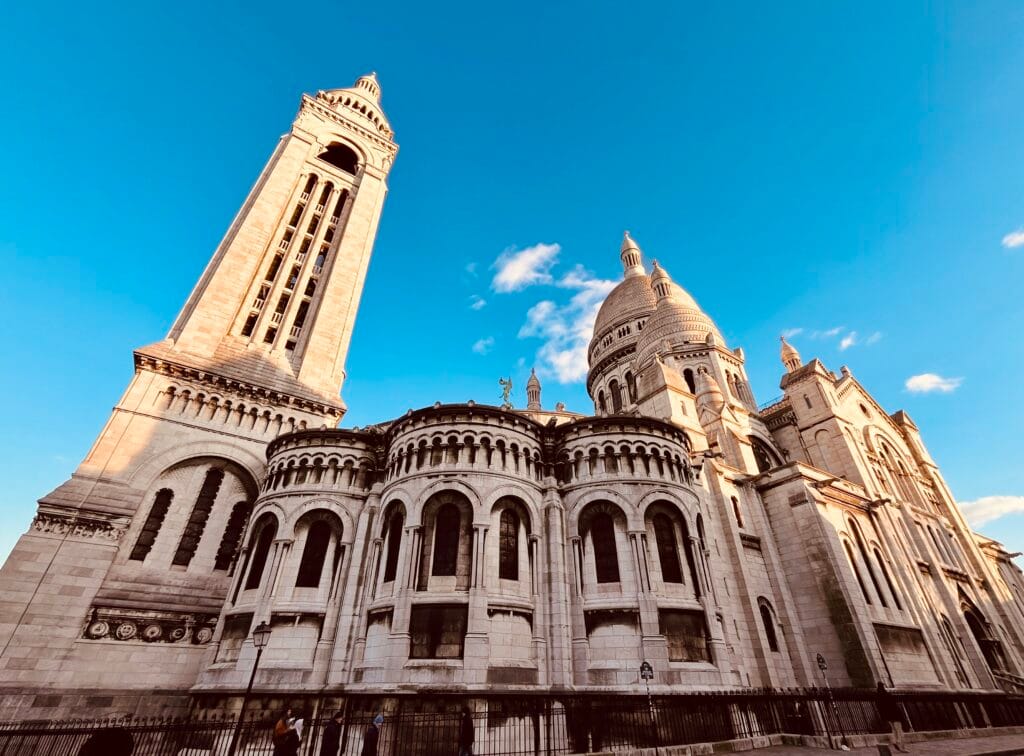
The terrace is packed between 10am and 6pm on any day that is not raining. Early morning is a different experience entirely: the basilica opens at 6:30am, the parvis is near-empty, and the view over Paris in the early light — before the tour groups arrive — is one of the better things you can do in the city for free. Weekday mornings before 9am are consistently calm. Avoid Saturday afternoon in summer without exception. The basilica’s own website puts the wait to get in at 10 to 15 minutes between 10:30am and 5pm.
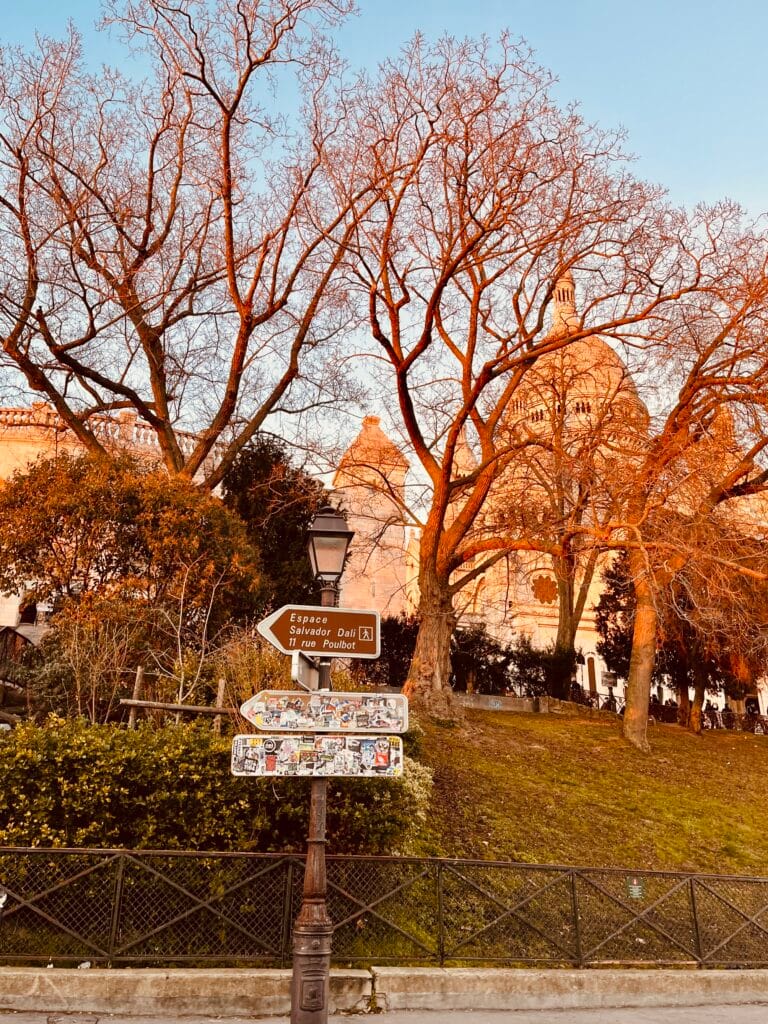
Sacré-Cœur is also at its most atmospheric once the day-trippers have gone. If you plan to be on the hill in the evening, our Montmartre date night guide suggests how to build a full evening around the view.
Sacré-Coeur After Dark
The basilica stays open until 10:30pm, long after the dome has closed, and the hill is quieter once day visitors leave. An evening visit trades the view from the dome for a quieter hill and a basilica that is still open.
Montmartre Night Tours
Guided evening tours of the hill. Check what each tour includes on the booking page.
Browse night tours on ViatorAffiliate link. Prices and availability are shown on Viator.
The Approach Worth Taking
Most visitors come up the tourist staircase from Anvers and leave the same way. The better route: take Line 12 to Abbesses, walk through Place des Abbesses, then up Rue Tholozé — the street that frames the Moulin de la Galette windmill dead ahead at the top. Cross Rue Lepic, continue through Rue des Saules past the Clos Montmartre vineyard, and approach Sacré-Coeur from the north side. Done this way, you see the genuinely interesting Montmartre first and the basilica as the payoff. It takes 20 minutes rather than 10, and it is not comparable.
Scams and Safety
The lower steps below the basilica are one of the more active tourist-scam zones in Paris. The main risks: friendship bracelet hawkers who tie a bracelet to your wrist and demand payment, fake petition collectors, and pickpockets working the crowd on the southern staircase. None of this affects the upper terrace or the basilica itself. The Abbesses approach on Line 12 bypasses the worst of it. Keep your bag in front on the lower steps and you will have no problems. For the wider picture, see our guide on whether Montmartre is safe.
Accessibility
The basilica has a step-free entrance at the rear of the building on Rue du Chevalier de la Barre, with a lift to the nave level. Open 8:30am to 7pm. Call ahead on +33 1 53 41 89 00 to confirm. The funicular from Place Saint-Pierre covers the hill climb itself. The dome and crypt are not wheelchair accessible.
What’s Nearby
The terrace faces south over Paris. Behind the basilica, to the north, the streets drop quickly into the quieter, less-visited side of Montmartre — Rue du Chevalier de la Barre, the vineyard at Clos Montmartre, Au Lapin Agile. Most visitors come up the front steps and leave the same way, missing the entire back half of the neighbourhood. The full Montmartre guide covers what to do once you leave the parvis. For photography, the best exterior angles are from the Rue du Cardinal Dubois side and from Square Louise Michel at the bottom of the steps.
💡 Frequently Asked Questions
Entry to the basilica is free and open daily from 6:30am to 10:30pm. The dome costs €8 for adults and €5 for children up to 15. The terrace and gardens are free at all times.
The basilica opens at 6:30am every day of the year. The dome opens at 10:15am and closes at 5:30pm, with a last entry at 5pm and a break around midday. Dome hours change with the season and run later in summer. The basilica can stay open later on major feast days.
The basilica closes at 10:30pm every day, Sundays included. It closes later on some feast days and at midnight on the first Thursday of each month. The dome closes much earlier: last entry at 5pm and closing at 5:30pm, later in summer.
About 222 steps lead from Square Willette to the basilica entrance, and the funicular lets you skip them. The dome is a separate climb of 280 narrow steps.
No. The basilica is free and needs no booking. Only the dome has an entry fee (€8 for adults, €5 for children up to 15), paid at the dome ticket office on site. Guided tours are optional.
Two options: Anvers (Line 2) for the direct tourist approach via the steps or funicular; Abbesses (Line 12) to approach through the Montmartre village streets. The funicular from Square Willette costs one Métro-Train-RER ticket (€2.55).
280 narrow spiral steps with no elevator and no restrooms on the route. The climb takes 10-15 minutes. The reward is a 360-degree view of Paris including the Eiffel Tower, Notre-Dame, and on clear days, the hills beyond the city.
The stone is travertine from Château-Landon in Seine-et-Marne. It releases calcite when wet, which means it actually gets whiter in the rain rather than darker. After 150 years of Parisian weather, the exterior remains as bright as when it was built.
Photography is restricted inside the nave and is actively managed by staff. The basilica is a functioning place of worship with silence enforced throughout. Exterior photography is unrestricted.
Yes. There is a step-free entrance at the rear of the basilica on Rue du Chevalier de la Barre, with a lift to the nave. Open 8:30am to 7pm. The funicular covers the hill itself. The dome and crypt are not wheelchair accessible.
Yes — the lower steps below the basilica are one of the more active tourist-scam zones in Paris. Watch for friendship bracelet hawkers and fake petition collectors. The Abbesses (Line 12) approach bypasses most of it. Keep your bag in front on the lower staircase.