

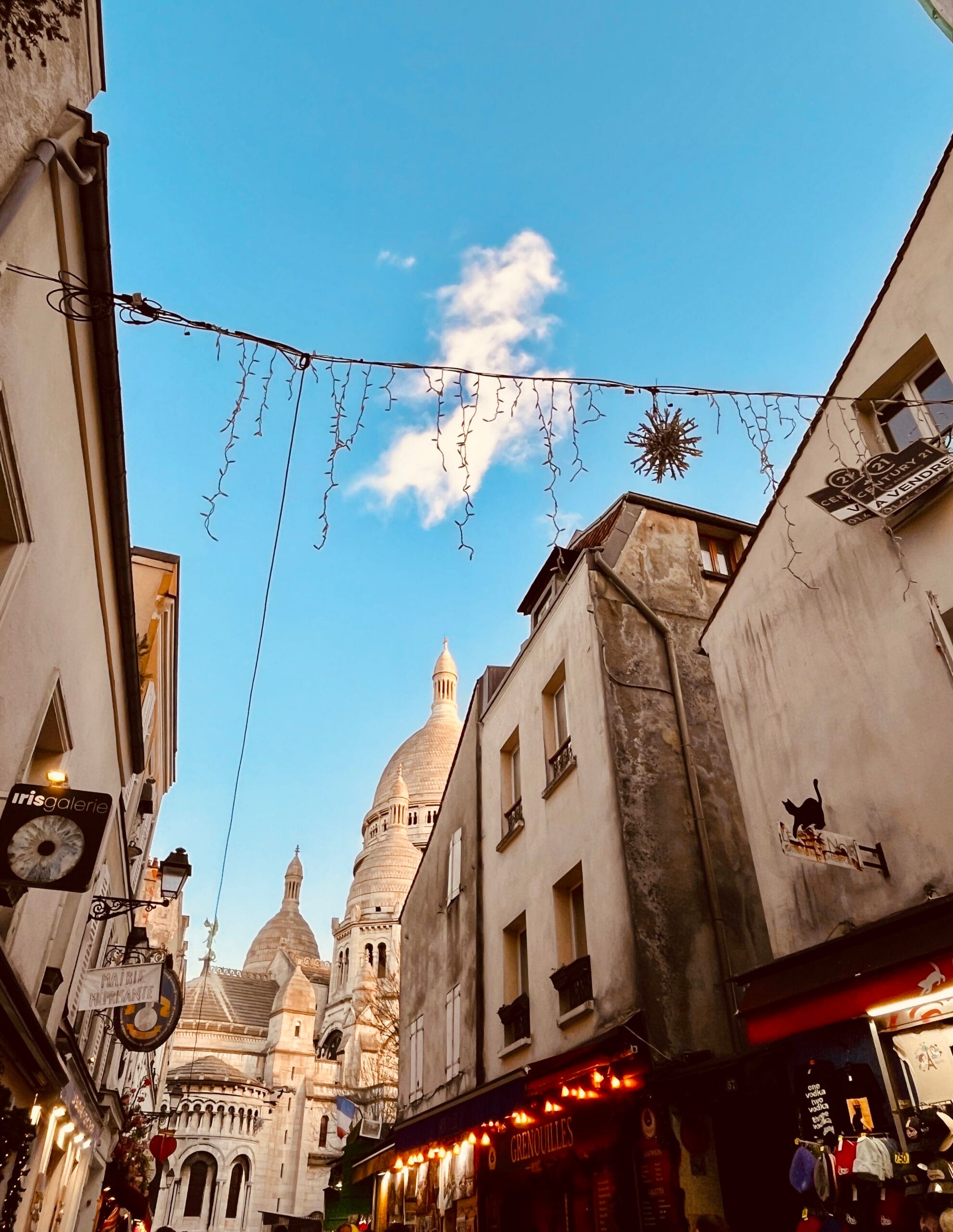
Sacré-Coeur is a basilica on Montmartre hill, designed by Paul Abadie in a Romano-Byzantine style. Its first stone was laid in 1875 and it was consecrated on 16 October 1919. The facts below come from the basilica’s own historical pages. To plan a visit, see the visitor guide, inside the basilica and tickets and tours.
What Are the Key Facts About Sacré-Coeur?
| Fact | Detail |
|---|---|
| Name | Sacré-Coeur means Sacred Heart. The basilica is dedicated to the Sacred Heart of Jesus. |
| Official name | Basilica of the National Vow (Vœu national) |
| Architects | Paul Abadie (competition won in 1874), then Lucien Magne after Abadie’s death in 1884 |
| Style | Romano-Byzantine, Greek-cross plan, north-south axis opening onto Paris |
| First stone | 1875 |
| Inauguration | 5 June 1891, still without the great dome |
| Consecration | 16 October 1919 |
| Campanile | 84 metres, designed by Lucien Magne |
| Choir mosaic | 475 square metres, inaugurated in 1923 |
| Bell | La Savoyarde, 19 tonnes, the heaviest bell in France |
Why Was Sacré-Coeur Built?
On 8 December 1870, after France’s military defeat by Prussia, Alexandre Legentil wrote to the bishop of Poitiers proposing a church in Paris dedicated to the Sacred Heart, as an act of penitence and trust. His brother-in-law Hubert Rohault de Fleury joined him. The idea became known as the national vow.
A common story says the basilica was a reaction to the Paris Commune. The basilica’s own history page corrects this: the Commune ran from 18 March to 28 May 1871, after the vow had been formulated in late 1870.
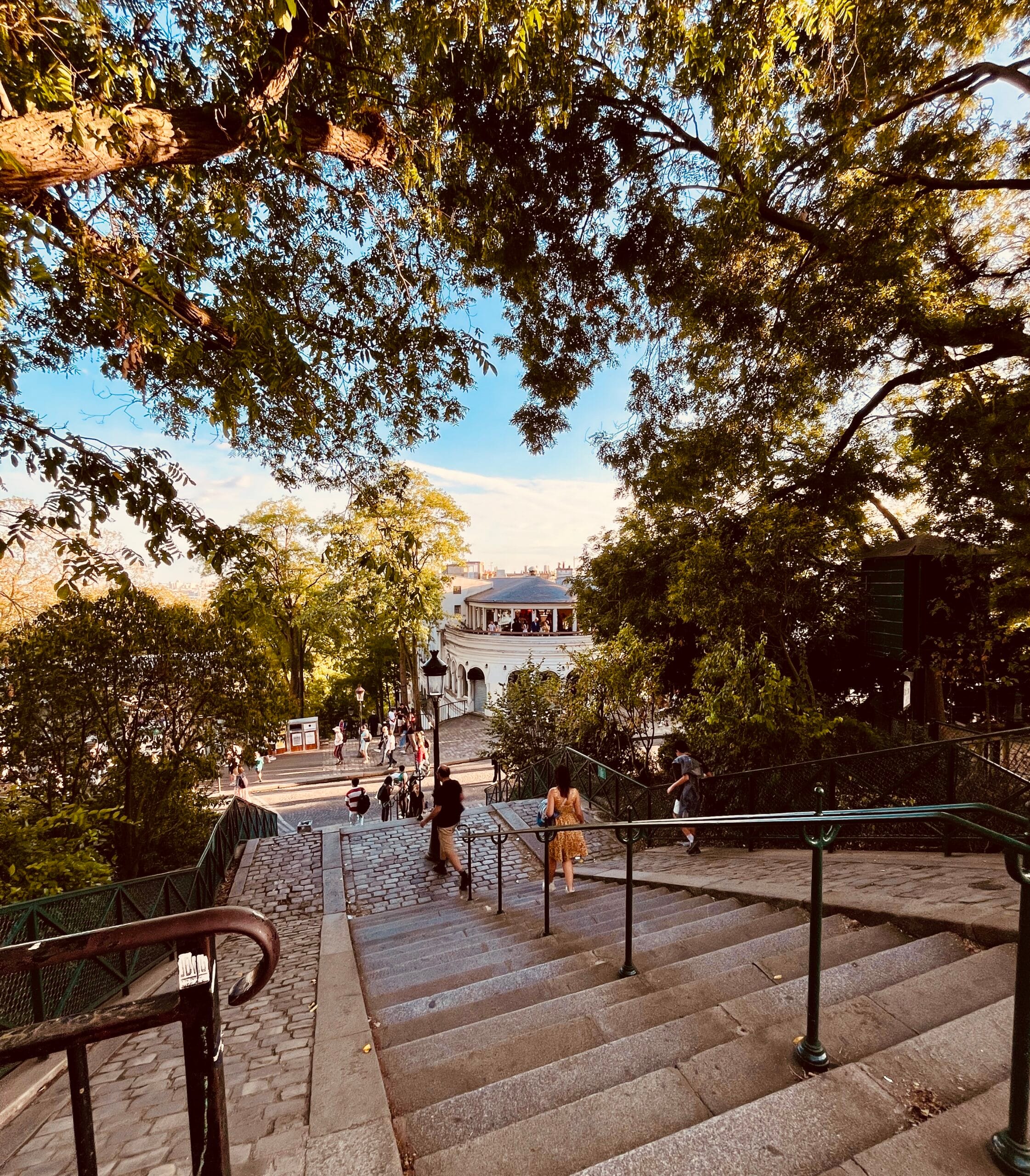
Cardinal Guibert, archbishop of Paris, approved the vow in January 1872 and the Montmartre site by the end of that year. The hill had been held sacred for centuries and is linked to the martyrdom of Saint Denis. In July 1873 the National Assembly declared the project of public utility.
What Is the Timeline?
| Year | Event |
|---|---|
| 1870 | 8 December: first version of the national vow. |
| 1873 | July: the National Assembly declares the project of public utility. |
| 1874 | Paul Abadie wins the architects’ competition. |
| 1875 | The first stone is laid. |
| 1885 | 1 August: perpetual Eucharistic adoration begins, never interrupted since. |
| 1891 | 5 June: solemn inauguration, still without the great dome. |
| 1895 | October and November: La Savoyarde arrives in Paris and is blessed. |
| 1912 | 6 April: the campanile is completed and the cross of the lantern is placed. |
| 1914 | The consecration planned for 17 October is suspended by the First World War. |
| 1919 | 16 October: consecration of the basilica. |
What Architectural Style Is Sacré-Coeur?
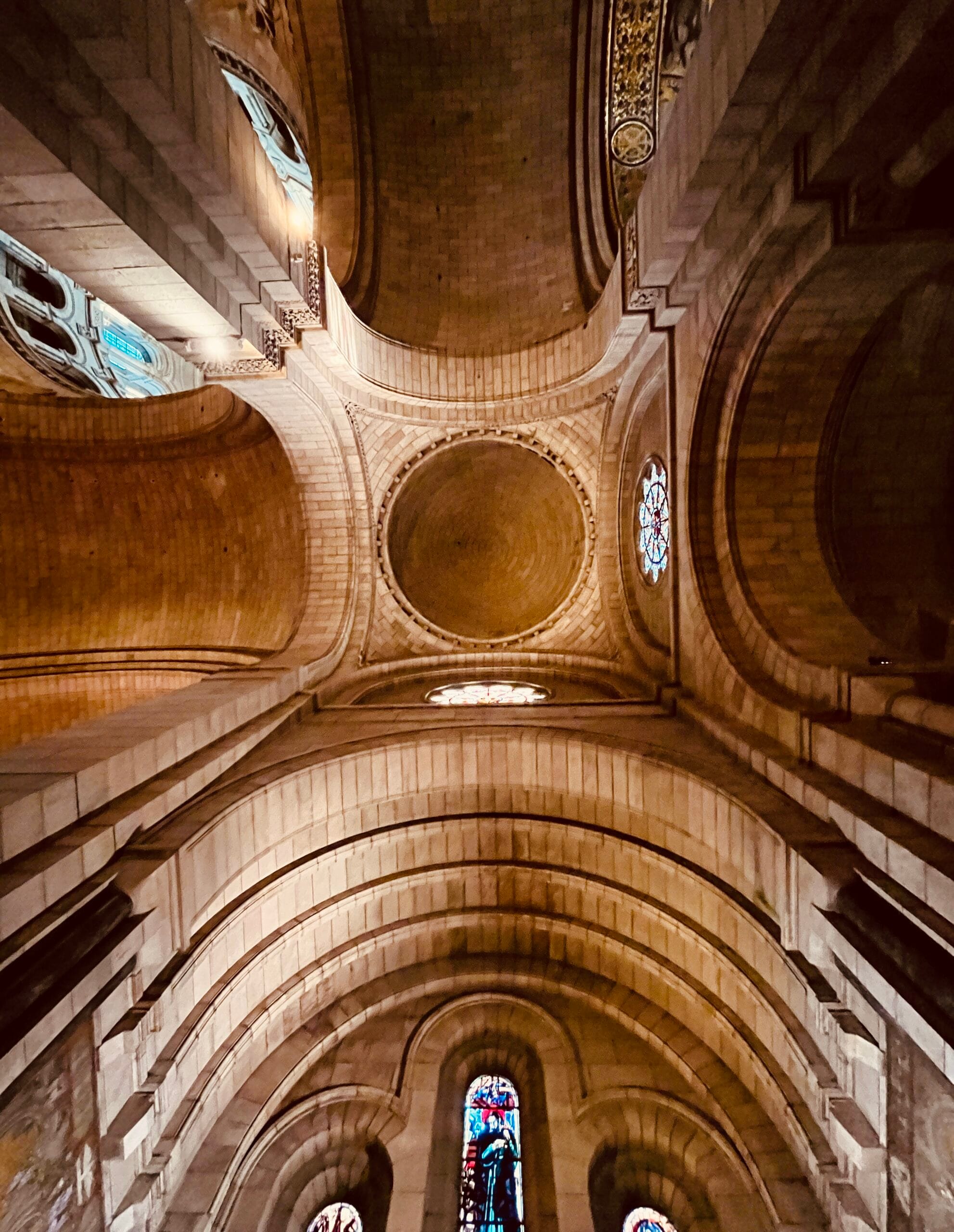
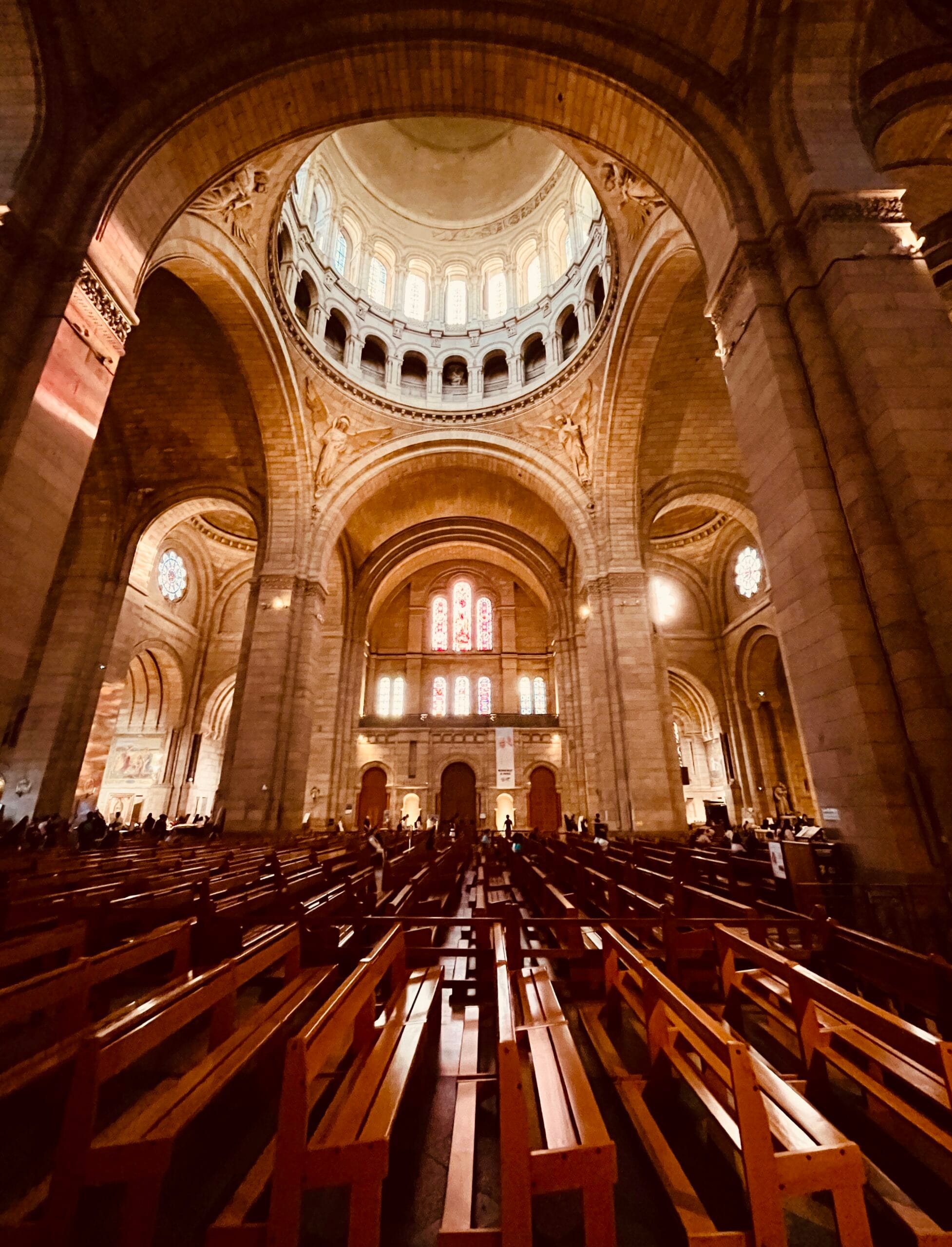
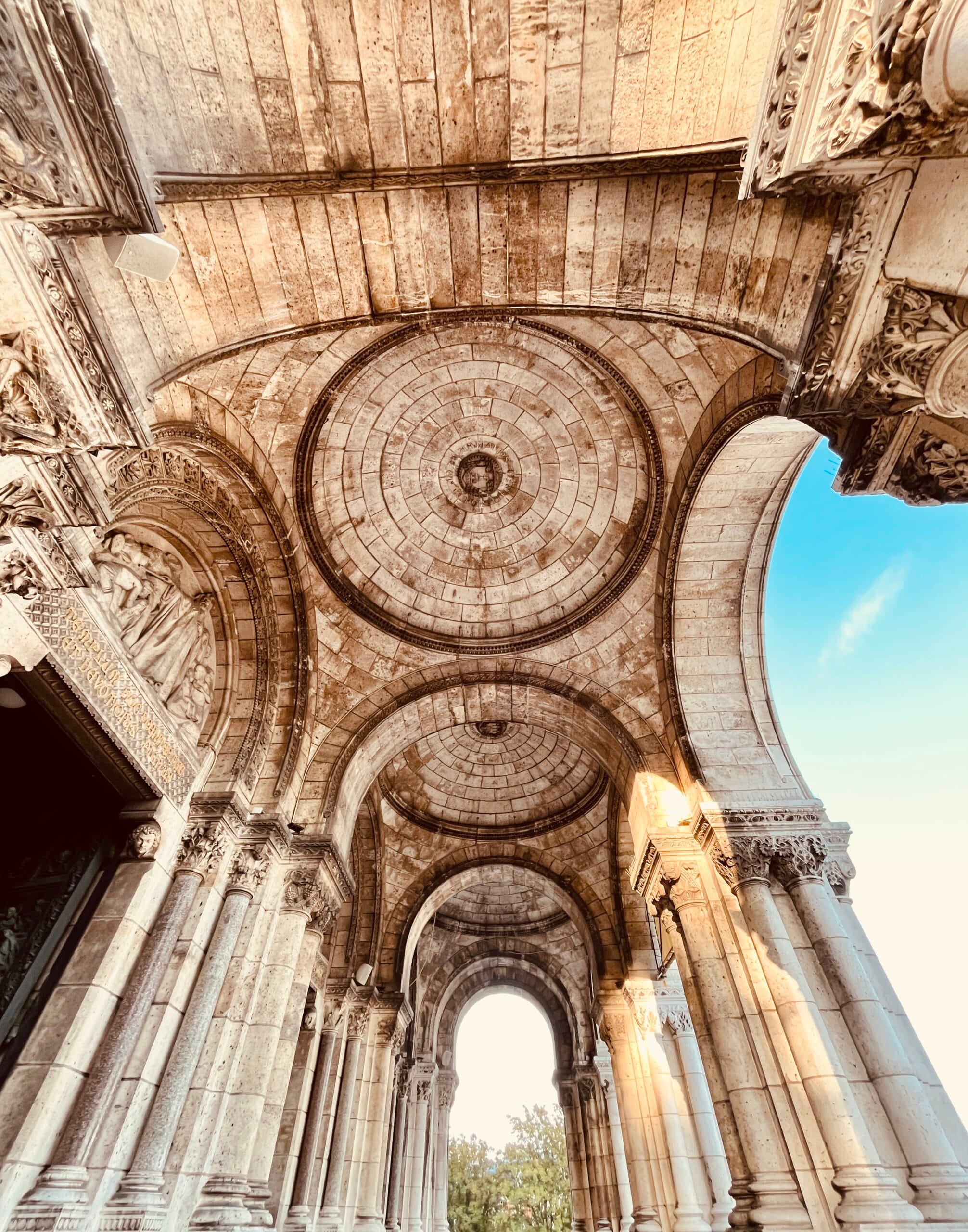
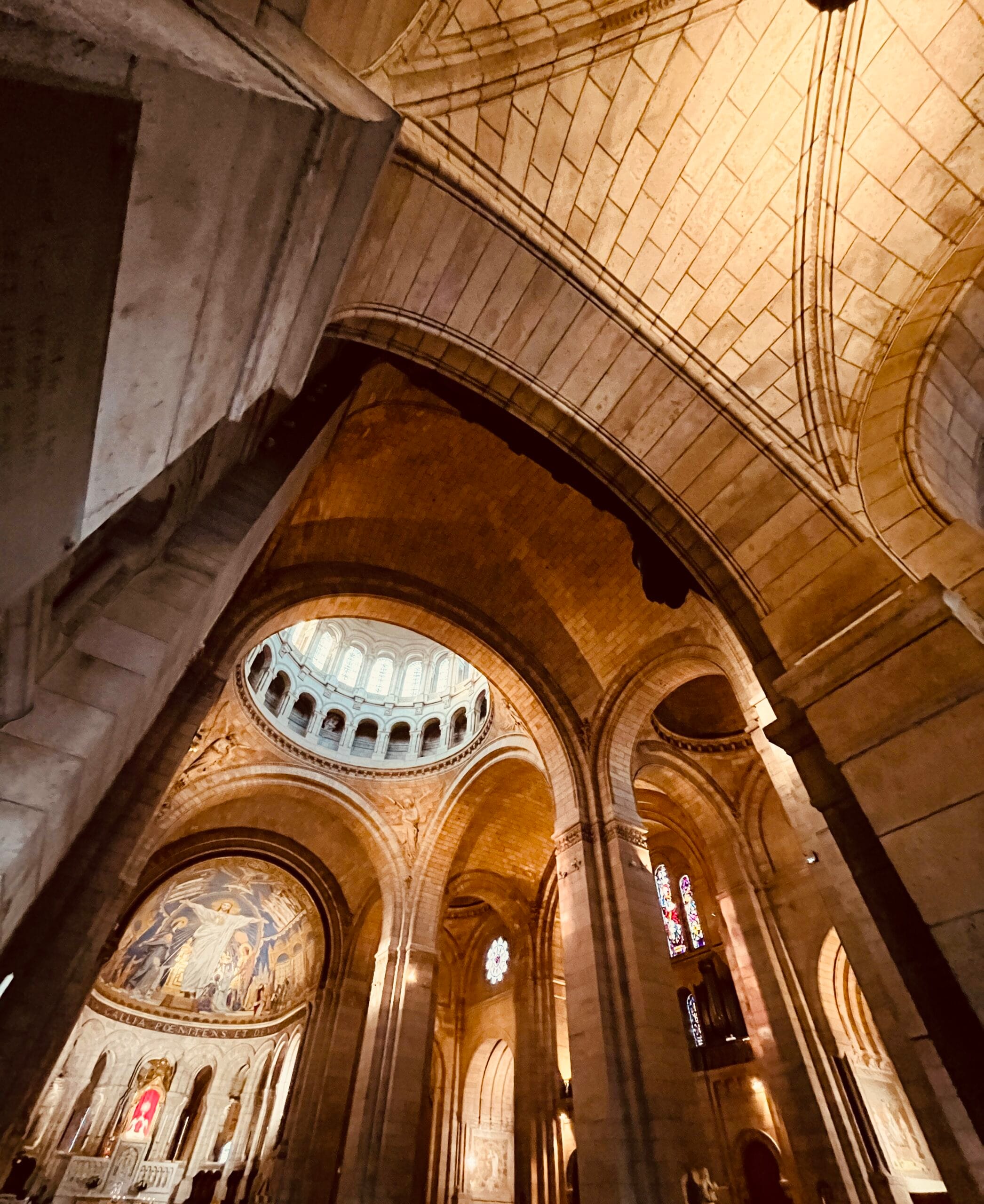
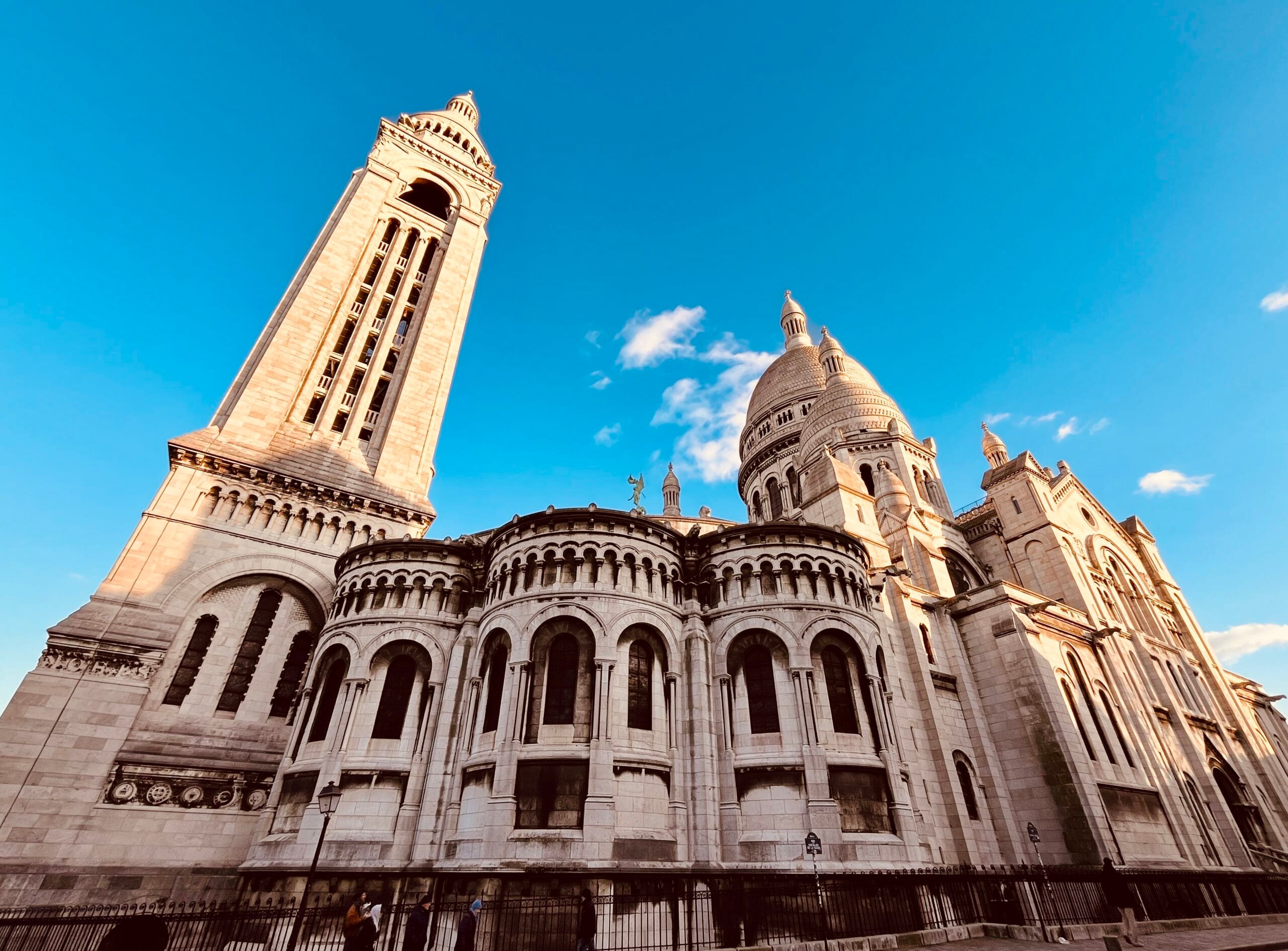
Paul Abadie won the 1874 competition and gave the basilica its Romano-Byzantine style and its Greek-cross plan, with a north-south axis so that it opens onto Paris. When Abadie died in 1884, Lucien Magne took over the works and designed the campanile, 84 metres high. Outside, the basilica is a group of white domes rather than a Gothic spire. Inside, the style shows in the round arches, the massive columns and the central dome.
Why Is Sacré-Coeur So White?
The basilica is built of Château-Landon stone, quarried in Seine-et-Marne. Rain washes it clean, which keeps the building white.
What Is the Choir Mosaic?
The choir mosaic was inaugurated in 1923. It is the work of Olivier Merson, H. M. Magne and R. Martin and covers 475 square metres, among the largest mosaics in the world. It shows the risen Christ in white, arms open, with a golden heart. Details are in our guide to the inside of the basilica.
What Is La Savoyarde?
La Savoyarde is the bell of the campanile and the heaviest bell in France, at 19 tonnes. The four dioceses of Savoie offered it, the Paccard foundry in Annecy cast it, and it reached Paris in October 1895. Cardinal Richard blessed it on 21 November 1895, and it was hoisted into the campanile in March 1907. Its full name is Françoise Marguerite du Sacré-Cœur de Jésus.
The basilica’s history page notes that the date engraved on the bell reads 1890, although it was cast in 1891. Since 1969, four other bells from the church of Saint-Roch have hung above it.
What Else Happened at Sacré-Coeur?
Since 1 August 1885, prayer before the Blessed Sacrament has continued day and night in the basilica. On 6 November 1887 the young Thérèse Martin, later Saint Thérèse of Lisieux, consecrated herself to the Sacred Heart in the crypt. On 6 June 1889 Charles de Foucauld did the same in the basilica, then still under construction.
How Can You See Sacré-Coeur in Person?
Entry to the basilica is free, and a guided visit adds the history behind what you see. Another piece of the hill’s history is the Clos Montmartre vineyard, a short walk away.
Montmartre Walking Tours
Walking tours place the basilica in the story of the hill around it, for the history of Montmartre and not only of Sacré-Coeur.
Browse walking tours on GetYourGuideAffiliate link. Prices and availability are shown on GetYourGuide.
Montmartre Night Tours
The basilica stays open until 10:30pm. Night tours cover the hill after dark.
Browse night tours on ViatorAffiliate link. Prices and availability are shown on Viator.
💡 Sacré-Coeur Facts FAQ
Sacré-Coeur is French for Sacred Heart. The basilica is dedicated to the Sacred Heart of Jesus.
Paul Abadie won the architects’ competition in 1874. After his death in 1884, Lucien Magne took over the works and designed the campanile.
The first stone was laid in 1875, the basilica was inaugurated on 5 June 1891 without its great dome, and it was consecrated on 16 October 1919.
According to the basilica’s own history pages, no. The national vow was first formulated on 8 December 1870, before the Commune, which ran from 18 March to 28 May 1871.
It is built of Château-Landon stone, which rain washes clean.
La Savoyarde weighs 19 tonnes, making it the heaviest bell in France.
Related guides
Last updated: 20 October 2026.
Sources: basilica website pages on the national vow, the stages of construction, the choir mosaic and La Savoyarde.