
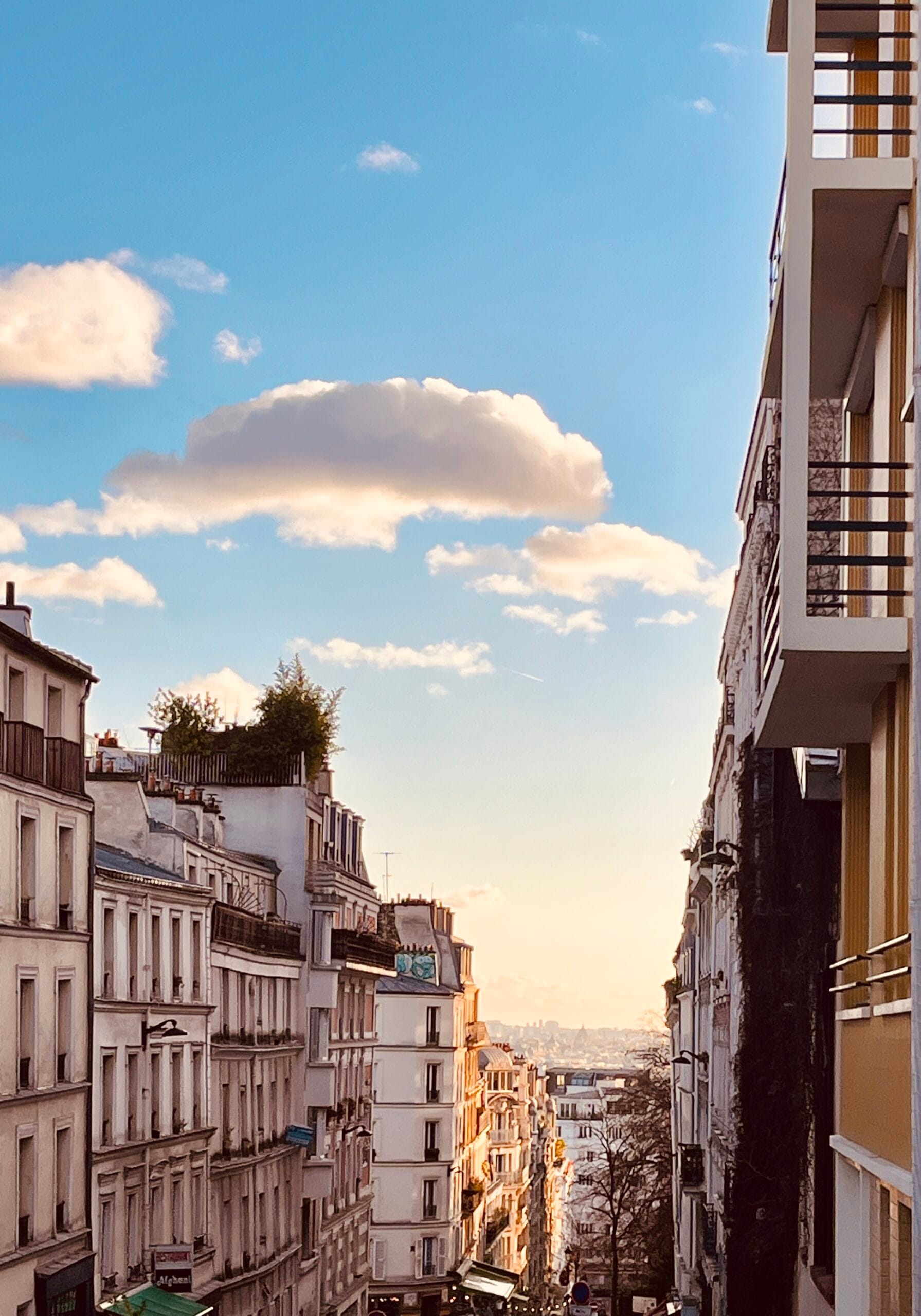

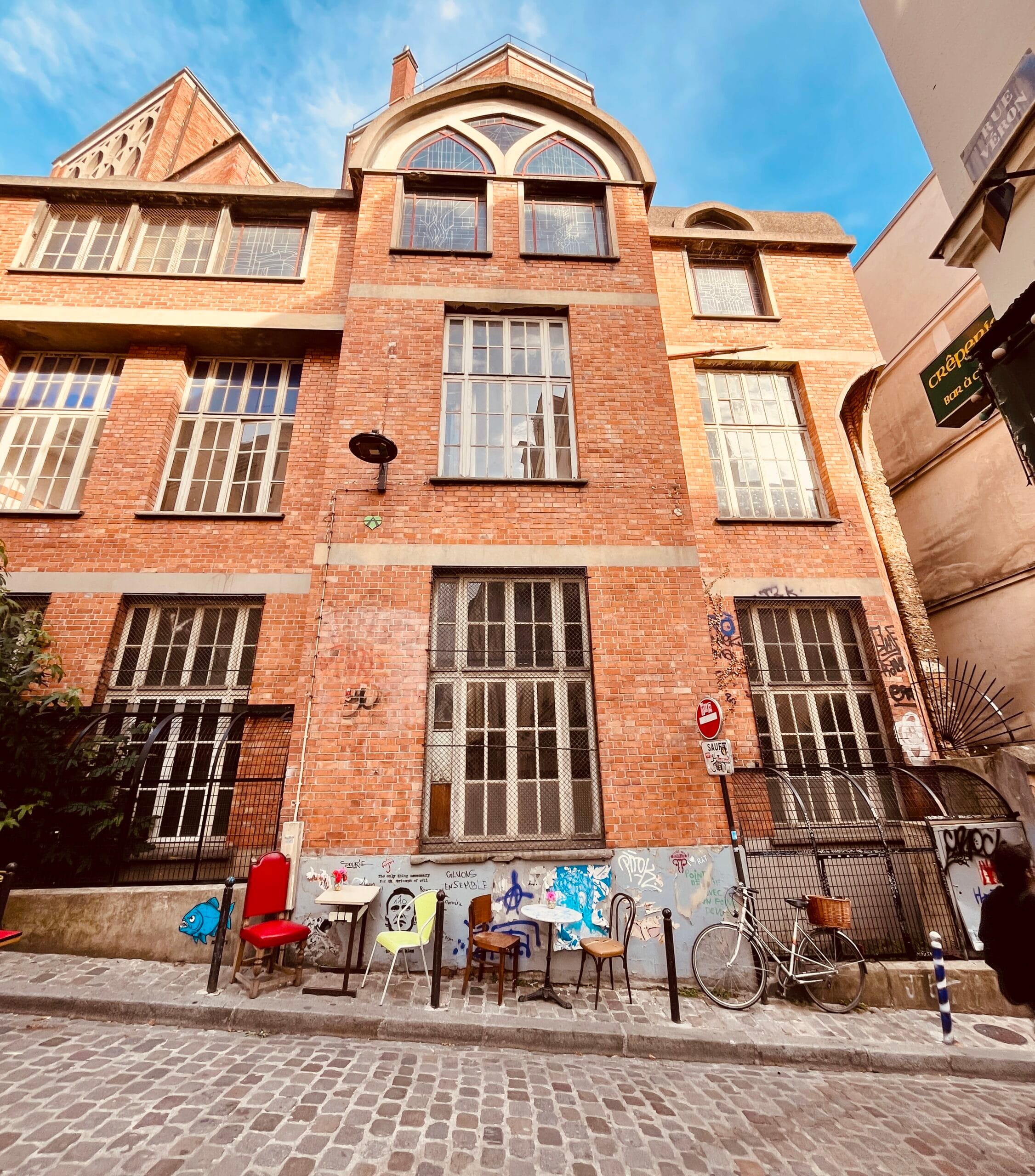
Good Montmartre photos come down to timing: 6am, when the cobblestones are still wet; sunset, when the light turns the white stone gold; and late at night, when the crowds have gone and the hill is quiet. This guide lists the spots, the best time for each one, and the angles that work. For the rest of the hill, see our complete Montmartre guide. Photographing sunrise or the blue hour is easier if you stay on the hill.
The Iconic Spots (Worth Every Cliché)
1. Sacré-Cœur Steps — Paris at Your Feet
The steps of the Sacré-Cœur are one of the most photographed viewpoints in Paris for good reason — the south-facing panorama takes in the entire city, from the Eiffel Tower to the distant suburbs. The trick is arriving before 8am. By 10am, the steps are packed with selfie sticks and tour groups. At dawn, you will often be alone with the pigeons and a handful of serious photographers who know exactly what they came for.
📍 Best angle: Sit midway up the central staircase and shoot upward to frame the entire basilica. Turn 180° for the Paris skyline shot. For the classic wide view of the steps with the basilica behind, position yourself at Square Louise Michel at the very base of the hill.
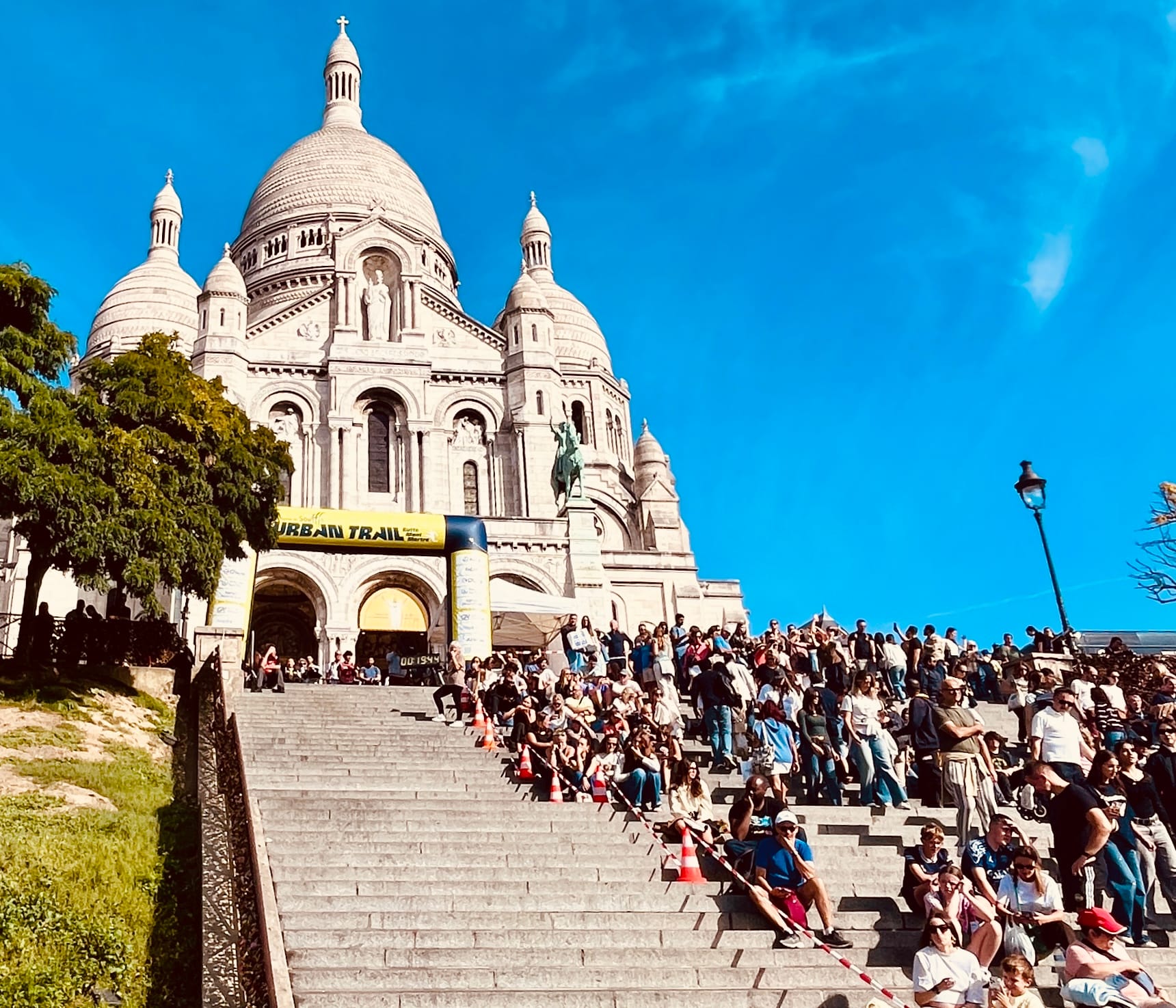
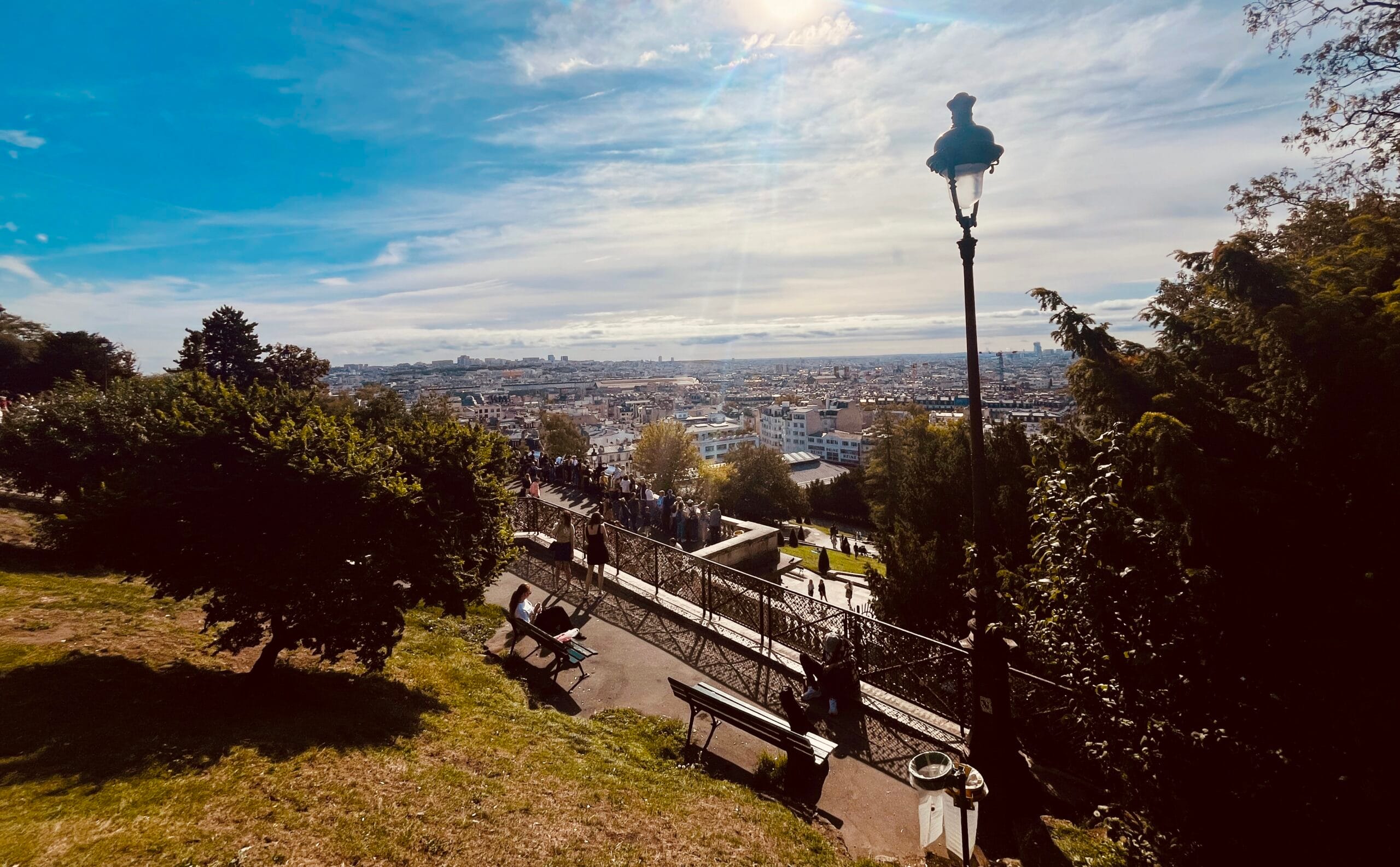
Left: the crowd on the Sacré-Cœur steps on a busy day. Right: the panoramic view over Paris from the Montmartre hill. © montmartre-in-paris.com
2. Rue de l’Abreuvoir — Montmartre’s Most Beautiful Street
This narrow cobblestone lane gently slopes downhill, lined with 18th-century stone houses and iron lamp posts. At the far end stands La Maison Rose — the famous pink café that has been serving coffee for over a century. What makes this street special for photography is the natural leading line created by the buildings on both sides, drawing the eye straight to the café facade.
📍 Best angle: Stand at the top of the street (near Rue des Saules) and shoot downhill toward La Maison Rose. In spring and summer, green ivy covers the surrounding walls — extraordinary colour contrast against the pink facade. Best light: early morning, shooting east.
3. Place du Tertre — Artists’ Square at Dawn
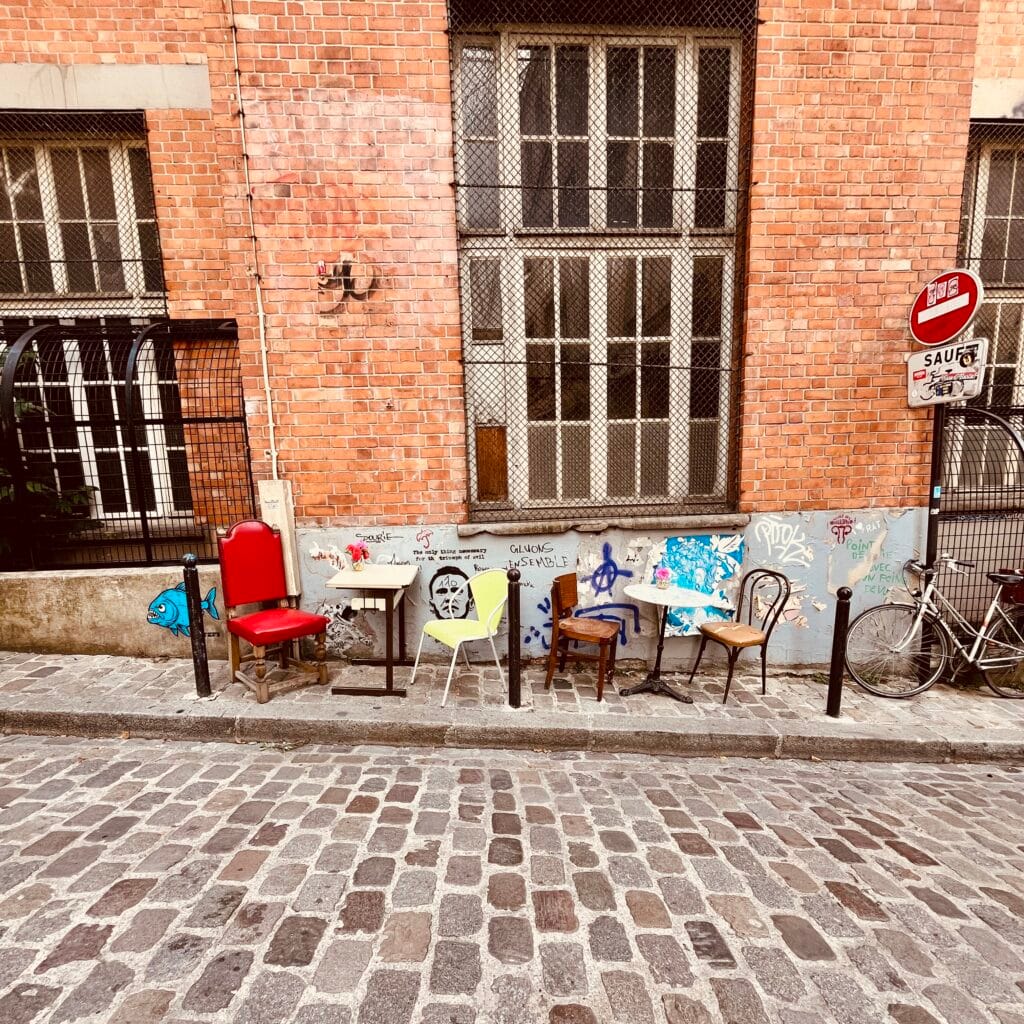
By day, Place du Tertre is wall-to-wall tourist caricature artists. By 7am, before the easels go up, it is a different square entirely — quiet, almost village-like, with the warm stone of the surrounding buildings catching the first light. The square itself is not the shot; it is the alleyways leading off it, the old gas-style lamp posts, and the shuttered café fronts.
📍 Best angle: The narrow passage at the northeast corner of the square, looking back toward Sacré-Cœur’s dome appearing above the rooflines.
4. Moulin de la Galette — Paris’s Last Working Windmill
Two windmills survive on the Montmartre hill. The most photogenic is the Moulin Radet on Rue Lepic — white sails against a blue sky, or silhouetted at dusk. Renoir painted dances here in 1876. Position yourself on the opposite pavement to capture the full mill against the sky, and wait for the golden hour light to hit the white sails from the west.
📍 Address: 83 Rue Lepic, 75018 Paris. Best light: late afternoon westward, 5–7pm in summer.
Hidden Gems — The Spots Most Visitors Walk Past
5. Place Dalida — A Perfect View Nobody Queues For
This small square on Rue de l’Abreuvoir is named after the legendary Franco-Italian singer Dalida, who lived and died in Montmartre. A bronze bust of her stands in the centre. But the real photography discovery here is turning your back to the bust and looking south — you get a clear, unobstructed view of the Sacré-Cœur dome framed between the old stone houses. Almost no tourists find this angle.
📍 When to go: Any time of day. Early morning for empty streets, late afternoon for warm light on the basilica.
6. Rue Saint-Rustique — The Oldest Street on the Hill
Rue Saint-Rustique has barely changed since the 18th century. It is a short, curved street with a slight uphill grade — and the combination of worn cobblestones, low stone walls, and the way the light filters through at the bend makes it one of the most cinematic streets in Paris. Very few people know it exists.
📍 Best angle: Stand at the lower end and shoot uphill toward the curve. The Consulat restaurant appears in the background. Perfect at any light, extraordinary in rain.
7. Clos Montmartre Vineyard — Paris’s Secret Vineyard
Planted in 1933 to save the land from developers, the Clos Montmartre is the last active vineyard inside the Paris city walls. It produces a few hundred bottles a year. The iron gate on Rue des Saules gives a perfect framed view of the vine rows descending the hillside with the city beyond. In October, during the Fête des Vendanges harvest festival, the vineyard is at its most photogenic — golden leaves and the scent of fermenting grapes in the air.
📍 Address: 18 Rue des Saules, 75018 Paris. Best months: October (harvest) and June (full green).
8. Lamarck-Caulaincourt Metro — The Most Photogenic Staircase in Paris
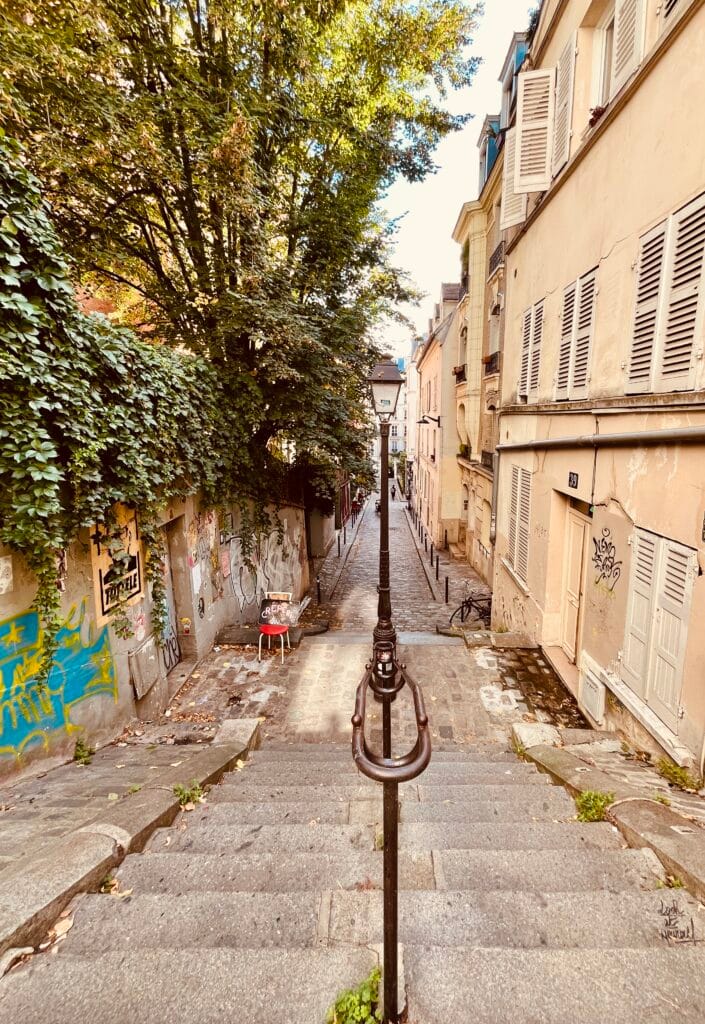
This métro station is 25 metres underground — and the two spiral staircases that wind up to street level are genuinely beautiful. The art nouveau ironwork, the green lamp posts, and the way the staircases curve around each other create a double-helix shot that stops people mid-scroll. Rare for a Paris metro shot: no platform crowds.
📍 Best angle: Stand at the base of the exterior double staircase and shoot upward. The vintage MÉTROPOLITAIN sign appears at the top. Best in morning light when the sun catches the ironwork.
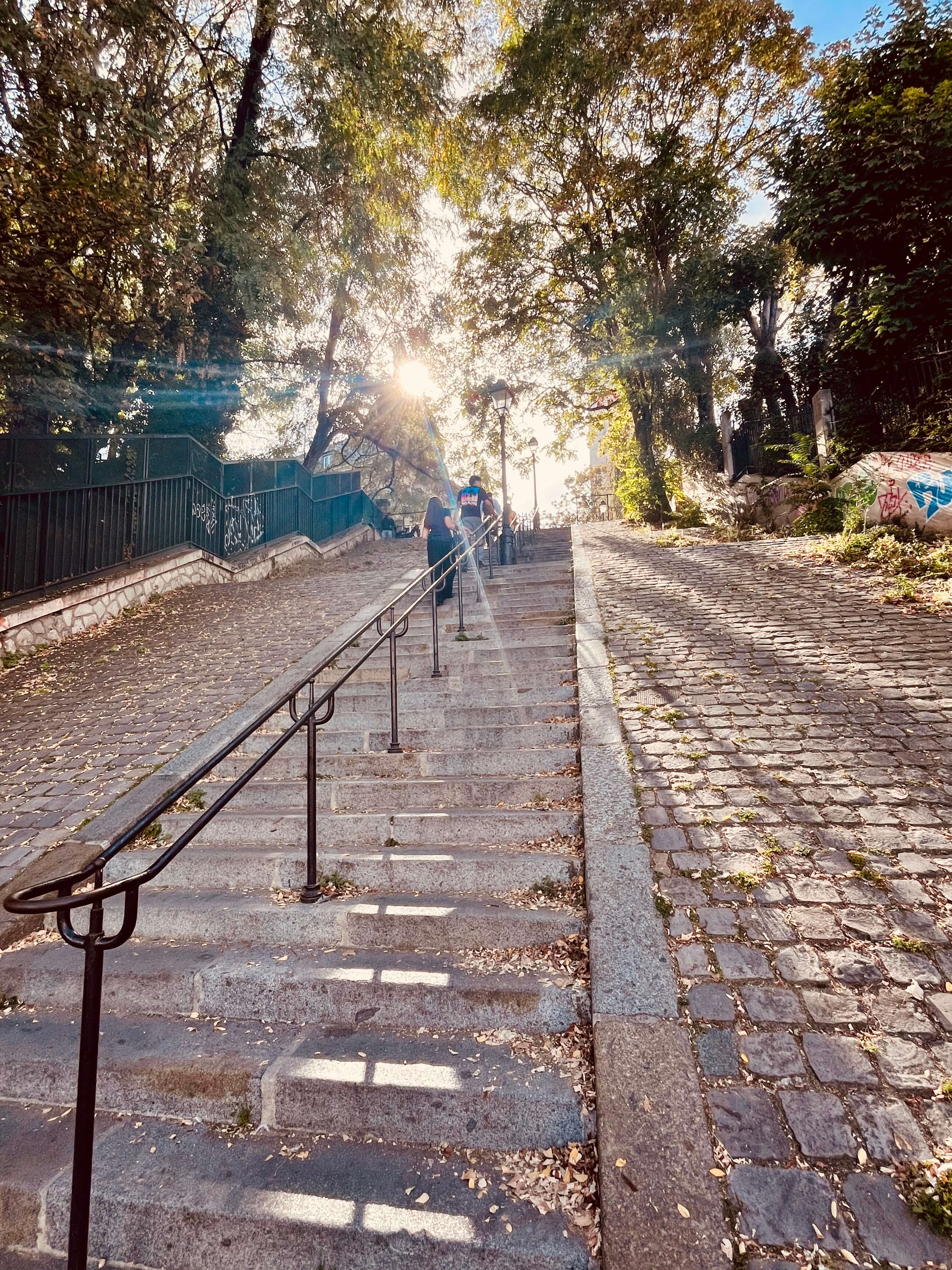
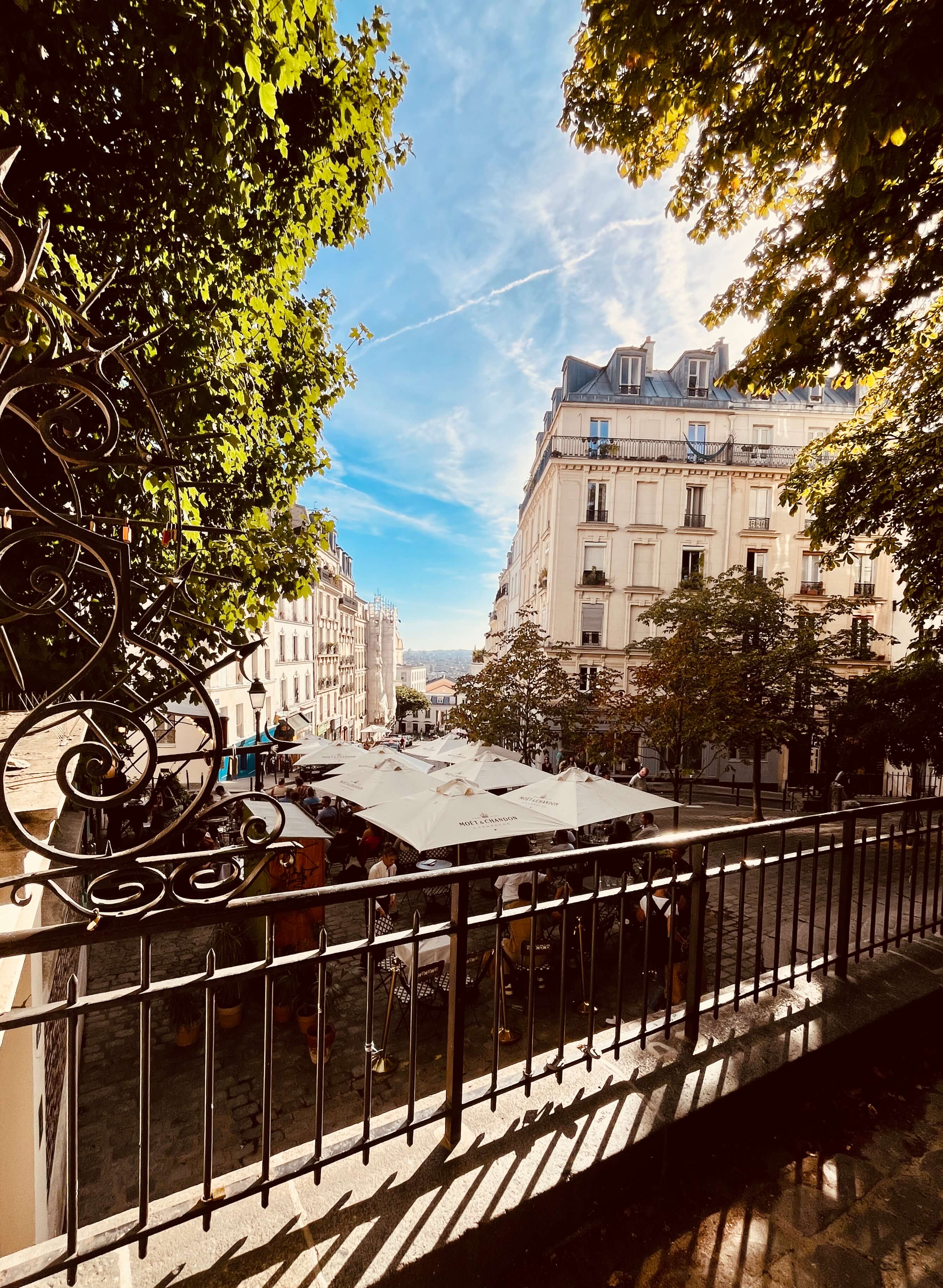
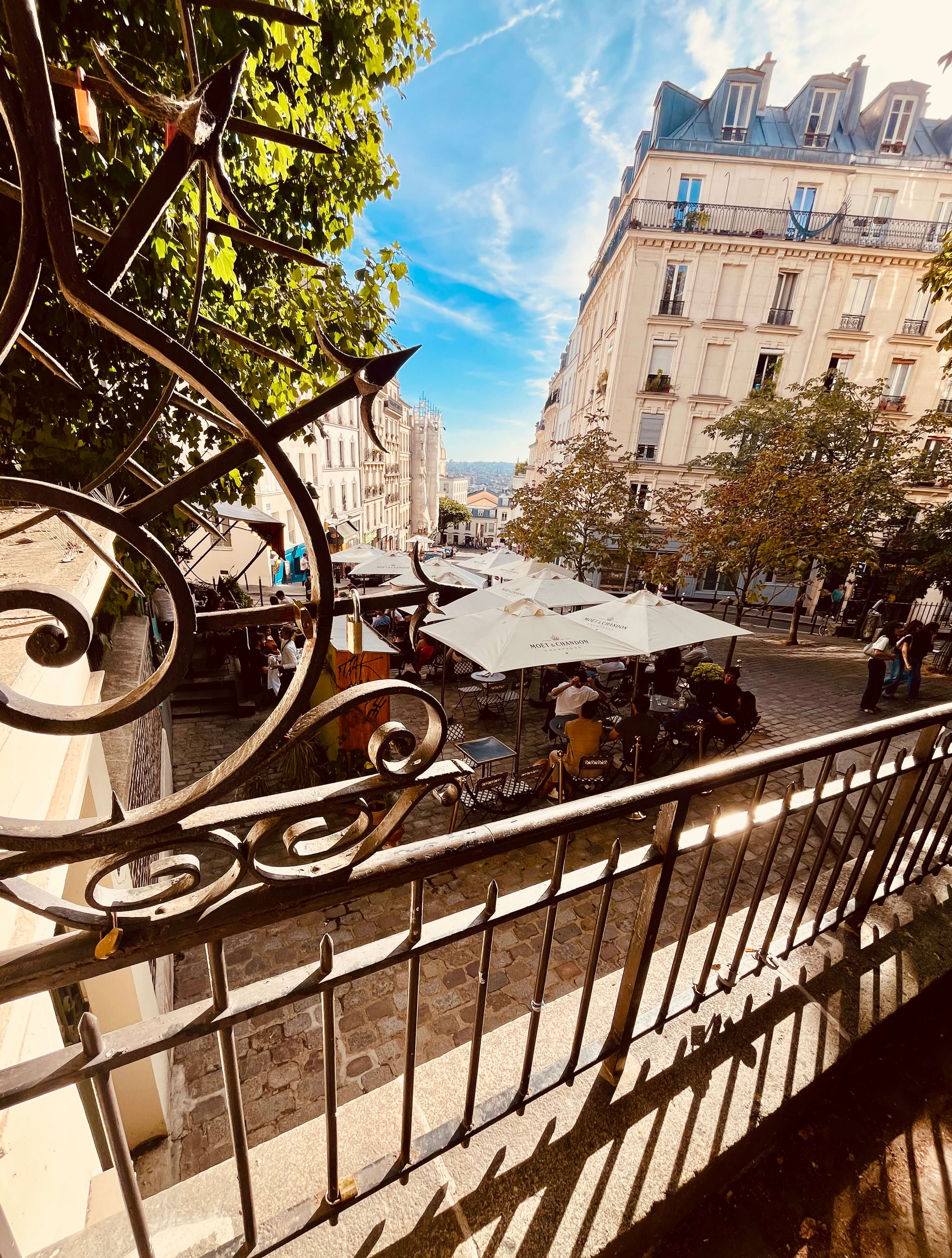
Rue Ravignan steps and iron balconies — some of the most photogenic architecture in Montmartre © montmartre-in-paris.com
9. Le Consulat Café — Classic Paris in One Frame
Le Consulat has a red awning, painted signs, and a facade that has barely changed since Picasso and Renoir drank here. It sits at the junction of two narrow streets, which means you can photograph it from multiple angles without shooting into the sun. Come on a weekday morning to shoot the closed terrace — the hanging lanterns and the painted windows work best without the lunchtime crowds.
📍 Address: 18 Rue Norvins, 75018 Paris. Best light: morning, shooting southeast.
10. Square Suzanne Buisson — Montmartre’s Secret Garden
Hidden behind stone walls near Place Constantin Pecqueur, this small public garden is one of the quietest corners of the 18th. A statue of Saint Denis stands at its centre — the bishop who, legend has it, picked up his severed head and carried it north after his martyrdom. Dense climbing plants, old benches, dappled light through lime trees. It photographs like a corner of the countryside that somehow ended up inside Paris.
📍 When to go: Midday in summer — the dappled light through the canopy creates the best texture shots. Almost always empty.
Street Art and Pigalle — The Other Side of Montmartre
Most photography guides stop at the Sacré-Cœur and the windmill. Few mention what lies at the foot of the hill. The streets between Pigalle and the lower slopes of the butte have become one of the most concentrated open-air street art corridors in Paris — large-scale murals, stencil work, and paste-ups covering entire building facades. No admission, no queue, no closing time.
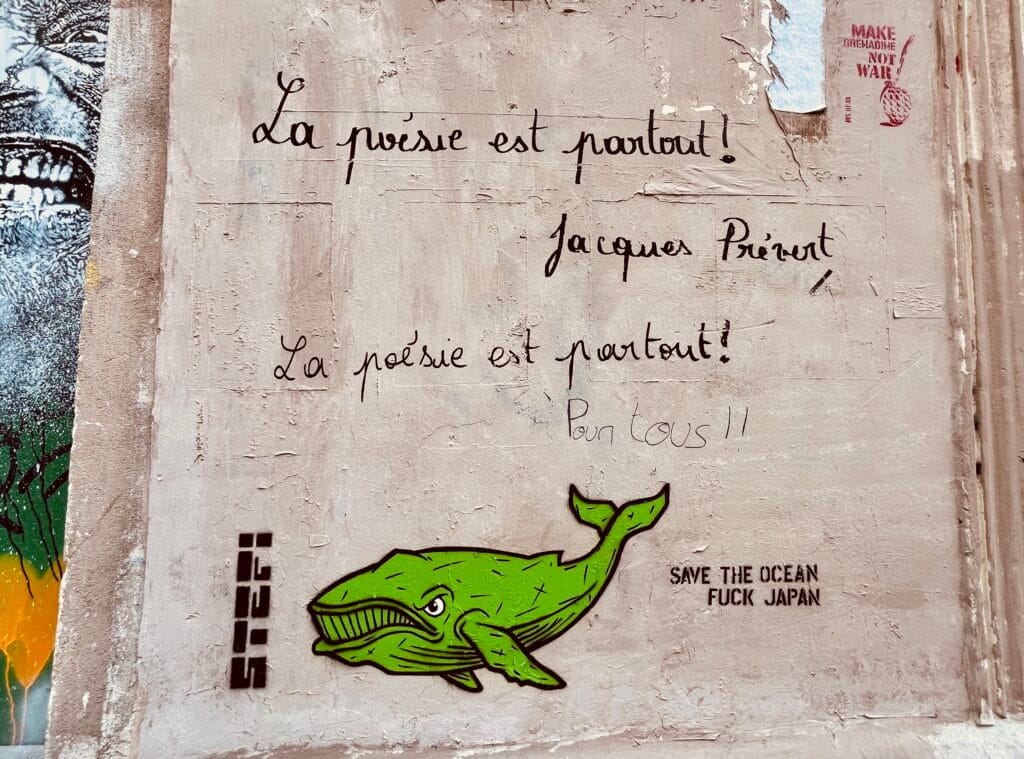
The density is highest along the streets connecting Pigalle to Abbesses — particularly around Boulevard de Clichy, the lower section of Rue Lepic, and the side streets off Place de Clichy. Walk slowly. Look up. The best pieces are not always the most visible.
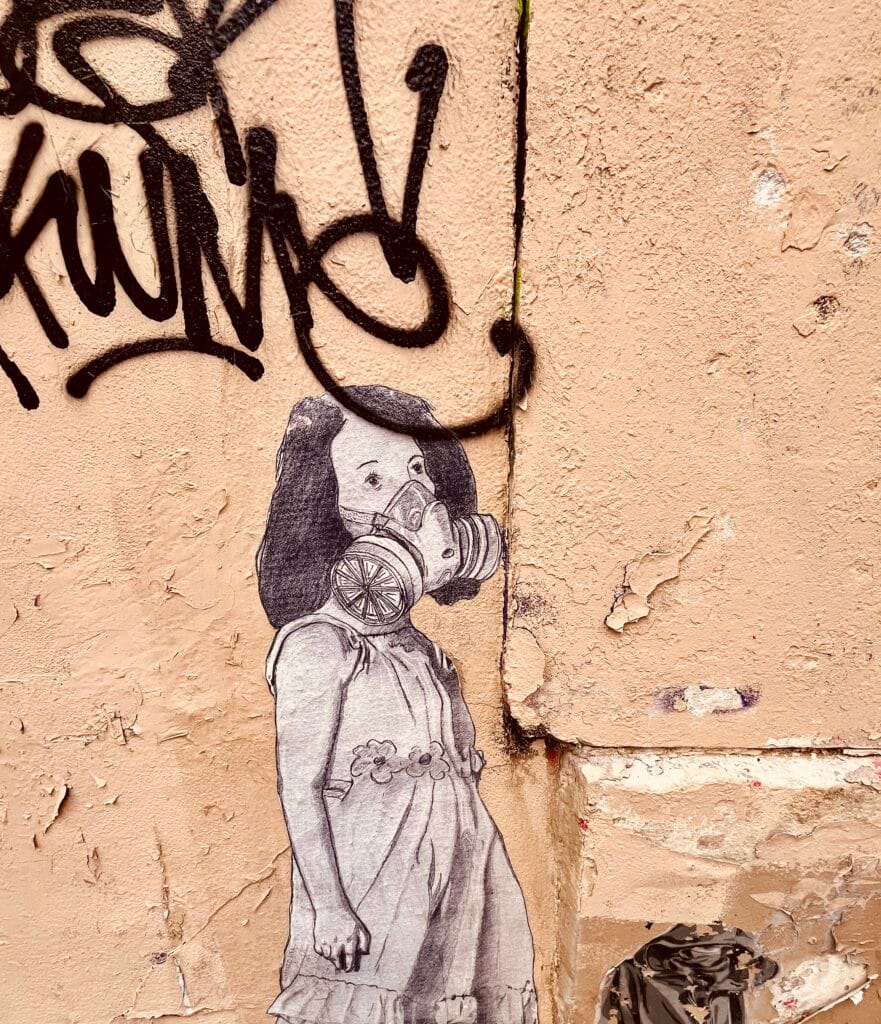
Unlike the curated street art districts of Belleville or the 13th arrondissement, Pigalle’s art scene feels genuinely unplanned — pieces appear overnight, stack on top of older work, and exist alongside the neighbourhood’s mix of independent record stores, music bars, and vintage shops. That contrast is exactly what makes it worth photographing.
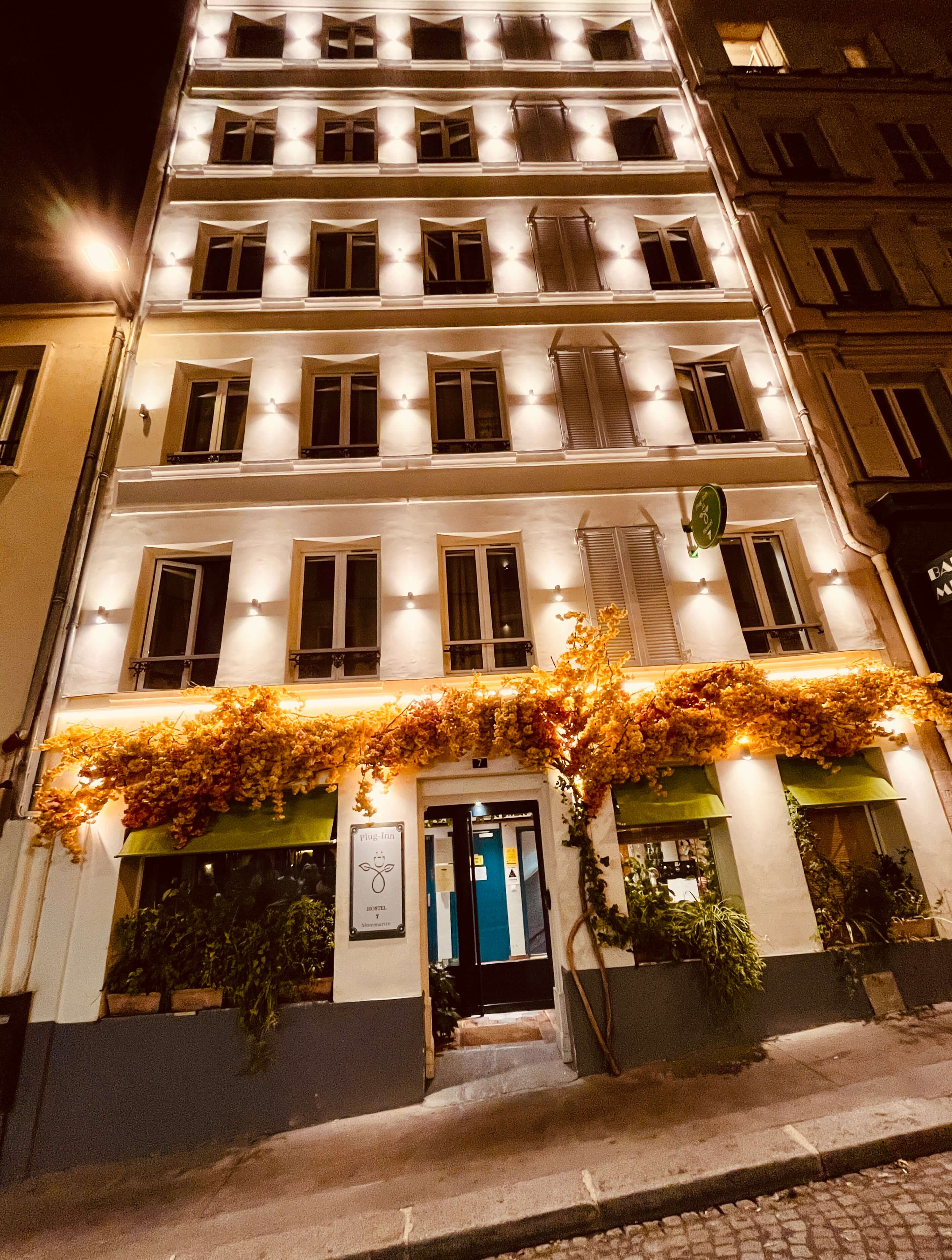
Rue des Abbesses at night — fairy lights on a Haussmann facade, a classic Montmartre winter shot. © montmartre-in-paris.com
📍 Best approach: Start at Pigalle métro (line 2 or 12) and walk uphill toward Abbesses. You cover the street art corridor on the way up, and arrive at the classic Montmartre spots with fresh eyes. The whole walk takes about 45 minutes at a relaxed pace.
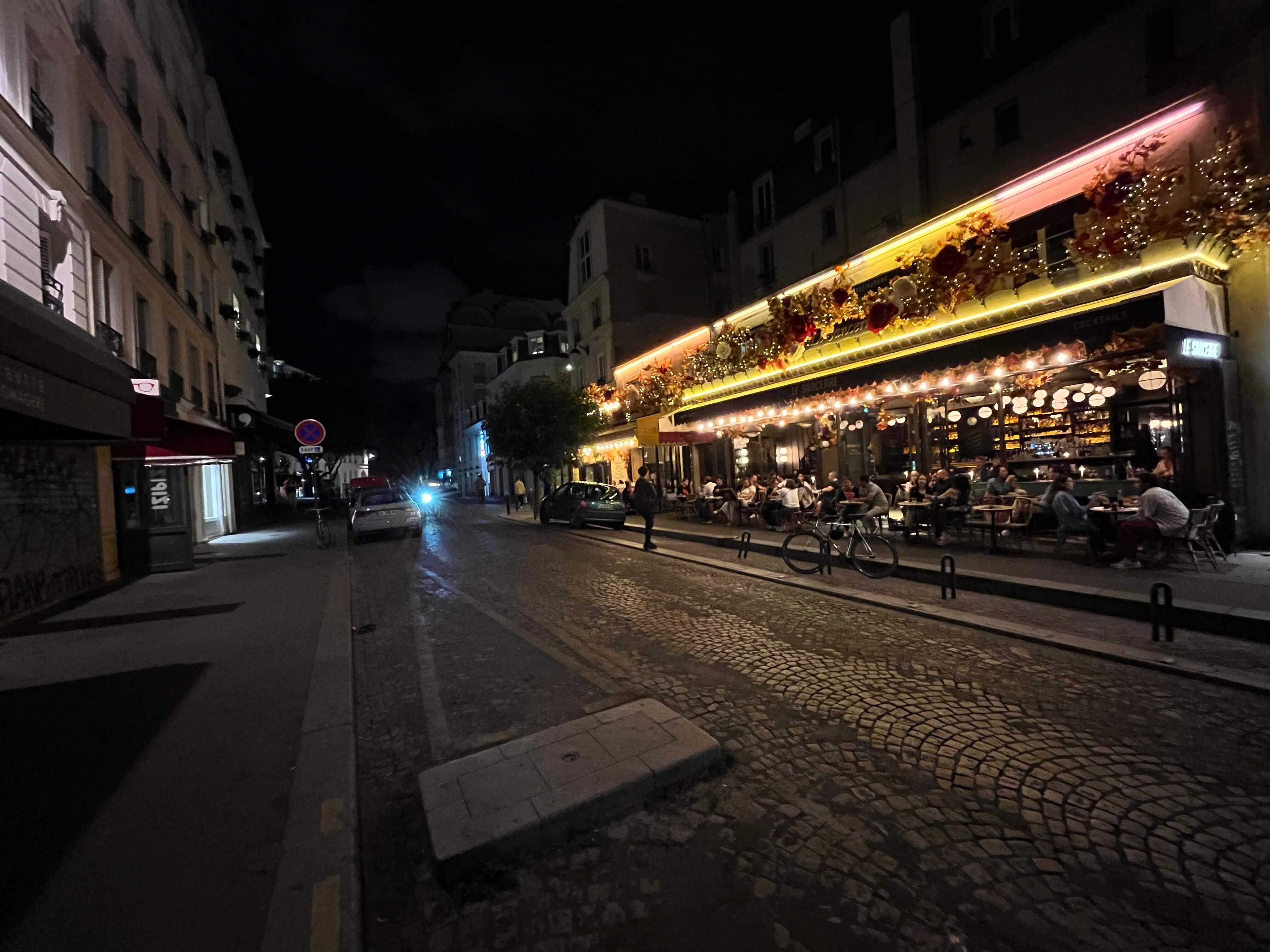
Rue des Abbesses at night, looking uphill — the mix of restaurant light and street lamp makes for a long-exposure shot worth setting up. © montmartre-in-paris.com
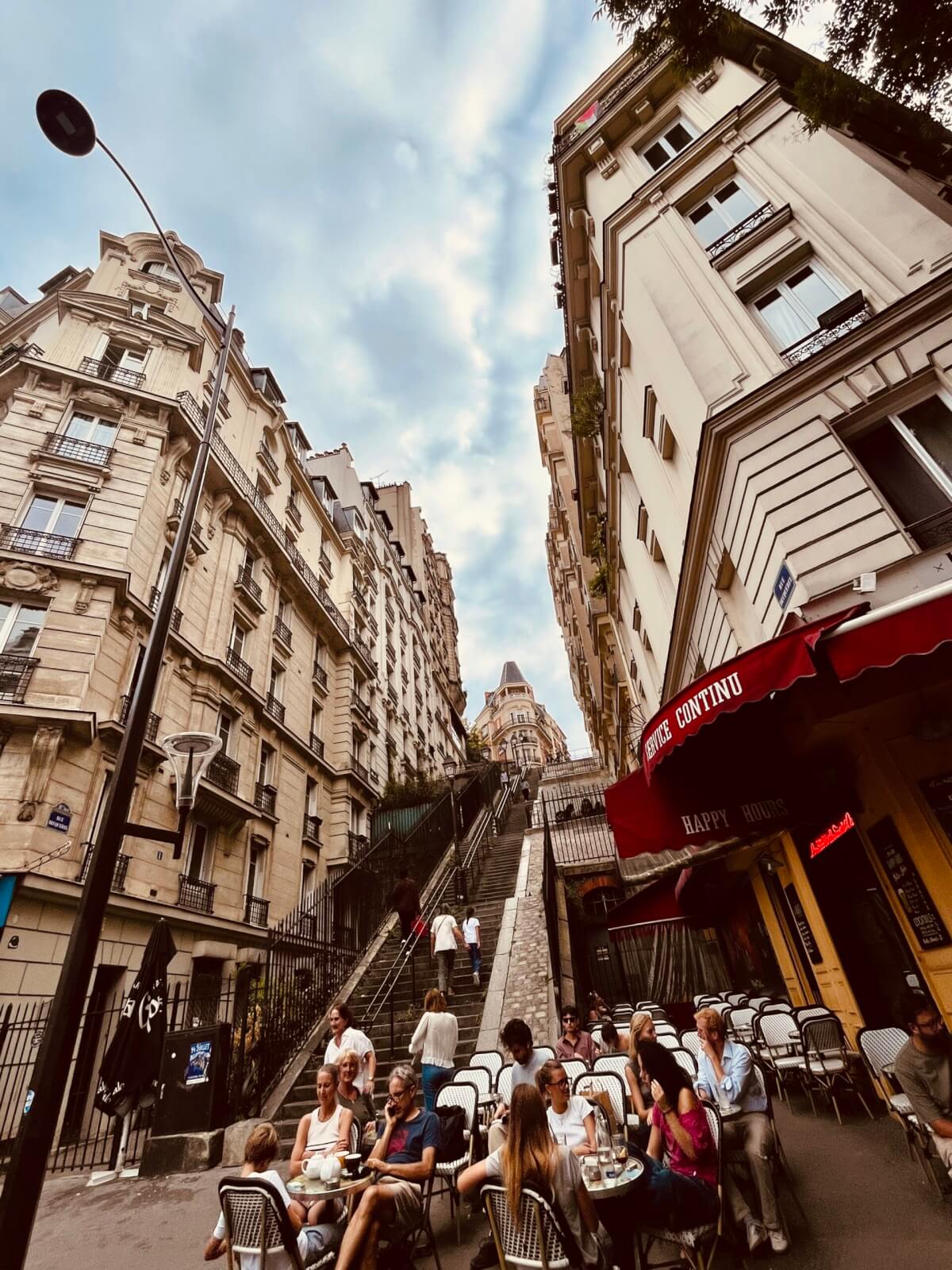
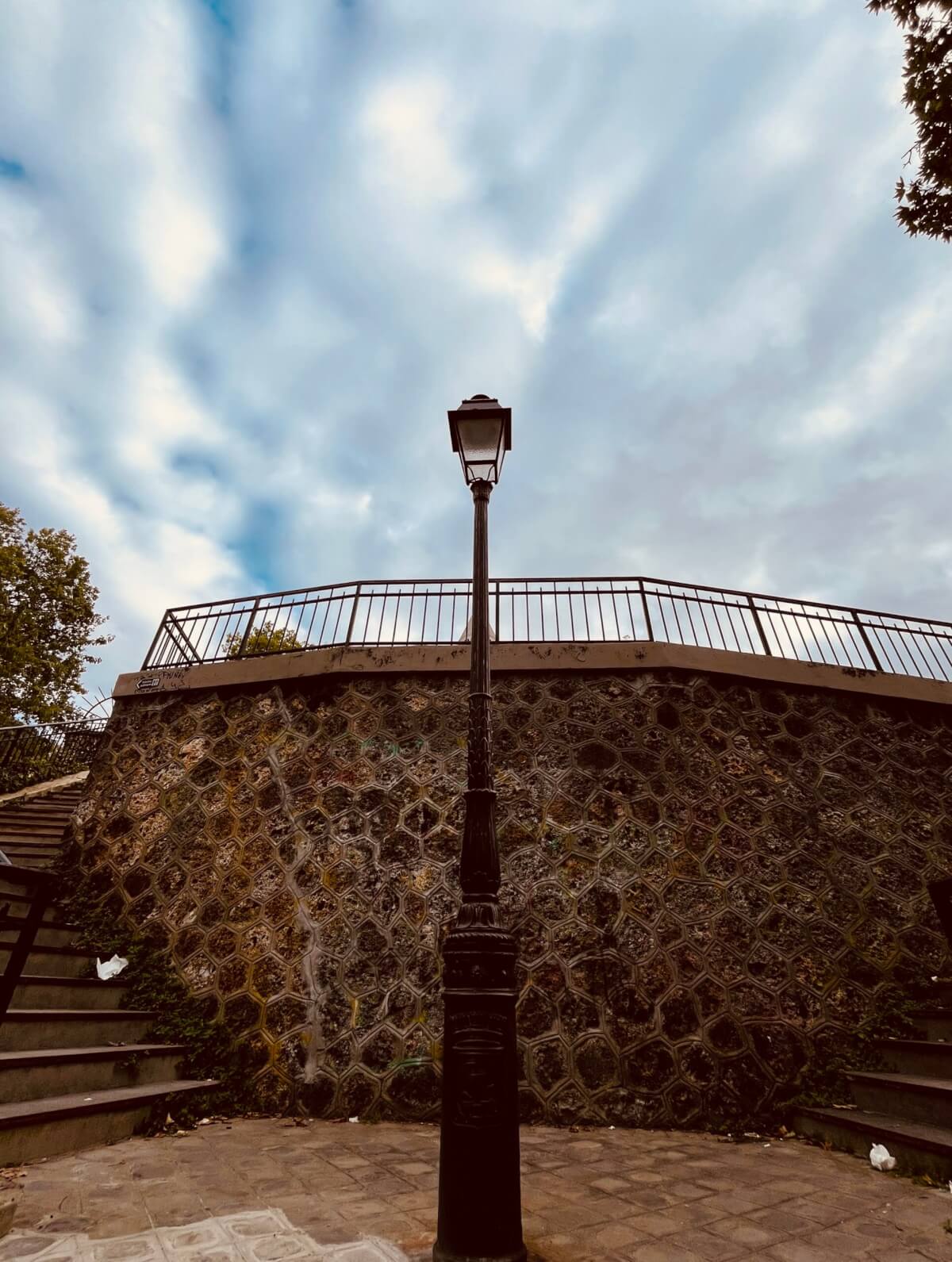
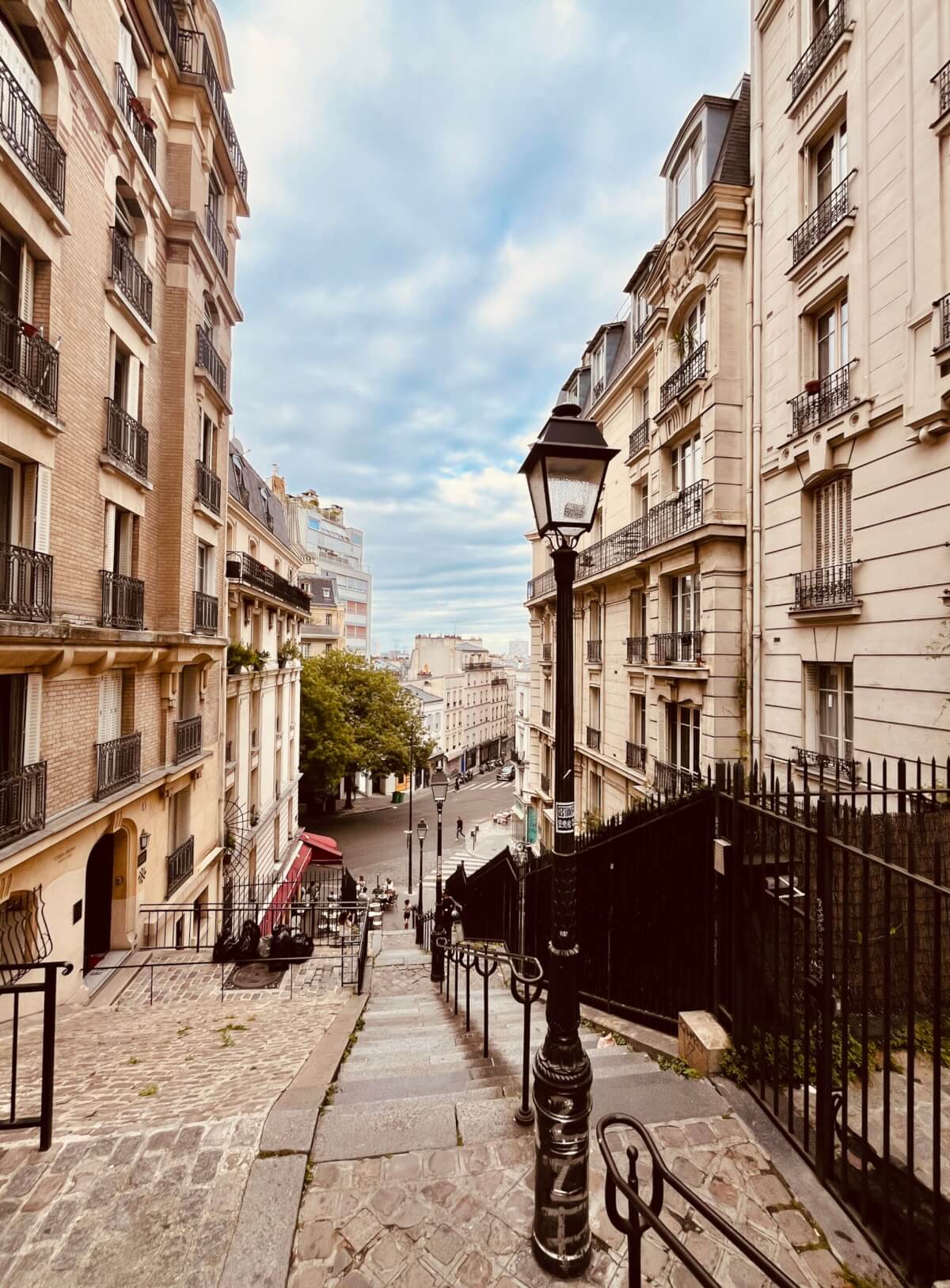
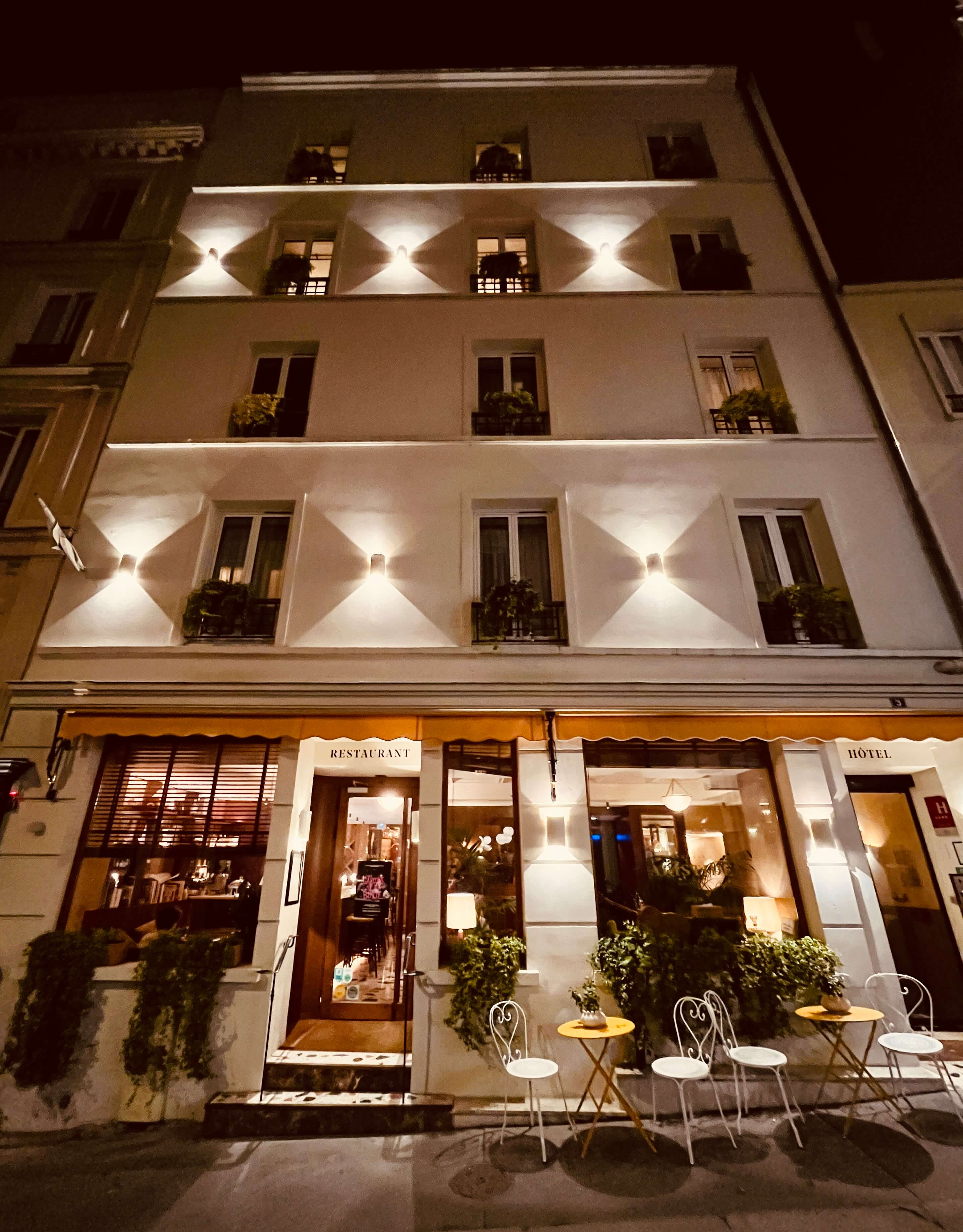
A white Haussmann facade on rue des Abbesses — clean lines, warm light. Best shot just after sunset. © montmartre-in-paris.com
Shooting Tips From a Local
- Golden hour is everything. Paris is a city of stone and light. The Sacré-Cœur steps at 7am in summer, or the Moulin de la Galette at 6pm — these are the shots that look like paintings rather than snapshots.
- Arrive early, always. Montmartre gets crowded fast. By 10am on any summer day, the main spots have queues of people waiting for selfie angles. Before 8am, you often have them to yourself.
- Walk downhill from Sacré-Cœur toward Abbesses. Most tourists walk up and back down the same way. Walk the other side — through Rue Lepic, past the windmill, down toward the Abbesses métro — and you find a completely different, calmer neighbourhood.
- Shoot in rain. Cobblestones reflect street lights and café glow in wet weather. Some of the most beautiful Montmartre photos exist because someone went out when everyone else stayed inside.
- Respect the residents. These are real streets where real people live. Keep noise down early in the morning, don’t block doorways for shots, and remember that the 18th arrondissement is a neighbourhood first and a photographic backdrop second.
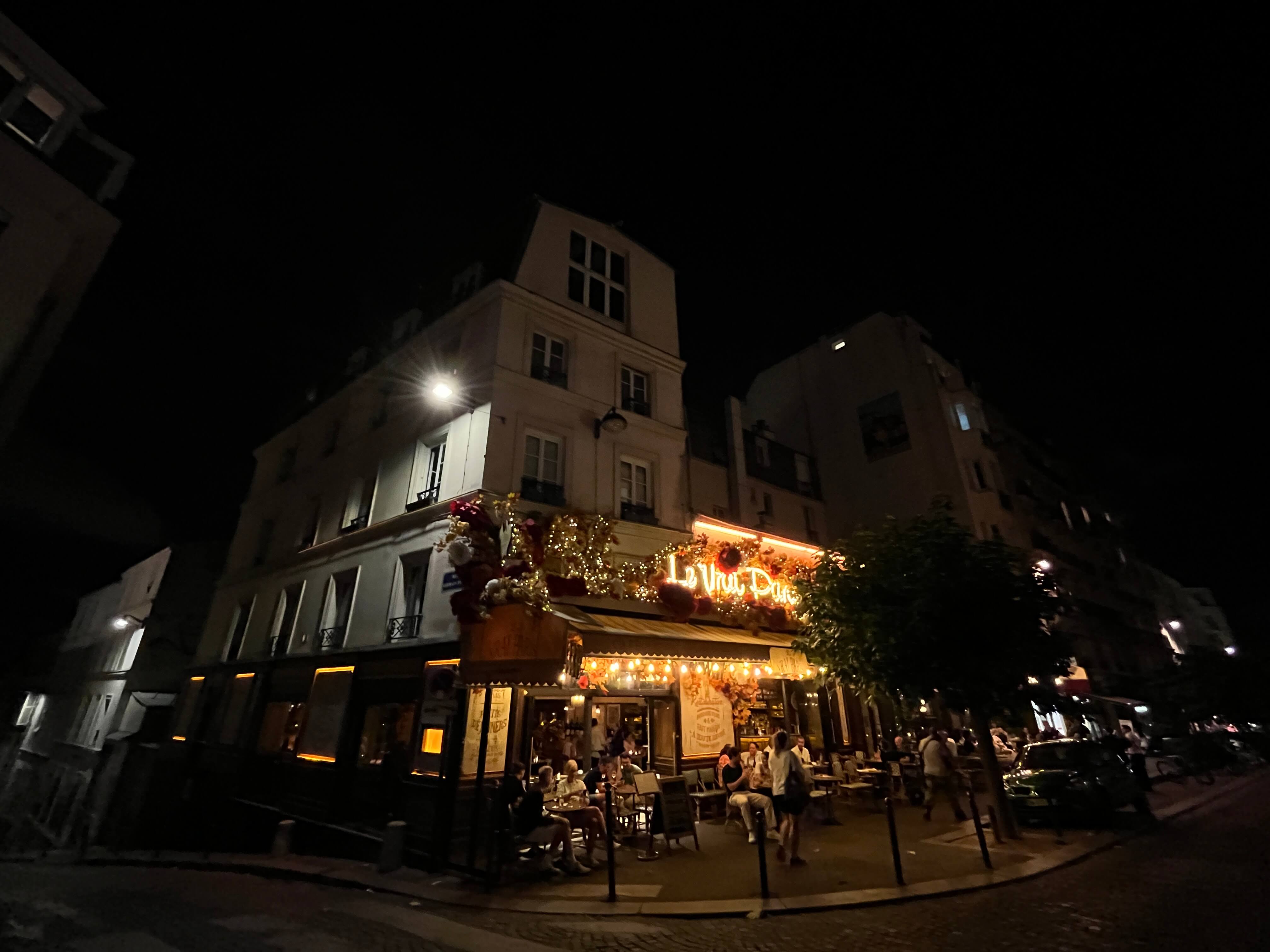
A corner intersection on rue des Abbesses — the overlapping light sources make this a reliable nighttime composition. © montmartre-in-paris.com
Book a Guided Photography Experience
Want a professional photographer to show you the best angles and light? Several excellent guided photography walks operate in Montmartre — small groups, local guides, and routes that cover both the iconic spots and the hidden streets most tourists never find. To compare all formats, see our guide to the best Montmartre tours.
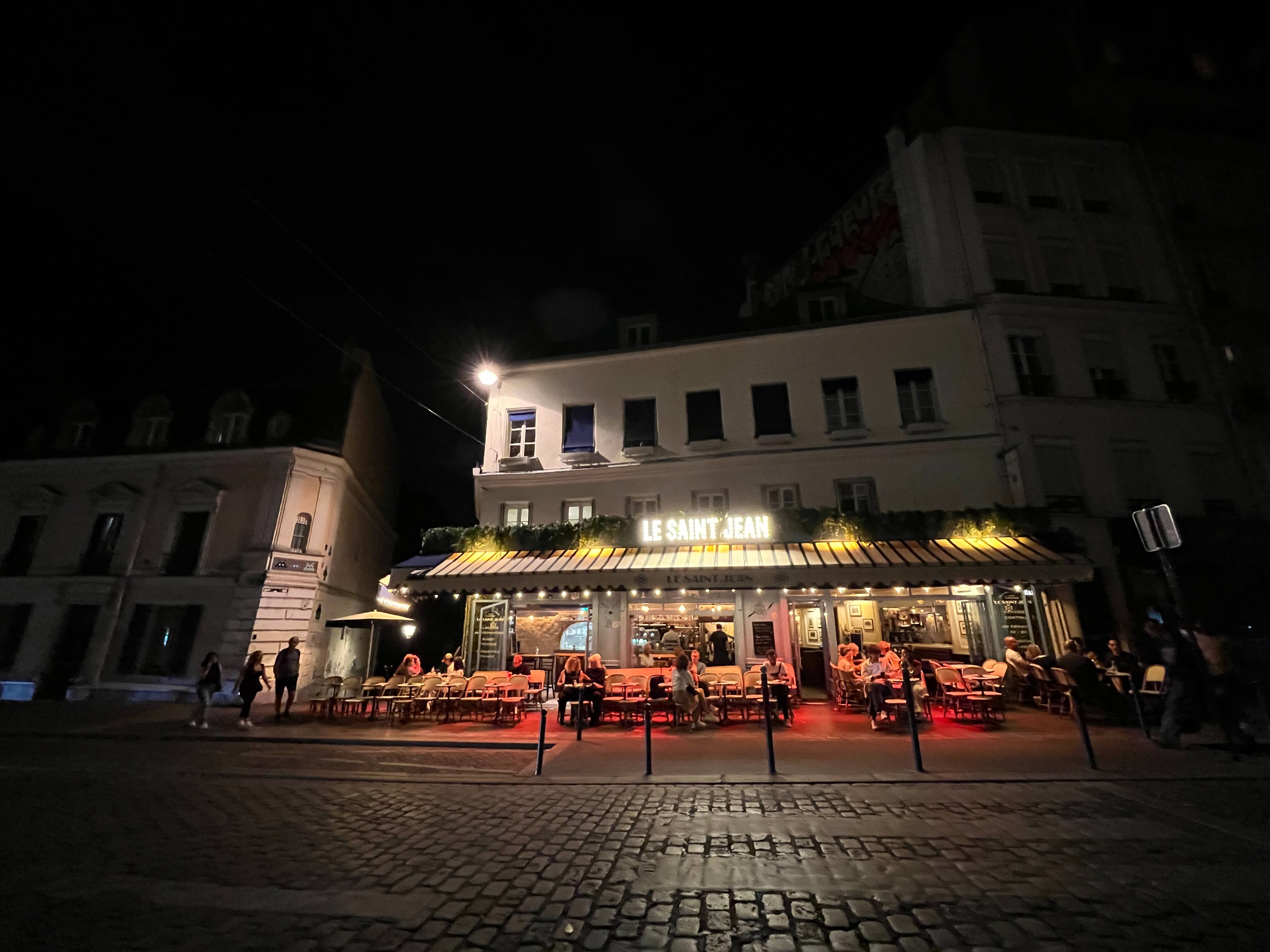
Rue des Abbesses at night — the whole street lit up. Shoot from the far end for the best wide frame. © montmartre-in-paris.com
💡 Frequently Asked Questions
Early morning, between 6am and 8am, is the best time to photograph Montmartre. The streets are quiet, the light is soft, and iconic spots like the Sacré-Cœur steps and Rue de l’Abreuvoir are largely empty of tourists. Golden hour in the evening (around 6-8pm in summer) is the second-best window.
Tripods are allowed in Montmartre’s public streets and squares. For shooting inside the Sacré-Cœur Basilica, tripods are generally not permitted. On the steps and in the surrounding streets, a compact travel tripod works well for blue hour and night shots.
La Maison Rose is located at 2 Rue de l’Abreuvoir, 75018 Paris, at the junction with Rue des Saules. It is a short walk from the Lamarck-Caulaincourt métro station (line 12).
Photography inside the Sacré-Cœur Basilica is generally not permitted out of respect for worshippers. The exterior, the steps, and the surrounding gardens offer the most photogenic angles and are freely open to photographers at all hours. The interior and the photo rules are detailed in Inside Sacré-Coeur.