
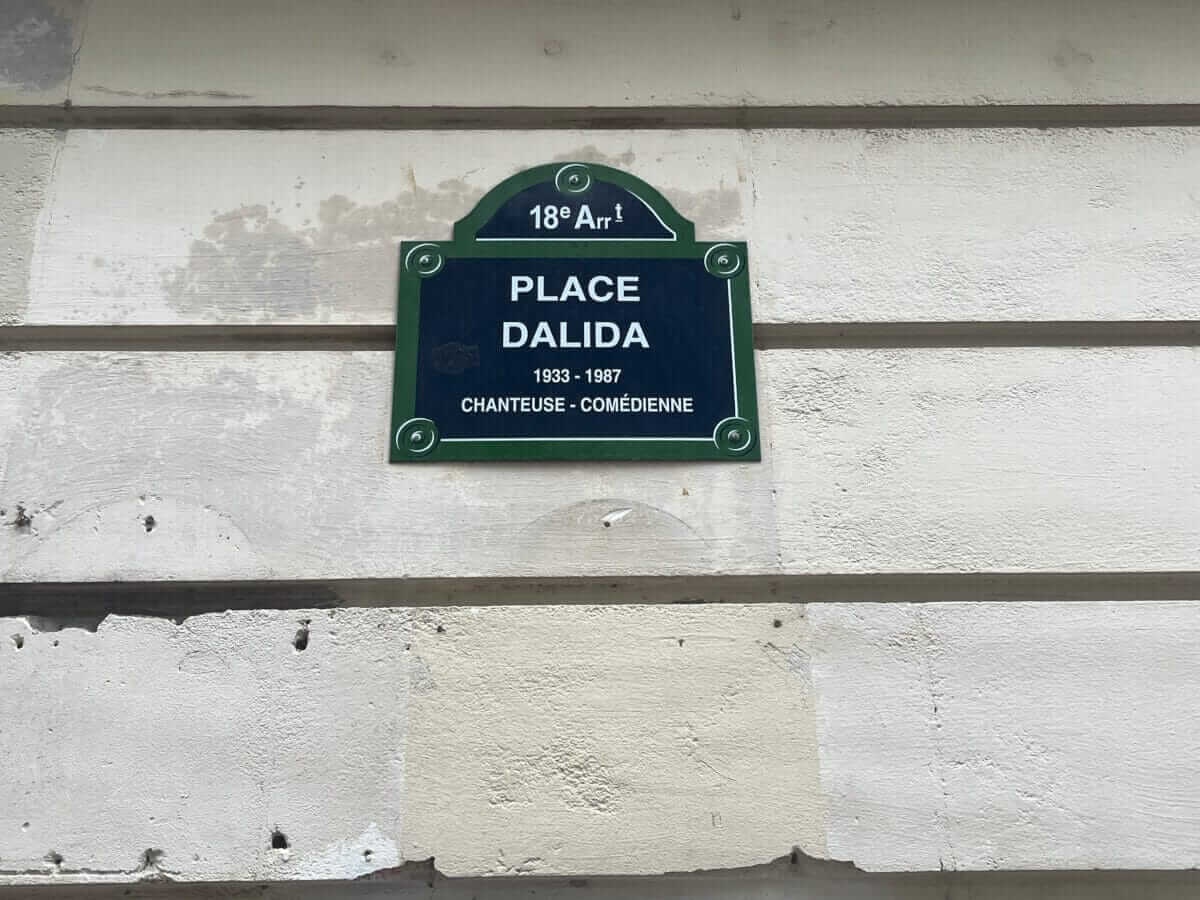

Dalida lived in Montmartre for 25 years. She chose it, stayed when she could have left, and is buried here. The neighbourhood has three places that carry her name and likeness — a square, a bronze bust, and a grave that fans still visit from across the world. This is how to find them, what you will see, and why they matter. For the wider neighbourhood, see our complete Montmartre guide, or our guide to Montmartre tours if you would like a local guide to walk you through it.
Coming to Paris in 2027? Her life is also becoming a musical: see our guide to Dalida in Paradisco at the Dôme de Paris, with dates and ticket sale.
Place Dalida: The Square and the Bust
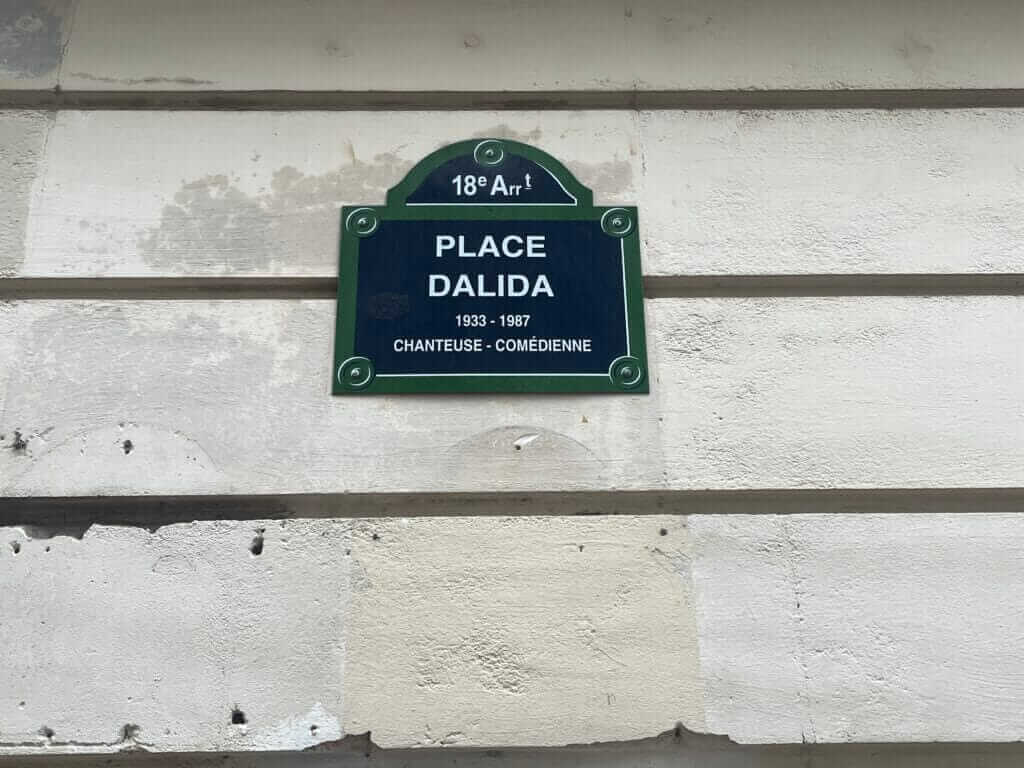
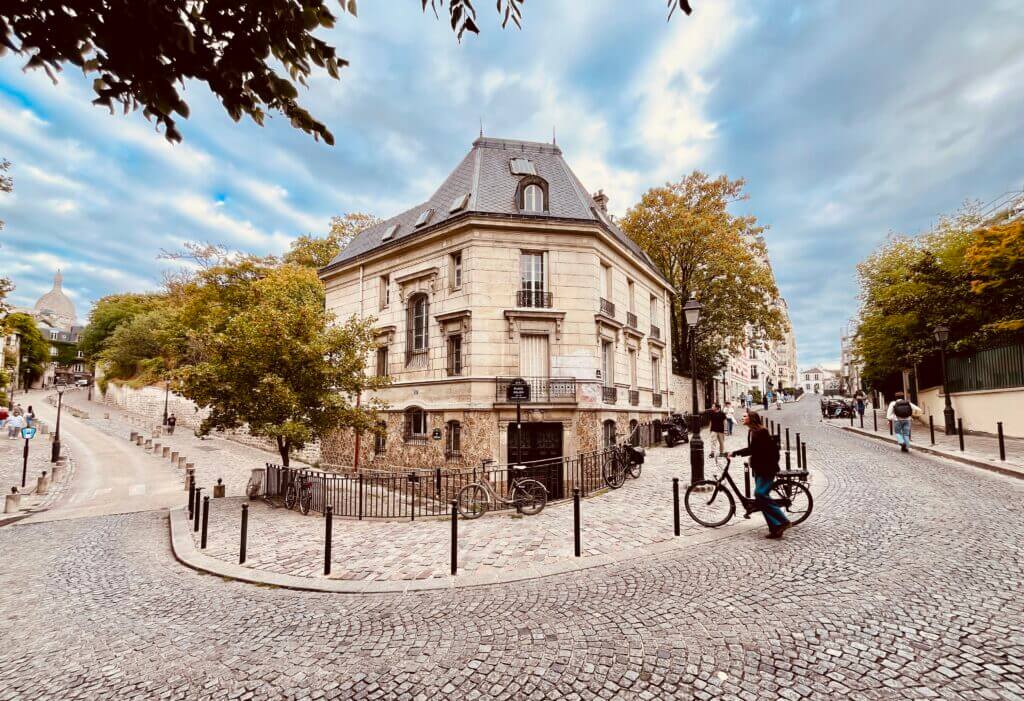
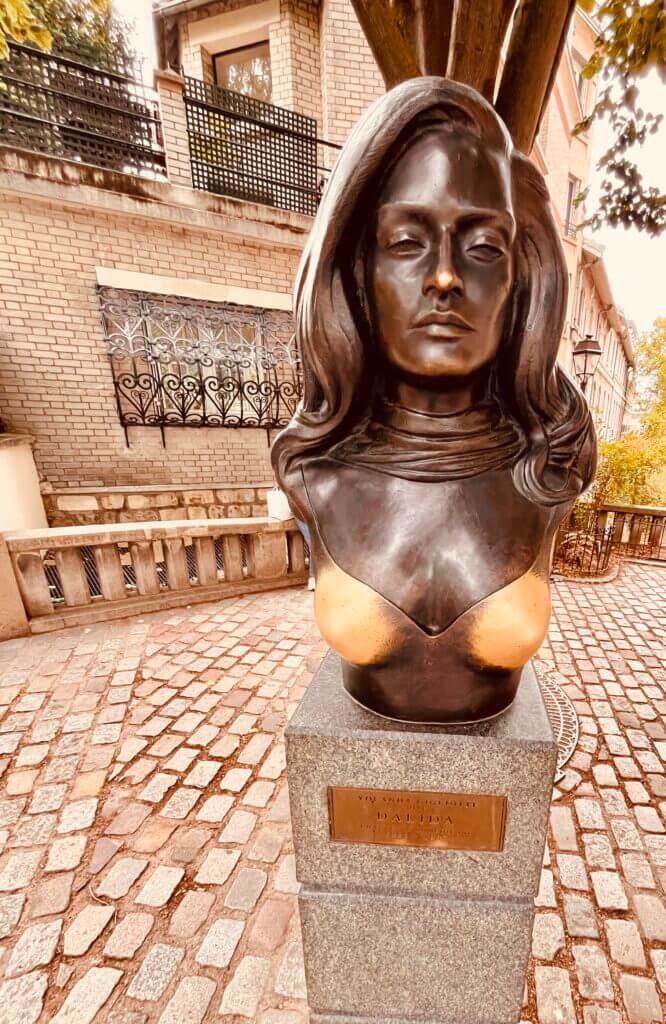
Place Dalida sits at the corner of Rue de l’Abreuvoir and Rue Girardon, about 100 metres from where Dalida lived. It is a small square — 19 by 13 metres — surrounded entirely by houses and three trees. The Paris City Council created it on 5 December 1996, and on 24 April 1997, the tenth anniversary of her death, a bronze bust sculpted by the artist Aslan was installed at its centre. The square is a quiet stop on an evening walk — we include it in our Montmartre date night guide.
The bust sits atop five blocks of cut granite. Dalida was only the third woman in France to receive a public statue, after Joan of Arc and Sarah Bernhardt. Visitors rub the chest of the bronze figure — a tradition that has polished it bright gold over the years. The inscription on the base reads: Yolanda Gigliotti dite Dalida, chanteuse comédienne 1933–1987.
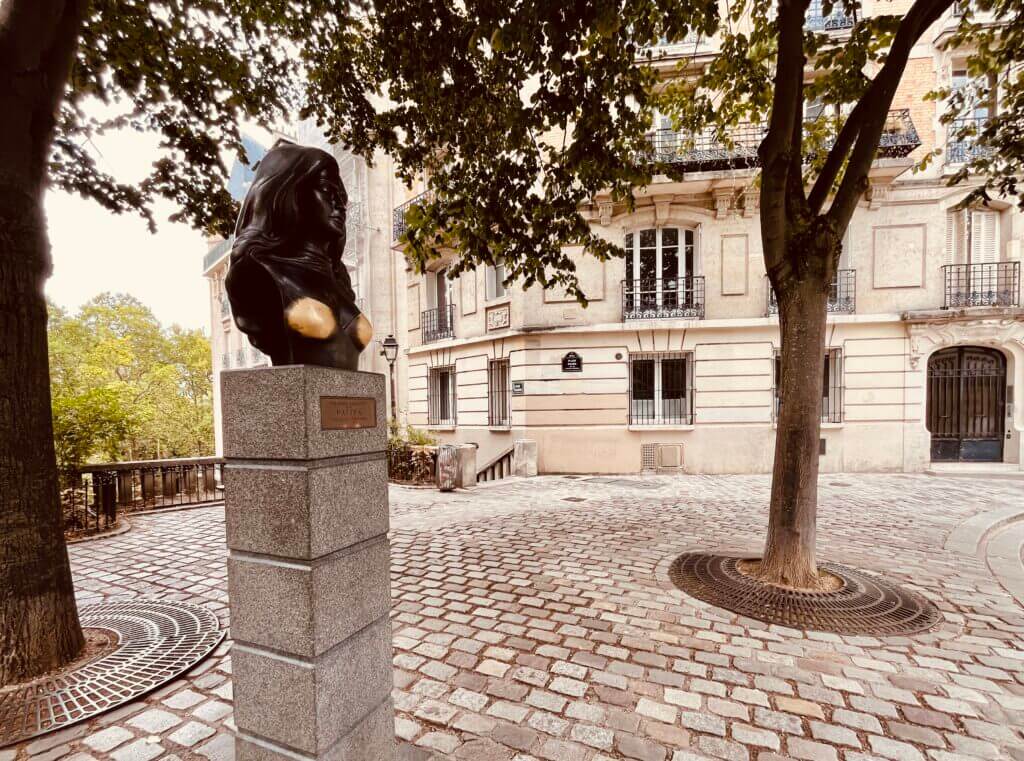
The Inscription on the Base
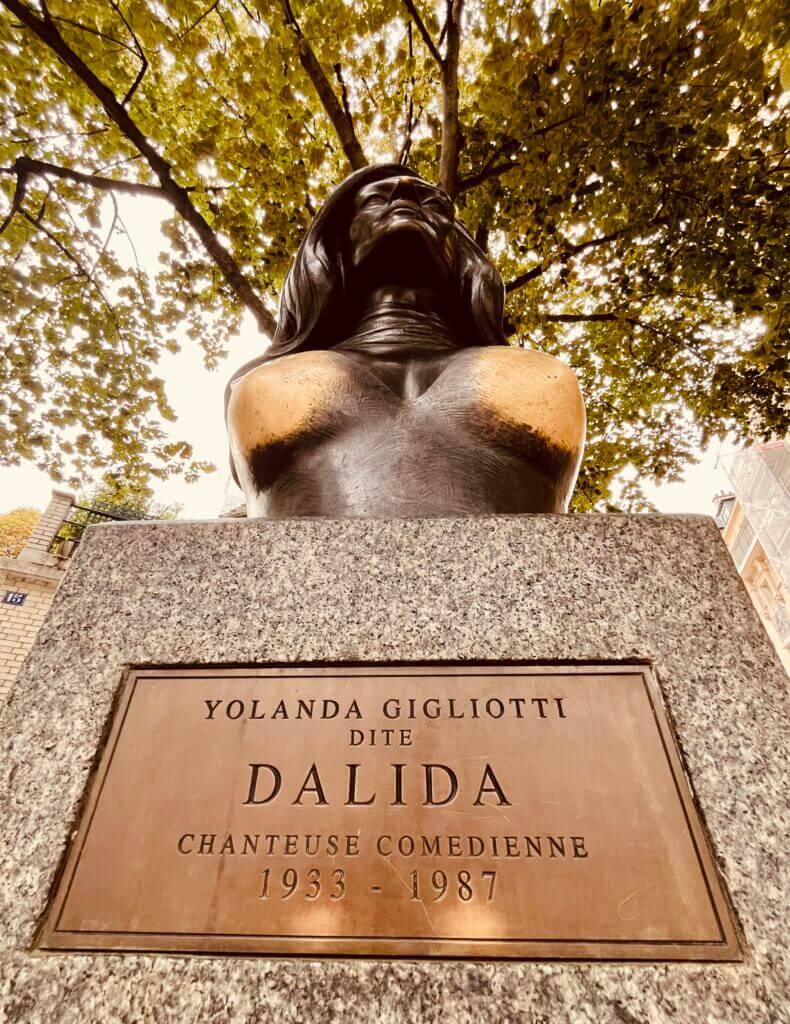
The inscription uses her full legal name: Yolanda Gigliotti. Dalida was born of Italian nationals in Egypt on 17 January 1933. She arrived in France in 1954, built one of the most extraordinary careers in the history of popular music — 170 million albums sold, recordings in 10 languages, more than 70 gold records — and chose Montmartre as the place she called home for the last 25 years of her life.
Her House: 11 bis Rue d’Orchampt
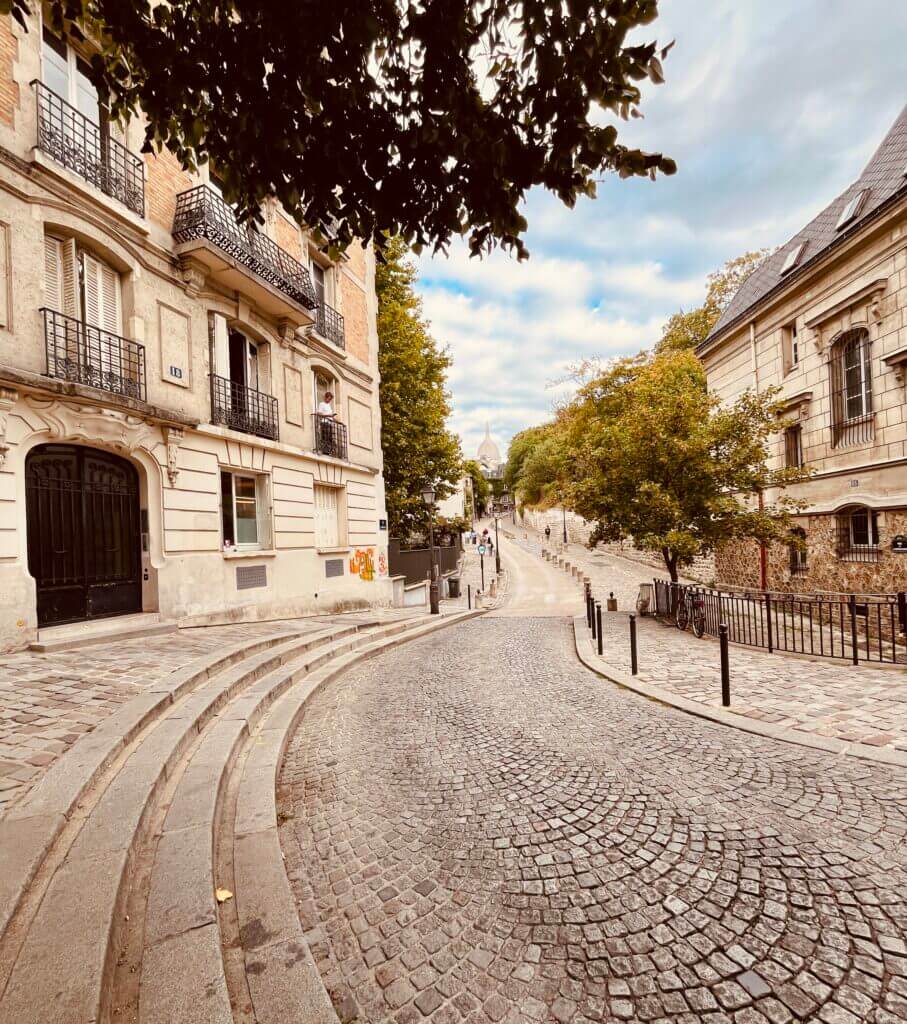
In the summer of 1962, Dalida’s desire for space and freedom brought her to Montmartre. Behind a gate off Rue d’Orchampt — a passage most tourists never find — stands a four-storey private mansion in the 1900 style. She bought it when it came to market and lived there until her death in 1987. A plaque on the wall reads: Dalida lived in this house from 1962 to 1987. Her friends from Montmartre will not forget her.
The house is not open to visitors — it remains private property. From the street you can see the gate and the plaque. The walk from Place Dalida to Rue d’Orchampt takes about two minutes on foot.
Dalida and the Clos Montmartre Vineyard
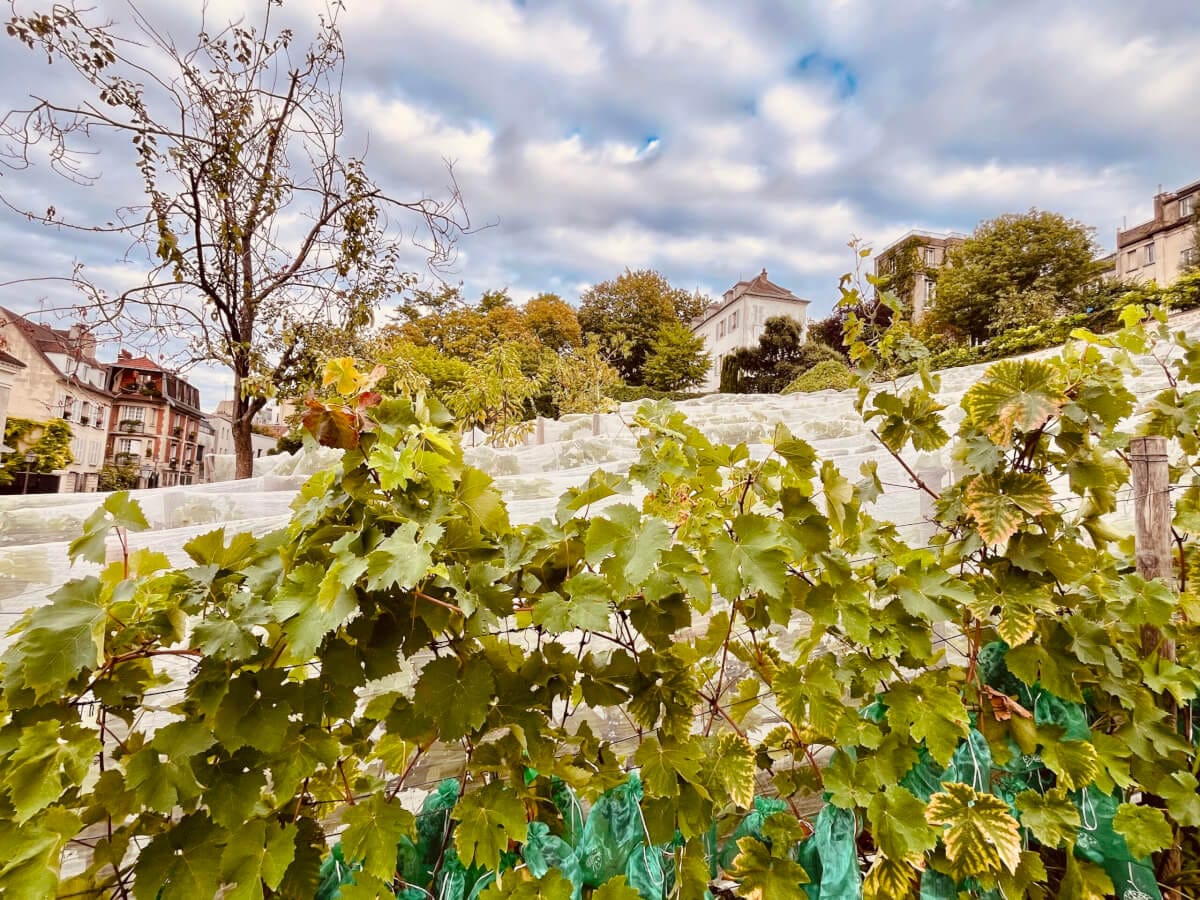
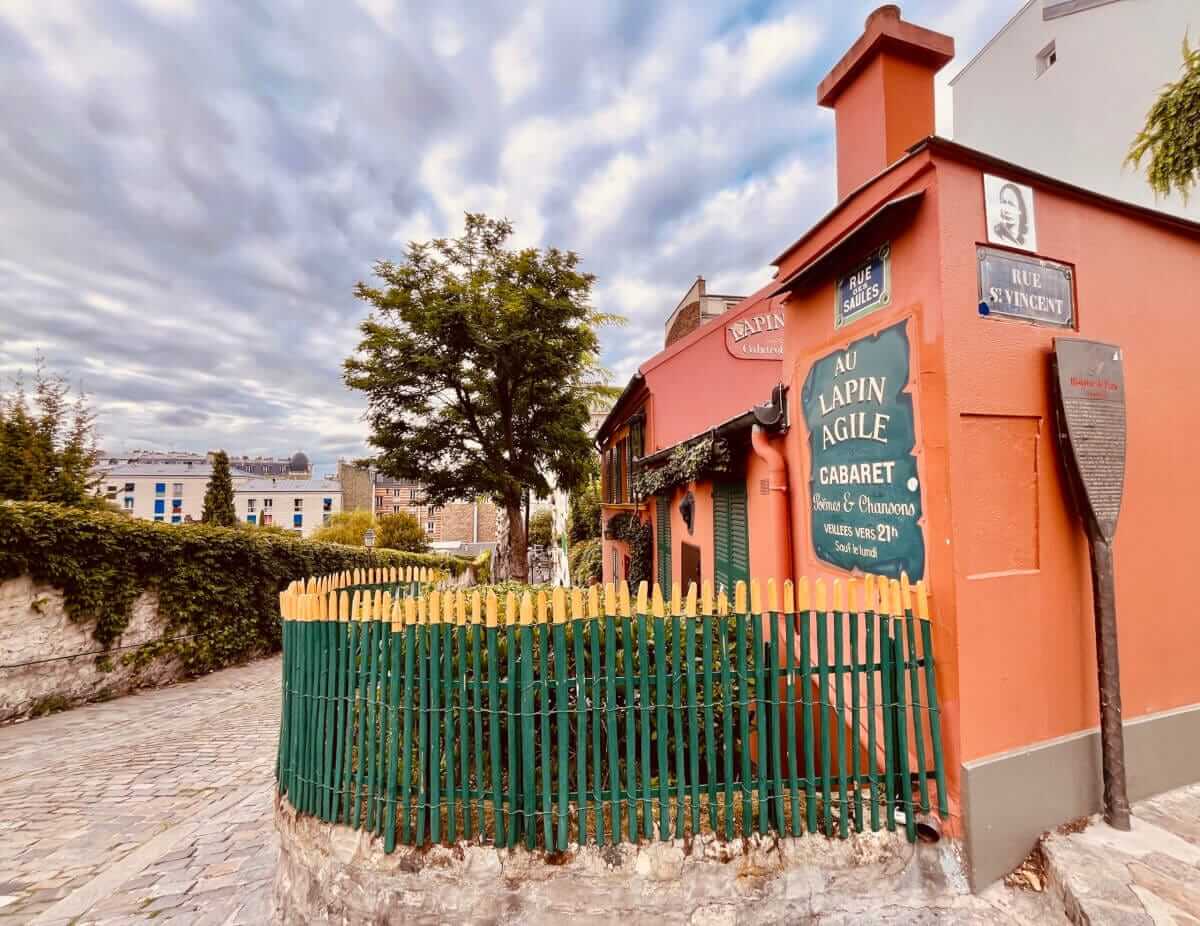
Dalida’s house on Rue d’Orchampt sits at the top of the Butte, a short walk from the Clos Montmartre — the last working vineyard inside Paris. She lived alongside it for 25 years. The vines are visible through the iron gate on Rue des Saules, facing Au Lapin Agile, the cabaret that was part of the same bohemian village she inhabited. Every October, the Fete des Vendanges harvest festival draws thousands to these streets — the same streets she walked daily.
Her Grave at Montmartre Cemetery
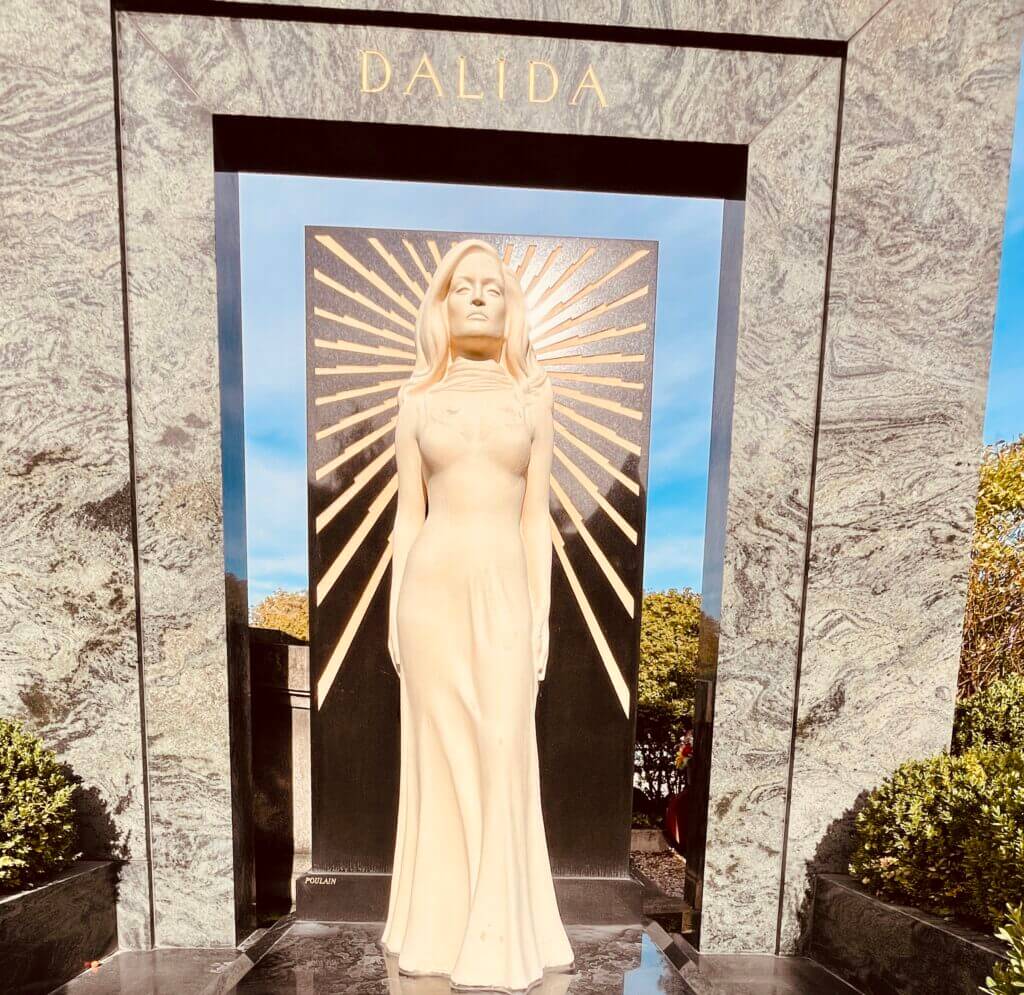
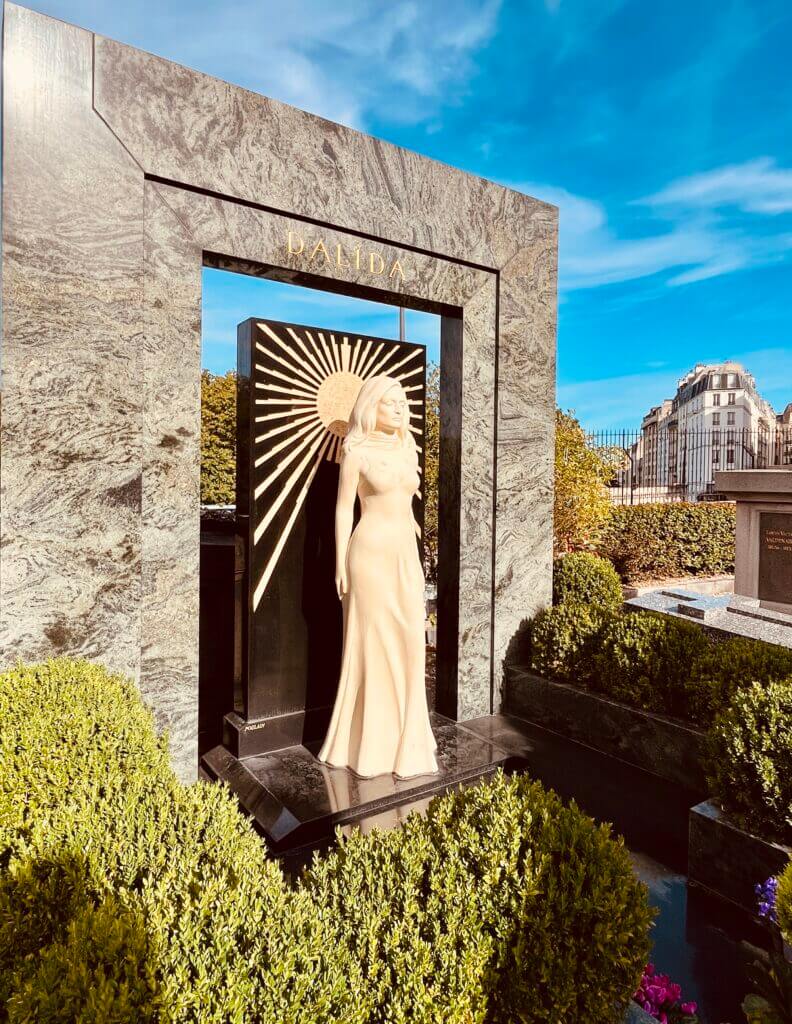
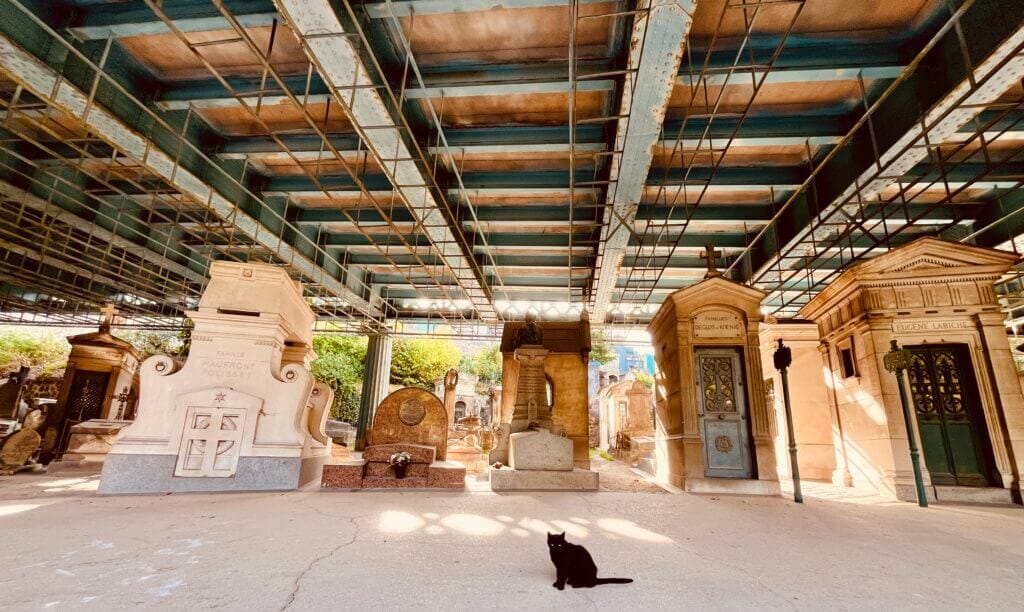
Dalida is buried at the Cimetière de Montmartre, Division 18, near the main entrance on Avenue Rachel, below the metal bridge of Rue Caulaincourt. She rests alongside Degas and Zola in one of Paris’s great cemeteries. The grave is well-maintained and visited year-round by fans from across the world — particularly on 3 May, the anniversary of her death in 1987.
Cemetery opening hours: Monday to Friday 8h–18h, Saturday 8h30–18h, Sunday and public holidays 9h–18h. Closes at 17h30 from November to March. Metro: Place de Clichy or Blanche (Line 2).
Cemetery opening hours: Monday to Friday 8h–18h, Saturday 8h30–18h, Sunday and public holidays 9h–18h. Closes at 17h30 from November to March. Metro: Place de Clichy or Blanche (Line 2).
Dalida is buried in Montmartre Cemetery — read our complete visitor guide, including opening hours, how to find the grave, and the other famous tombs worth discovering →
Who Was Dalida?
Most visitors to Montmartre know Edith Piaf. Far fewer know that Dalida sold 170 million albums, recorded in 10 languages, and is considered among the six most popular singers in the world. She was the first artist in France to receive a diamond disc. She is today the most decorated artist in French music history.
She was born Yolanda Gigliotti in Cairo on 17 January 1933, to Italian parents from Calabria. She moved to Paris in 1954, transformed a modelling career into a singing career, and spent the next 33 years building a body of work that crossed pop, disco, and world music. She recorded in French, Italian, Arabic, German, Greek, Hebrew, Spanish, Dutch, Japanese, and English. She died at her home on Rue d’Orchampt on the night of 2–3 May 1987, aged 54. She left a note that read: La vie m’est insupportable.
How to Visit: The Three Dalida Sites in Montmartre
| Site | Address | Access |
|---|---|---|
| Place Dalida & Bust | Corner Rue de l’Abreuvoir / Rue Girardon, 75018 | Open 24h, free |
| Her house (exterior only) | 11 bis Rue d’Orchampt, 75018 | Street view only, private |
| Her grave | Cimetière de Montmartre, Division 18, Avenue Rachel | Free, see hours above |
The three sites can be visited in sequence in under 90 minutes on foot. Start at Place Dalida, walk two minutes to Rue d’Orchampt, then continue down Rue Lepic toward the cemetery — the same route Dalida herself would have taken.
Explore Montmartre with a local guide
Walking tours that take you through the streets Dalida lived in — past the vineyard, the artists’ ateliers, and the hidden corners of the Butte.
Browse Montmartre Walking Tours →💡 Frequently Asked Questions
The Dalida bust is at Place Dalida, on the corner of Rue de l’Abreuvoir and Rue Girardon, in the 18th arrondissement of Paris (75018). It is open at all times and free to visit. The nearest Metro station is Lamarck-Caulaincourt on Line 12.
Dalida lived at 11 bis Rue d’Orchampt in Montmartre from 1962 until her death in 1987 — 25 years. The house is a four-storey private mansion off a quiet gated passage. It is not open to the public but the plaque on the exterior wall is visible from the street.
Dalida is buried at the Cimetière de Montmartre, Division 18, near the main entrance on Avenue Rachel below the Rue Caulaincourt bridge. The cemetery is open Monday to Friday 8h–18h, Saturday 8h30–18h, Sunday 9h–18h (closes 17h30 November to March). Metro: Place de Clichy or Blanche.
Dalida (born Yolanda Gigliotti, 1933–1987) was a French singer of Italian-Egyptian origin who sold over 170 million albums worldwide. She recorded in 10 languages and was the first artist in France to receive a diamond disc. She lived in Montmartre from 1962 until her death and is considered the most decorated artist in French music history.
No — 11 bis Rue d’Orchampt is private property and is not open to visitors. You can view the exterior gate and the commemorative plaque from the street. The walk from Place Dalida to the house takes about two minutes.