

Montmartre is 15–25 minutes from central Paris by metro. That makes it the easiest neighbourhood day trip in the city — no trains to book, no timed entry tickets, no logistics beyond knowing which exit to take at Abbesses station. What it rewards is arriving early and walking slowly. This itinerary is built for a full day, but every section works as a standalone half-day if your time is limited. For a wider overview of the neighbourhood, see our complete Montmartre guide. If one day feels too short, Montmartre hotels make it easy to stay overnight.
Getting to Montmartre from Paris
By Metro (recommended)
Line 12 to Abbesses is the cleanest option from anywhere in central Paris. Abbesses is one of the deepest stations in the network (36 metres underground) — take the lift rather than the spiral staircase if you’re carrying bags. Exit onto Place des Abbesses and you’re immediately in Montmartre, five minutes’ walk from Sacre-Coeur.
Journey times from key Paris starting points: Madeleine (2 stops, ~6 min), Saint-Lazare (3 stops via connection, ~12 min), Chatelet (change at Assemblee Nationale or Montparnasse-Bienvenue, ~18 min), Gare du Nord (take Line 4 to Barbes-Rochechouart, walk 15 min up the hill or take Line 2 to Anvers).
Coming from London? Eurostar arrives at Gare du Nord, which is about 20 minutes on foot or two metro stops from Montmartre. That makes a Montmartre day trip realistic as a long day from the UK: see our London to Montmartre by Eurostar guide for timings, luggage and check-in.
Eurostar fares to Paris sell out fast around holidays and summer weekends, so book a few weeks ahead.
Book your trainAffiliate link. Prices and availability are shown on Eurostar.
Full transport guide
Every metro line, bus route and walking option into Montmartre — with exact stops and journey times from 15 Paris starting points.
How to Get to Montmartre →By Taxi or Ride-Share
Straightforward but slower. From central Paris (Louvre, Marais, Saint-Germain) expect 15–30 minutes depending on traffic — the route crosses some of the busiest parts of the city. Useful late at night when metro service is winding down. Drop-off point: Place des Abbesses or the bottom of the Sacre-Coeur steps on Rue Tardieu.
Full Day Itinerary
Morning: The Butte at its Best (7am–11am)
The single most important decision in a Montmartre day trip is what time you arrive. Before 9am, the neighbourhood is genuinely quiet. After 10am, the main tourist circuit (Sacre-Coeur steps, Place du Tertre) is crowded. The itinerary below is designed around an early start — you can push it 90 minutes later and still have a good day, but you will share the famous spots with considerably more people.
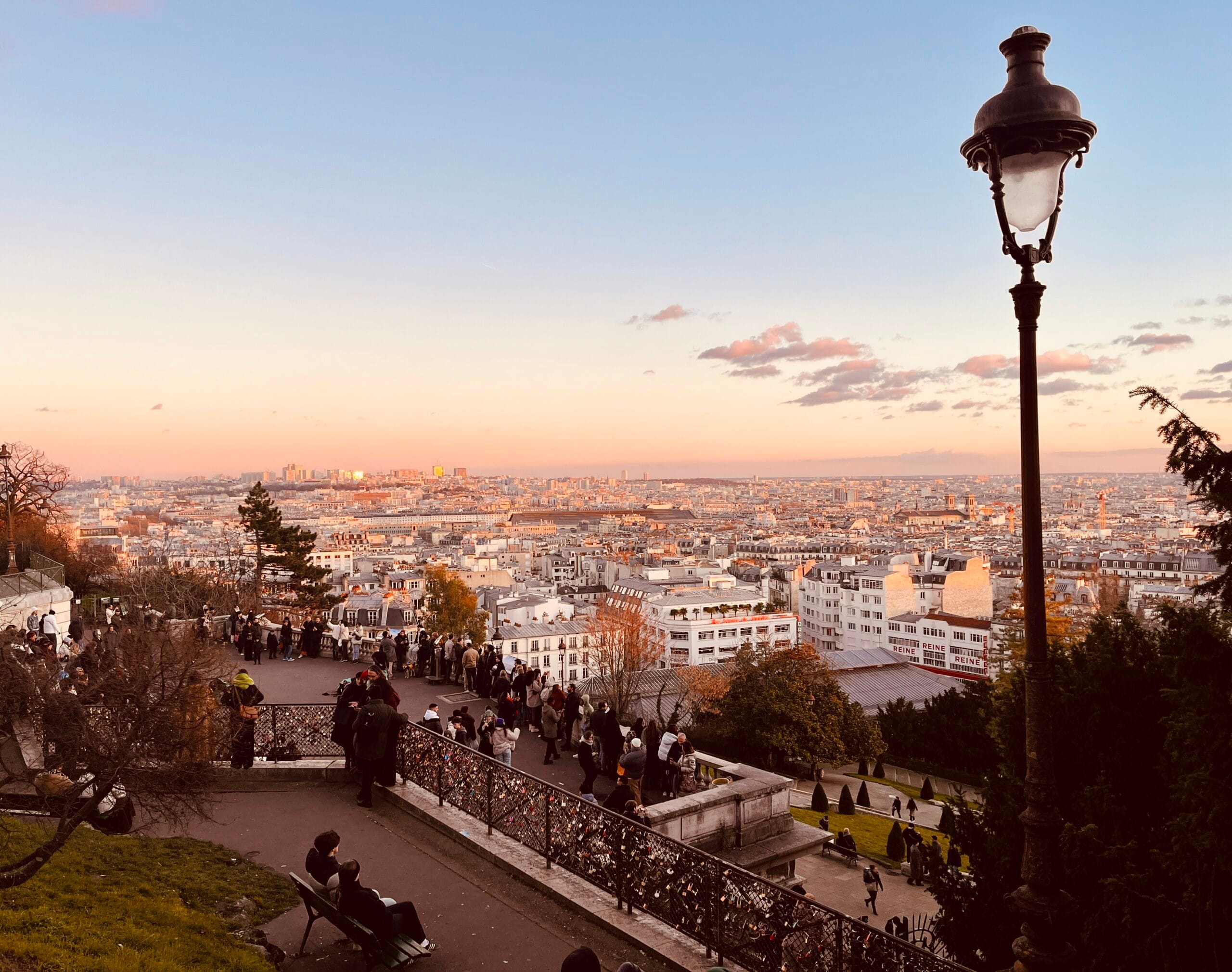
7:30am — Walk to Sacre-Coeur (2 min from Tertre). Sit on the steps. Paris is laid out below and the city lights are still on in the valley. This is the view that justifies the early alarm.
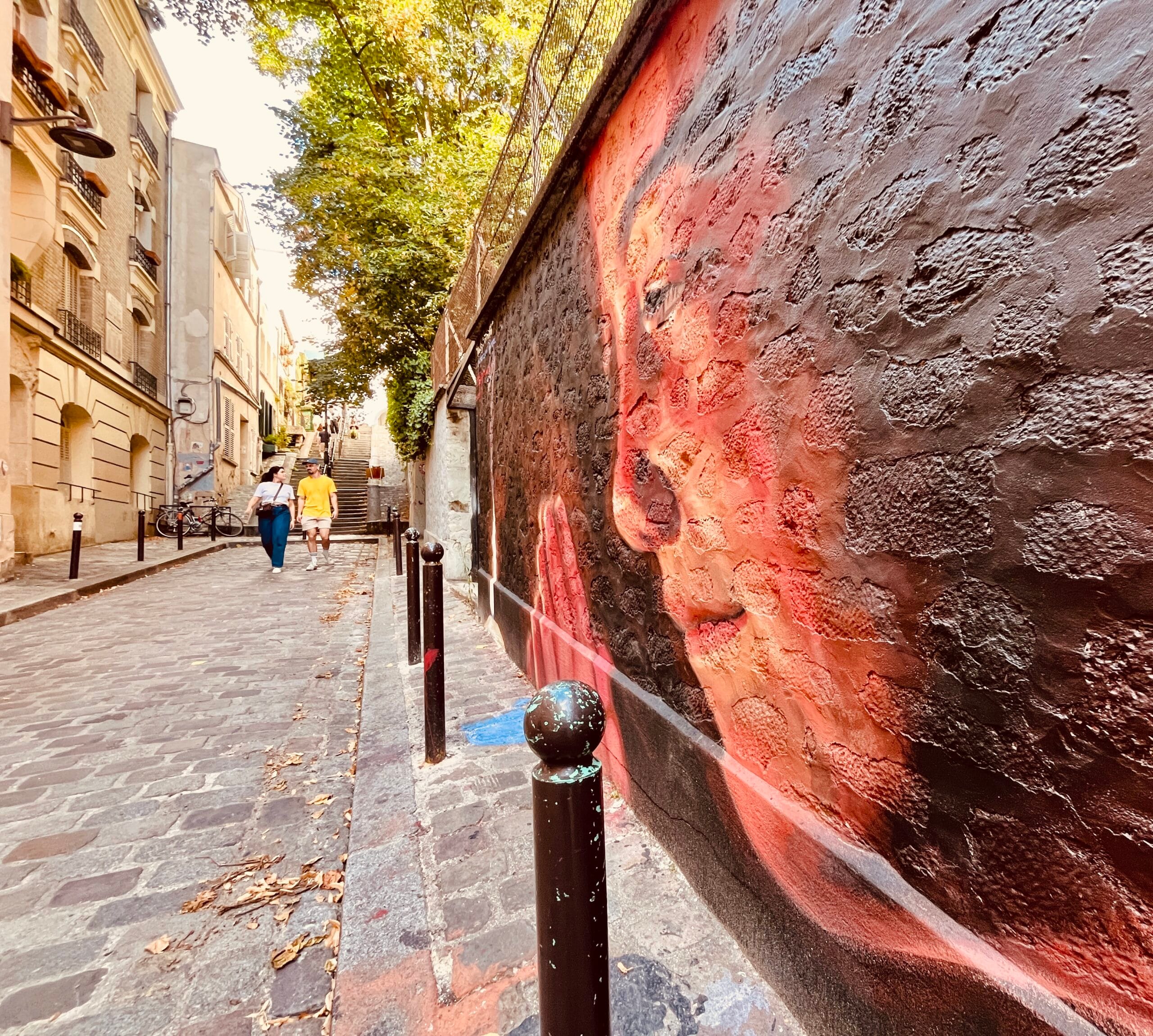
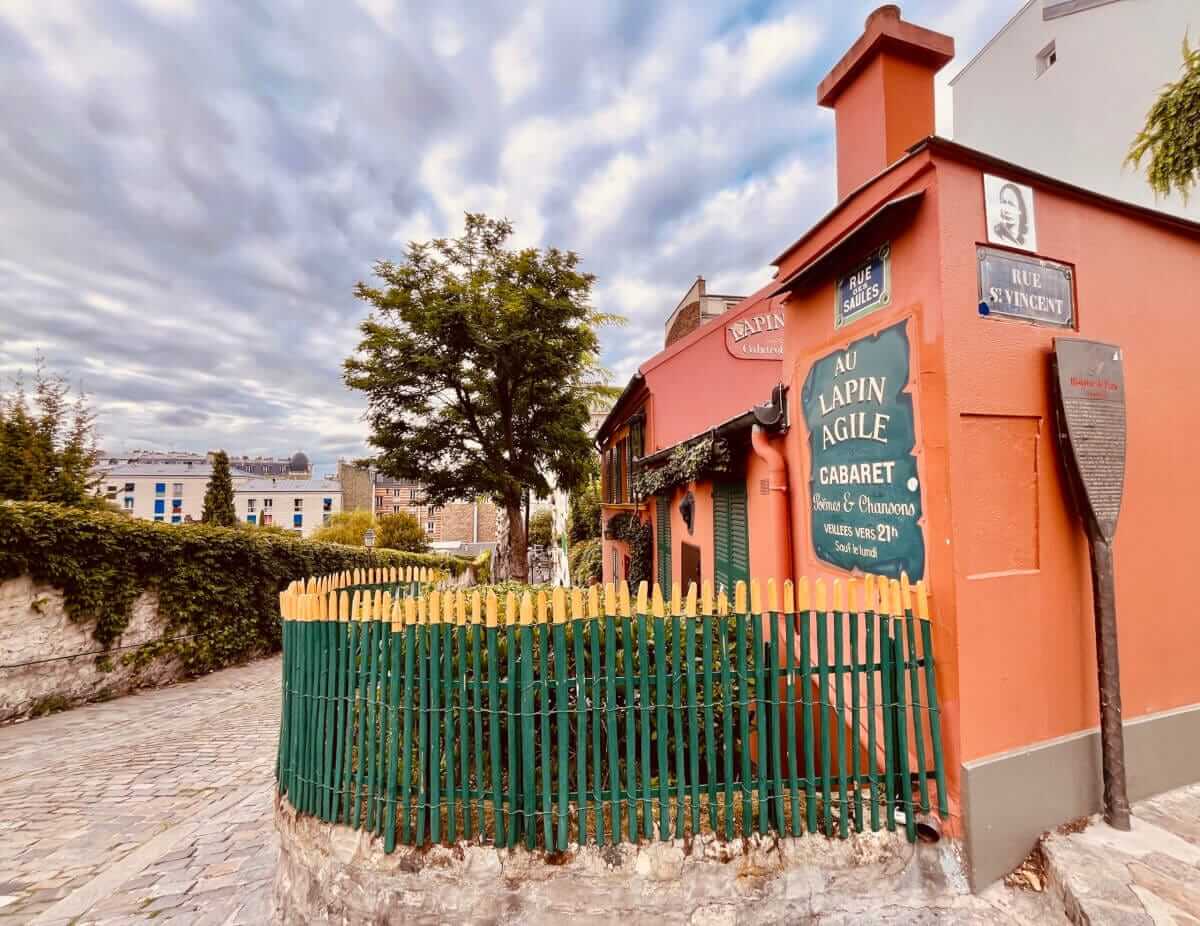
8:15am — Head north to Rue de l’Abreuvoir (10 min walk). One of the most beautiful streets in Paris. Walk it downhill from the top. The junction with Rue des Saules — vineyard on your left, Au Lapin Agile on your right — is the strongest composition in Montmartre.
9:00am — Avenue Junot and Villa Leandre. The Art Deco cul-de-sac that looks nothing like the rest of Paris. Most visitors walk straight past the entrance.
9:30am — Moulin de la Galette (83 Rue Lepic). The last windmill on the Butte. Then walk Rue Lepic downhill — on Saturday, the market is in full swing by this point.
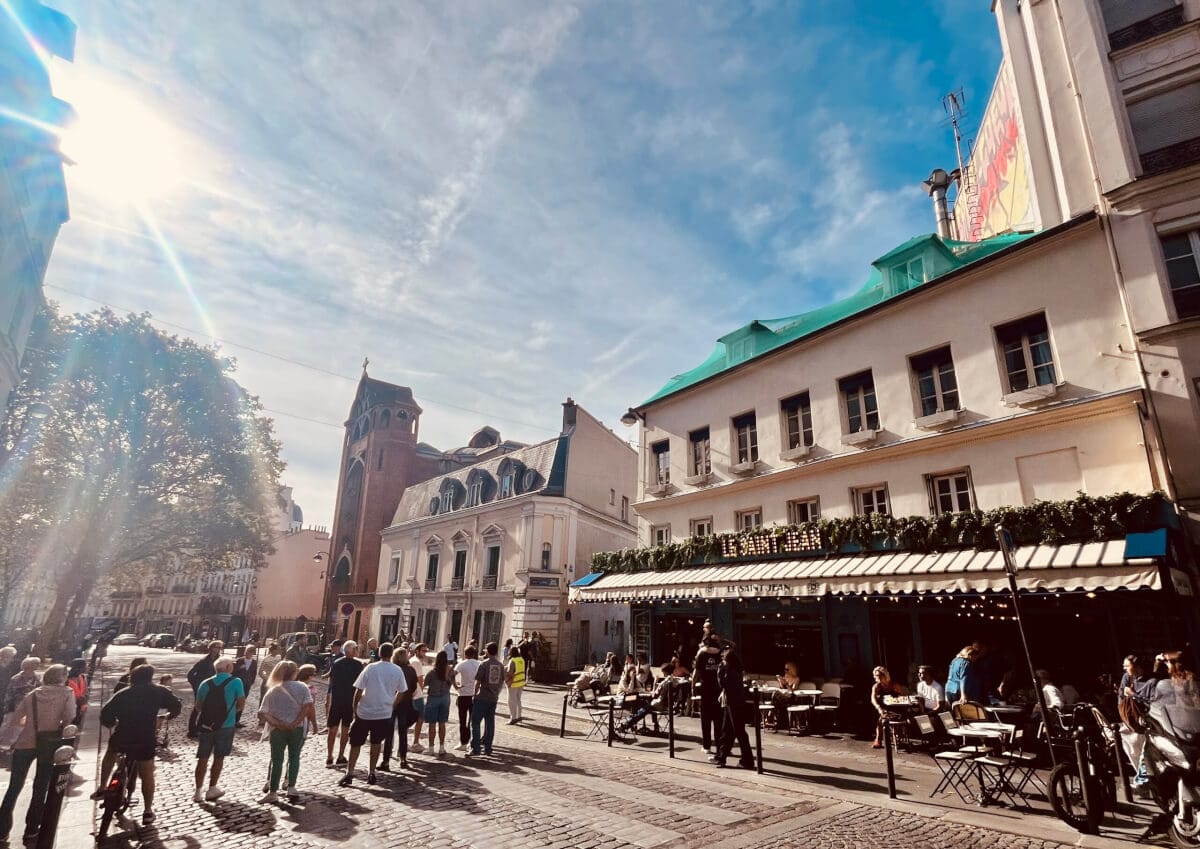
Montmartre is one of Paris’s most active neighbourhoods — street races and local events bring the hill to life year-round. © montmartre-in-paris.com
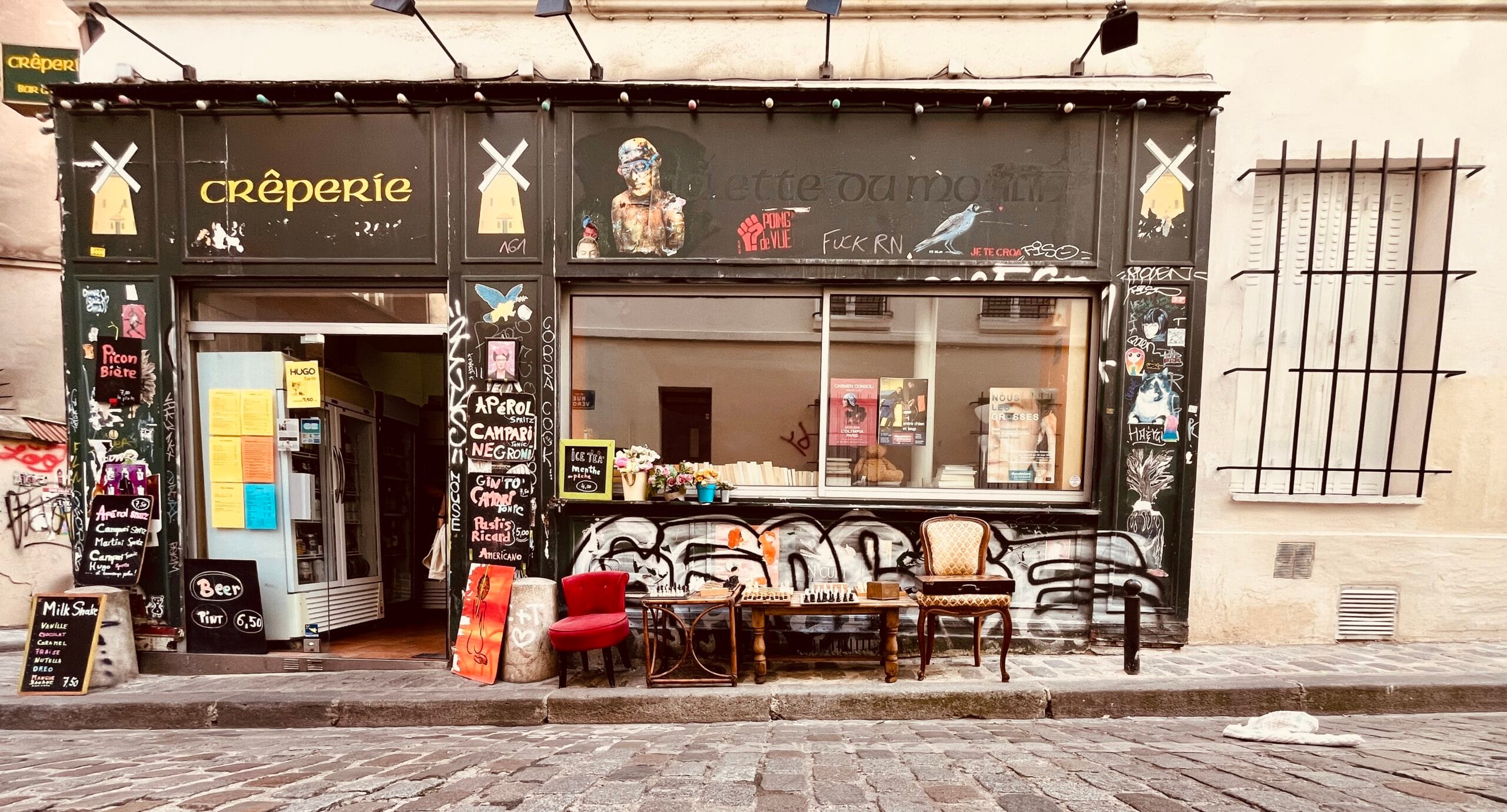
Place du Tertre before 8am — the square most visitors never see © montmartre-in-paris.com
Late Morning: Vineyard, Museums, Hidden Streets (10am–12:30pm)
By mid-morning the tourist flow has arrived at the main spots — which makes this the ideal time to explore the streets most visitors miss. The Musee de Montmartre opens at 10am and is the most underrated stop on the hill: Renoir’s former studio, Toulouse-Lautrec posters, and gardens that look directly onto the Clos Montmartre vineyard. Allow 45–60 minutes.
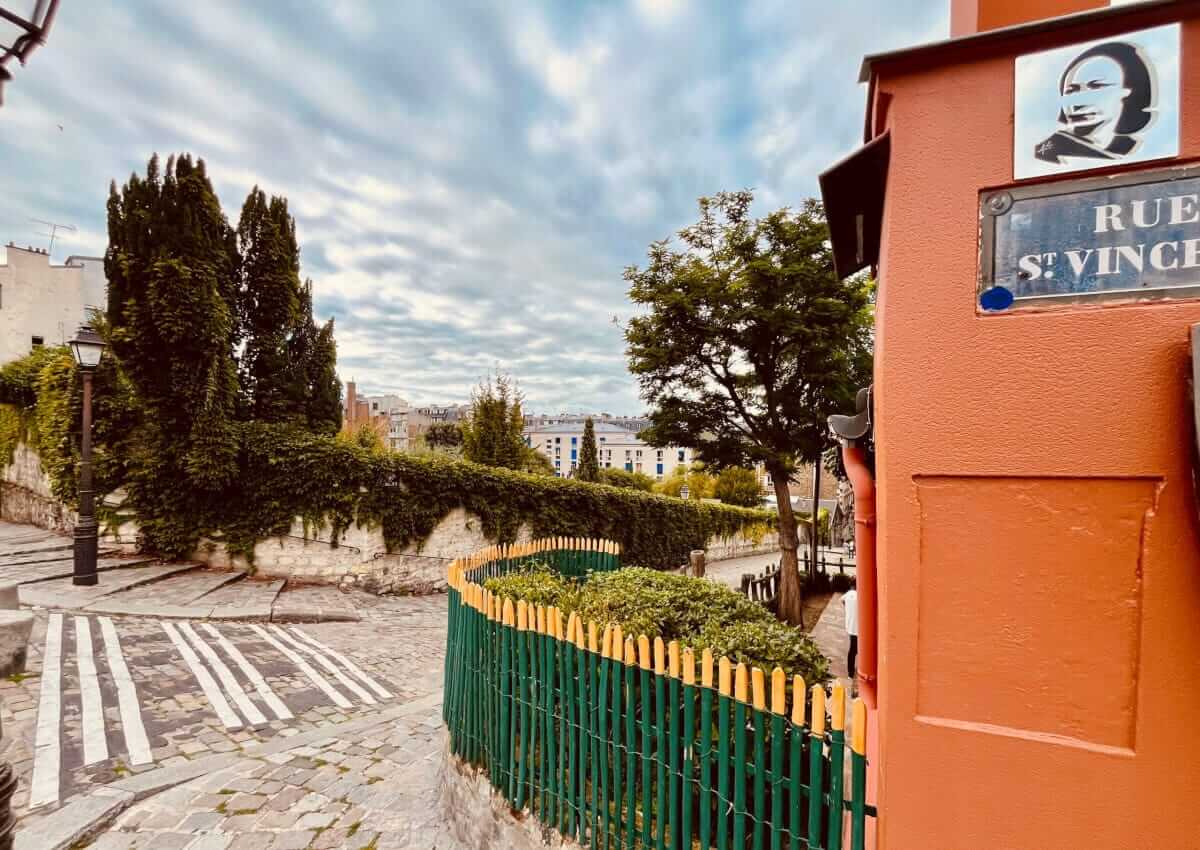
The Clos Montmartre itself (18 Rue des Saules) is worth the five-minute walk from the museum. The exterior corner at Rue Saint-Vincent — vineyard rows, Au Lapin Agile, a sliver of Sacre-Coeur above — is one of the quietest and most photographed spots on the Butte. In autumn the leaves turn gold; in summer the green rows against the white basilica above work equally well.
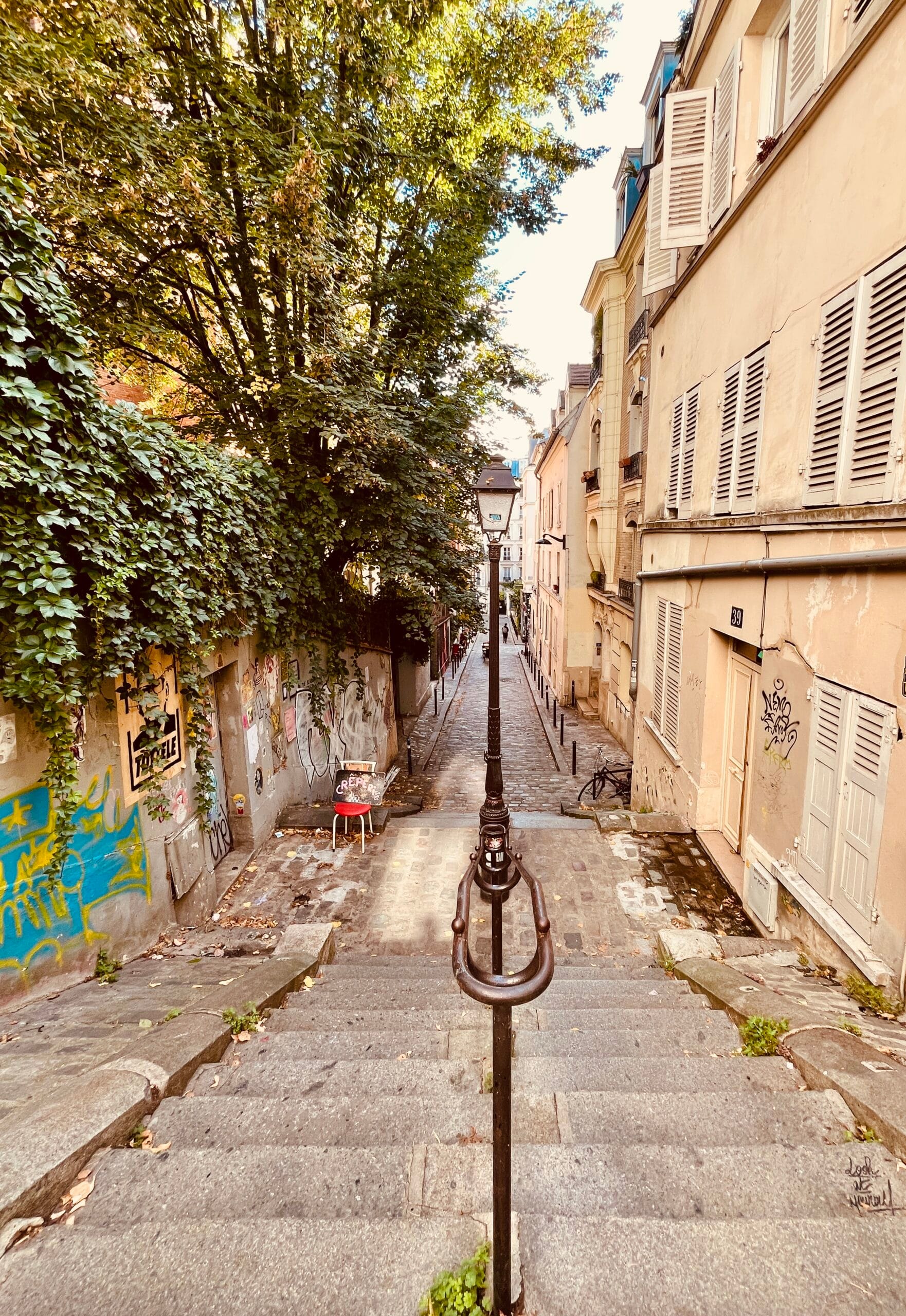
The vineyard corner at Rue Saint-Vincent — two landmarks, one composition © montmartre-in-paris.com
Lunch in Montmartre (12:30pm–2pm)
Avoid the restaurants around Place du Tertre and the Sacre-Coeur steps — they are uniformly tourist-priced. The better options are on Rue Lepic, Rue des Abbesses and the streets heading south towards Place de Clichy. Key principle: the further you walk from the basilica, the better the price-to-quality ratio. Menus written only in French are a reliable signal that the clientele is local.
Where locals eat in Montmartre
The restaurants worth finding — from Rue Lepic market counters to neighbourhood bistros that don’t appear in the tourist guides.
Best Restaurants in Montmartre →Afternoon: The Lower Neighbourhood (2pm–5pm)
The afternoon is the right time to explore the streets below the Butte — quieter than the morning tourist circuit, and a different side of the neighbourhood entirely. Place des Abbesses is the social hub of daily life in Montmartre: cafes, a small square with the Art Nouveau metro entrance by Guimard, locals at the terrace tables. Nothing to do here except sit and watch the neighbourhood function.
From Abbesses, the walk south along Rue Lepic passes the Cafe des Deux Moulins (the Amelie cafe, number 15) and continues down to Boulevard de Clichy. The Moulin Rouge is at the bottom of the hill — the facade and the red windmill are worth seeing in daylight before the evening crowds arrive around the entrance. The neon signs come on at dusk.
Evening: Montmartre After Dark (from 7pm)
Montmartre at night is a different neighbourhood again. Sacre-Coeur illuminated from the garden below is one of the best night shots in Paris — and the steps, finally less crowded, have a genuinely atmospheric quality in the evening light. The streets around Abbesses between 9pm and 11pm are warm with cafe terraces and local restaurants at full service.
If the Moulin Rouge is on your list, the two shows are at 9pm and 11pm. Book well in advance — the show sells out weeks ahead in summer, and tickets start at €115 per person. For a more local evening, the cabarets and music venues along the lower slopes of the Butte run until midnight and beyond.
Montmartre after the Adidas Arena
Heading to a concert or event at the Adidas Arena? Montmartre is 10 minutes away on Line 12. The full after-show guide covers bars, restaurants and late-night options between the arena and the Butte.
After Concert Guide →Half-Day Version (3–4 hours)
If you have half a day rather than a full day, prioritise in this order: Sacre-Coeur steps and the view (30 min), Place du Tertre (20 min), Rue de l’Abreuvoir (15 min walk), the vineyard corner at Rue des Saules and Rue Saint-Vincent (10 min), then Rue Lepic downhill to Place des Abbesses for lunch or coffee. That covers the strongest material in the neighbourhood in around three hours at a comfortable pace.
Organised Tours from Paris
A guided walking tour covers the main sights and the stories behind them in 2–3 hours, with none of the navigation overhead. The best Montmartre tours are small groups (under 10), led by residents or historians, and leave in the morning; see what Montmartre tours cost. Skip the hop-on-hop-off bus option — Montmartre’s streets are too narrow and steep for it to be useful.
Montmartre Walking Tours
Morning small-group tours with local guides covering the landmarks and the streets most visitors miss. Bookable from Paris hotels.
Browse Montmartre Tours →Montmartre Walking Tours
A guided walk is a simple way to cover the hill in a few hours.
Browse walking tours on ViatorAffiliate link. Prices and availability are shown on Viator.
Where to Stay for a Montmartre Day Trip
For a day trip, you’re probably staying elsewhere in Paris. The hotels best positioned for a Montmartre morning are in the 9th arrondissement (Opera area) — one stop south on Line 12 or a 15-minute walk up the hill. If Montmartre is your main reason for being in Paris, staying on the Butte itself gives you the early-morning access that makes the biggest difference.
Hotels in Montmartre
Options on the Butte and in the 9th arrondissement — with honest notes on location and what each means for your morning.
Hotels in Montmartre →Practical Notes
- Metro ticket: A single Navigo Easy or t+ ticket (€2.55) covers the journey in and also works on the funicular up to Sacre-Coeur. Buy 10 at once (carnet) to avoid queuing.
- Shoes: Cobblestones and steep gradients throughout. Prioritise comfort — this is non-negotiable.
- Saturday: The Rue Lepic market runs Saturday mornings. Best day for a full day trip.
- Peak season (Jul–Aug): Add 30 minutes to all journey times and arrive at least 30 minutes earlier than the itinerary suggests.
- Photography: Inside the Sacre-Coeur basilica is prohibited. Outside — steps, terrace, streets — no restrictions.
- Cash: Most Montmartre shops and market stalls are card-friendly now, but carry €20 in cash as backup for the smaller market vendors.
💡 Frequently Asked Questions
Yes — it’s one of the easiest and most rewarding half-days you can spend in Paris. 15–25 minutes by metro from anywhere central, no booking required for most of it, and a neighbourhood that rewards slow walking far more than most tourist circuits.
Metro Line 12 to Abbesses. From Chatelet allow about 15 minutes with one connection. From the Eiffel Tower area, allow 30–35 minutes. Taxis work but are slower in daytime traffic.
Three hours for a brisk visit covering the main sights. Five hours for a comfortable exploration with lunch. A full day is ideal if you want to see the neighbourhood in both morning and evening light.
Arrive before 9am. The difference in crowd levels between 7:30am and 10am is dramatic. Saturday morning is the best single slot — quiet early hours plus the Rue Lepic market later in the morning.
Yes, but be selective. Montmartre pairs naturally with the 9th arrondissement (Opera, Grands Boulevards). Adding the Louvre or Eiffel Tower on the same day is possible but makes for a rushed itinerary.