

The famous people of Montmartre left their mark on the Butte in very concrete ways: an apartment with a plaque, a studio turned museum, a bronze bust, a statue coming out of a wall. This guide lists seven places where their traces can still be found, with addresses, what to look for and a walking route that links most of them. If you would rather have a guide tell the stories, our guide to Montmartre tours compares the walking options.
Famous People of Montmartre at a Glance
| Place | Who | What to see | Address |
|---|---|---|---|
| Van Gogh’s apartment | Vincent van Gogh | The building where he lived with his brother Theo, 1886 to 1888; plaque on the façade | 54 Rue Lepic |
| Bateau-Lavoir | Pablo Picasso and other artists | The building that housed artists’ studios in the early 1900s | Place Émile-Goudeau (No. 13) |
| Musée de Montmartre | Renoir, Suzanne Valadon, Maurice Utrillo | Studios, Valadon’s reconstructed apartment, the Jardins Renoir | 12 Rue Cortot |
| Le Passe-Muraille | Marcel Aymé | The statue of a man coming out of a wall, inaugurated in 1989 | Place Marcel-Aymé, Rue Norvins |
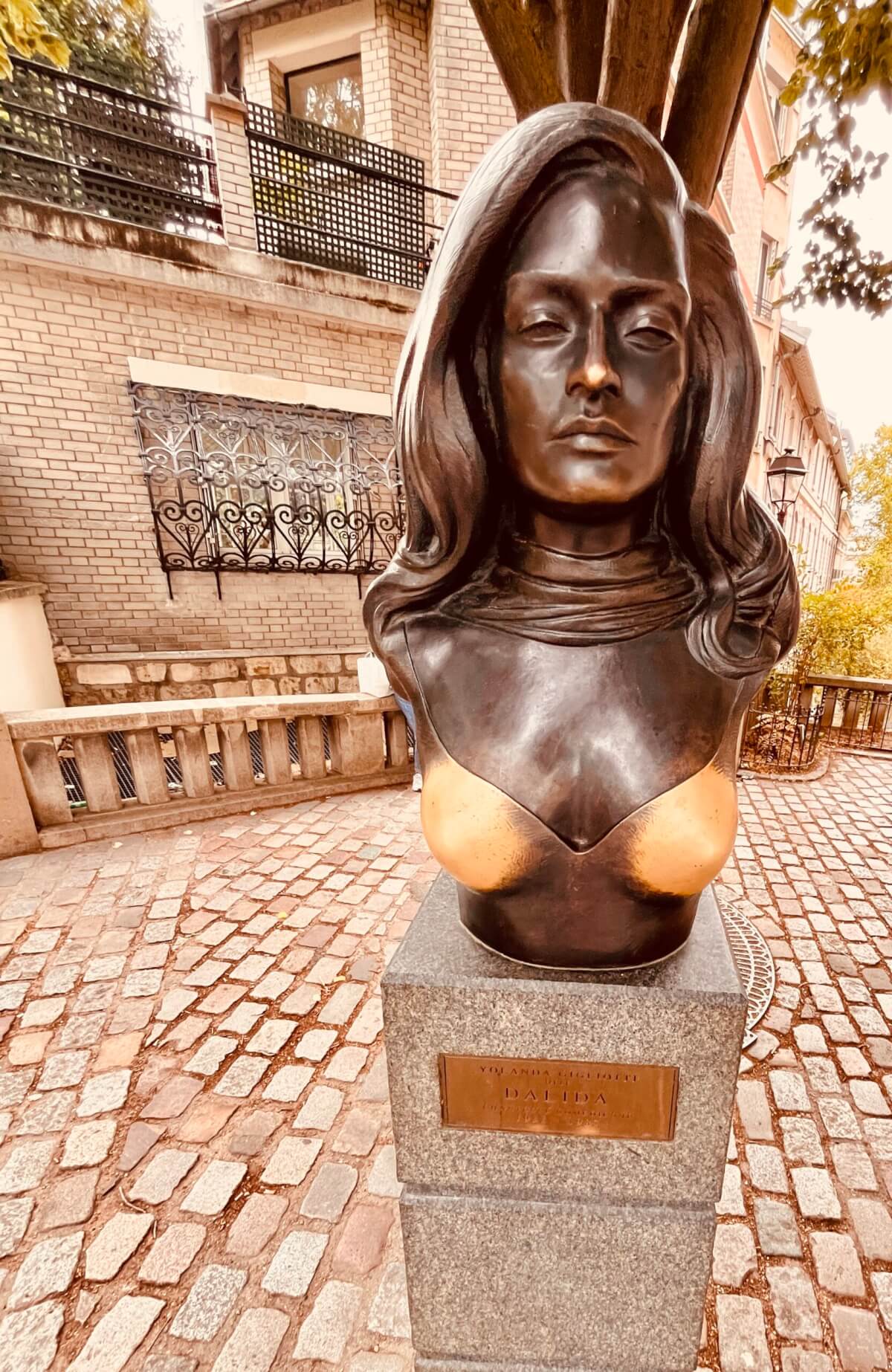
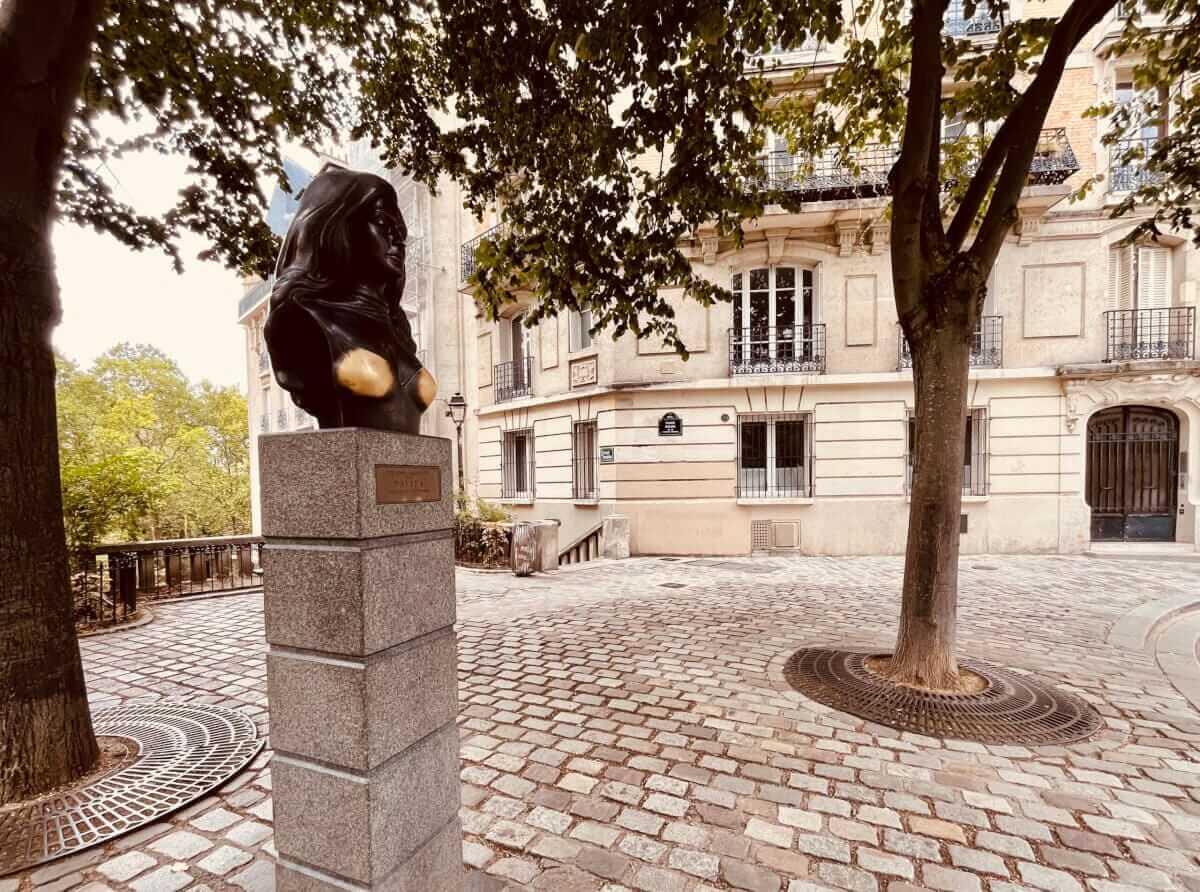
| Place Dalida | Dalida | The bronze bust by Aslan, 1997 | Corner of Rue de l’Abreuvoir and Rue Girardon |
| Dalida’s house | Dalida | Exterior only; private property with a plaque | 11 bis Rue d’Orchampt |
| Montmartre Cemetery | Dalida | Her grave, Division 18 | Entrance at 20 Avenue Rachel |
The Painters’ Butte: Van Gogh, Picasso, Renoir and Valadon
Vincent van Gogh, 54 Rue Lepic
Vincent van Gogh arrived in Paris in 1886 and shared a third-floor apartment at 54 Rue Lepic with his brother Theo, an art dealer, until he left for Arles in February 1888. The Moulin de la Galette was a short walk away, and he painted the windmills and the rooftops of Montmartre during these years. Only the façade and its plaque can be seen, since the building is residential. More on the street itself is on Wikipedia’s Rue Lepic page.
Pablo Picasso, the Bateau-Lavoir
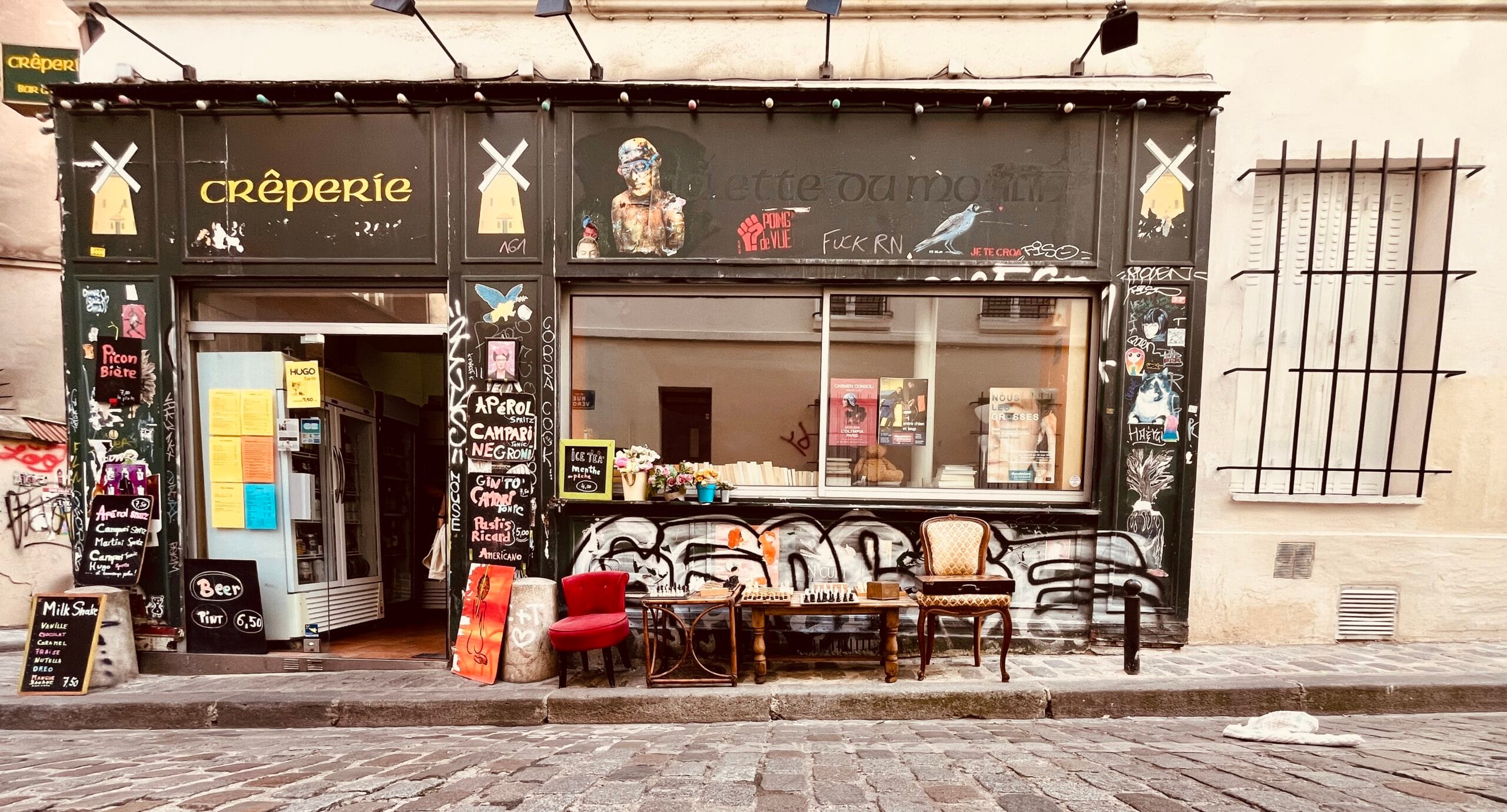
The Bateau-Lavoir, at 13 Place Émile-Goudeau just below Place du Tertre, was a set of artists’ studios in a former ballroom and piano factory. The poet Max Jacob gave it its name. Pablo Picasso and Kees van Dongen lived and worked there in the early 1900s. A fire in 1970 damaged the building, which was rebuilt, so the interior is not open to casual visitors. The square in front is the place to stop. See the Bateau-Lavoir page on Wikipedia for its history.
Renoir, Valadon and Utrillo, 12 Rue Cortot
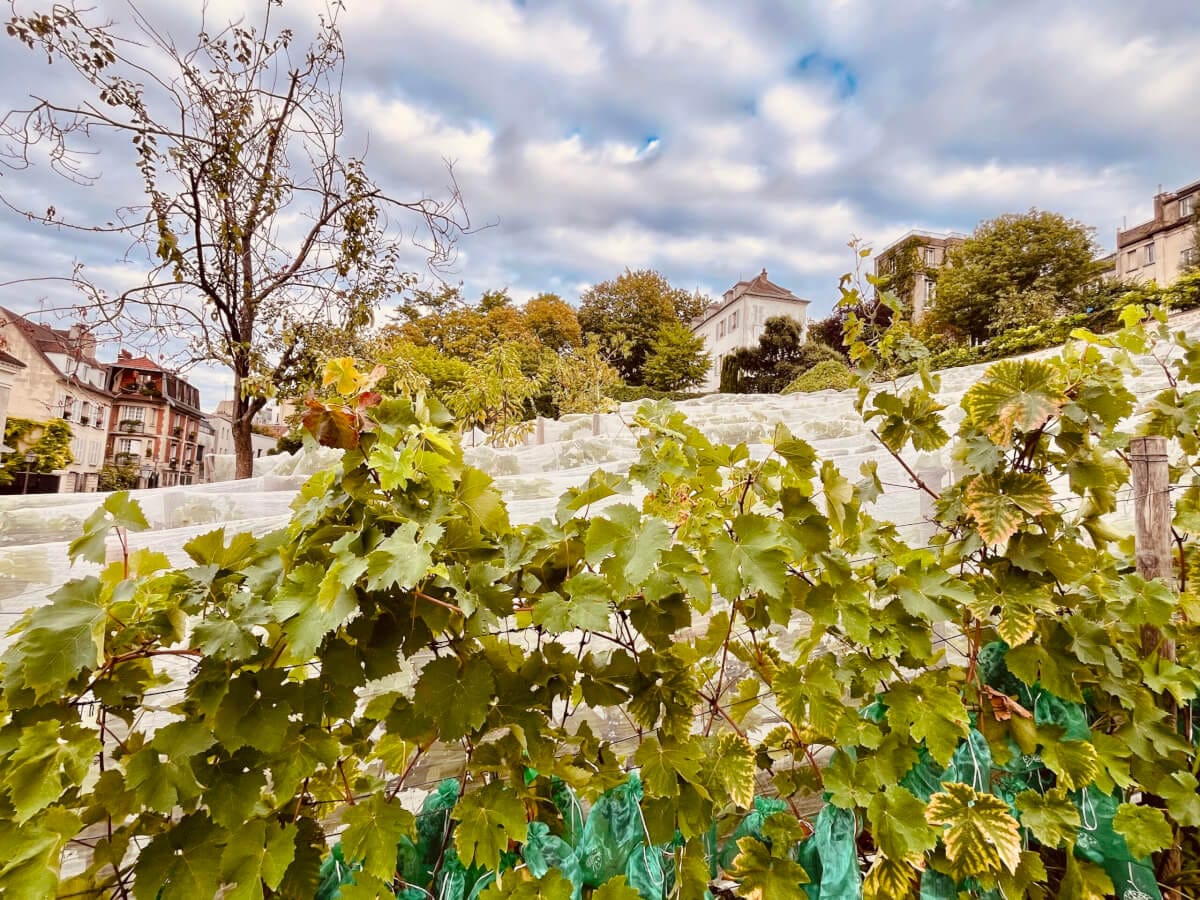
The Musée de Montmartre opened in 1960 in one of the oldest buildings on the Butte, dating from the 17th century. Pierre-Auguste Renoir had a studio here in the 1870s, where he painted the Bal du moulin de la Galette and La Balançoire. Suzanne Valadon, her son Maurice Utrillo and the painter André Utter moved into the building in 1912. Valadon’s studio-apartment has been reconstructed and can be visited, and the Jardins Renoir overlook the Clos Montmartre vineyard. Opening hours and tickets are on the museum’s website.
The Writer: Marcel Aymé and Le Passe-Muraille
Marcel Aymé lived in Montmartre for more than forty years, mostly on Rue Norvins, and set much of his fiction in the neighbourhood. His best-known short story, Le Passe-Muraille, follows Dutilleul, a modest clerk who discovers he can walk through walls and ends up stuck inside one. The actor and sculptor Jean Marais made the bronze statue that stands on Place Marcel-Aymé, at the corner of Rue Norvins and Rue Girardon, in 1989. The figure carries Aymé’s own face. The writer is buried in the nearby Saint-Vincent cemetery.
Stay in the writer’s neighbourhood
The Hôtel Littéraire Marcel Aymé, a 4-star hotel at 16 Rue Tholozé, is dedicated to the author, with a retro 1950s look inspired by his novels. See it with the other options in our Montmartre hotel guide, or check availability directly.
Check availability on ExpediaAffiliate link: a small commission may be earned at no extra cost to you.
The Singer: Dalida in Montmartre
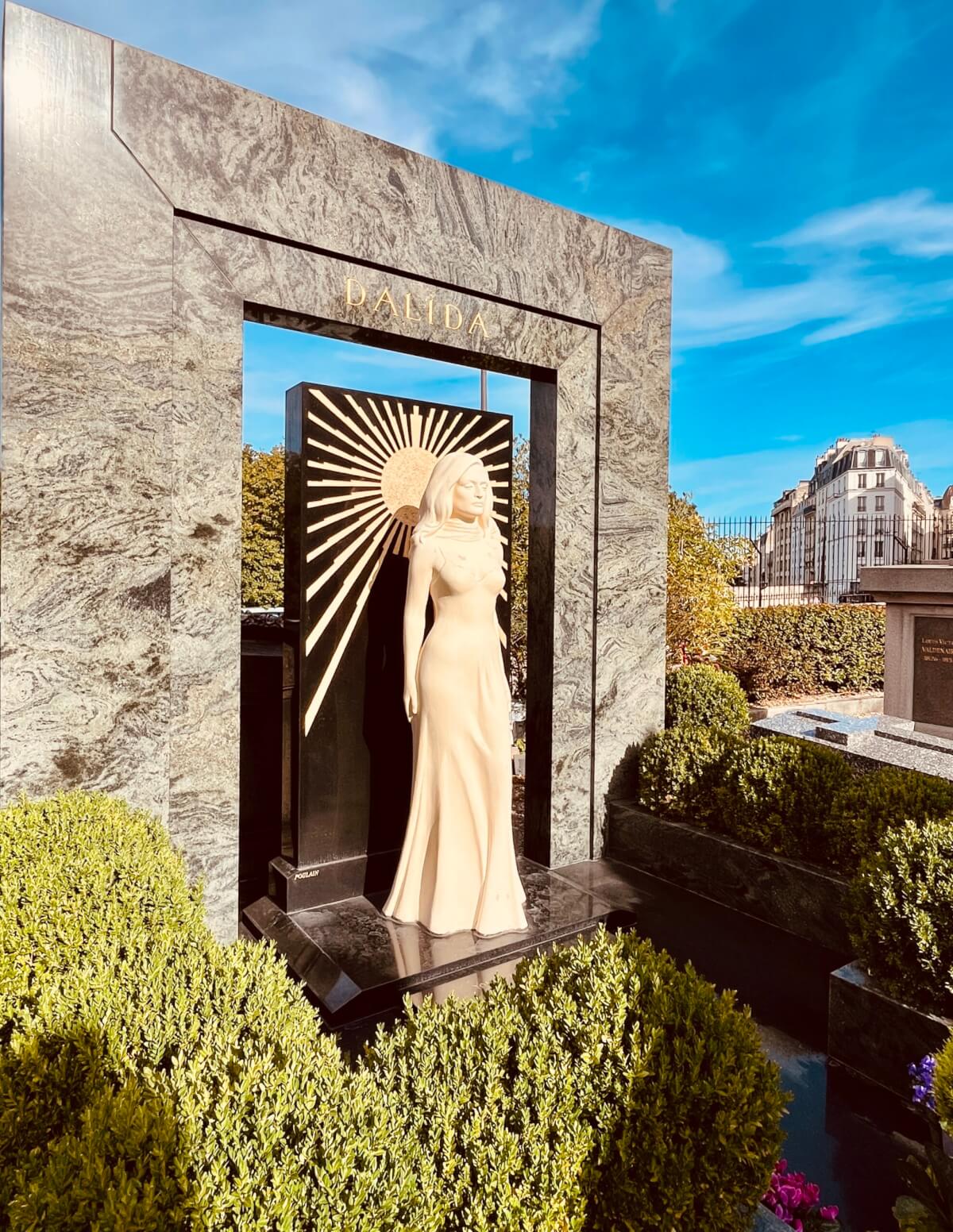
Dalida discovered Montmartre in 1962 and lived at 11 bis Rue d’Orchampt until 1987. The house is private and cannot be visited, but a plaque on the façade recalls her. A short walk away, Place Dalida, created by a city decree in December 1996, holds the bronze bust by the sculptor Aslan, inaugurated on 24 April 1997. Her grave is in Montmartre Cemetery, Division 18, near the main entrance below the Rue Caulaincourt bridge, with a statue also by Aslan. It is the most visited grave of the cemetery. The City of Paris walking guide follows the same route, and our own pages cover Dalida in Montmartre and the Montmartre Cemetery in more detail.
A Walking Route Through the Famous People of Montmartre
The sites sit on different parts of the hill, so the order matters. This route goes from the bottom of Rue Lepic up to the top of the Butte, then down to the cemetery. Allow about three hours with stops, more if you visit the museum.
- Start at Blanche metro (Line 2) and walk up Rue Lepic to No. 54, Van Gogh’s building.
- Continue to Place Émile-Goudeau for the Bateau-Lavoir.
- Walk up to Place Marcel-Aymé (Rue Norvins) for Le Passe-Muraille, close to Place du Tertre.
- Go on to Place Dalida, then the nearby Rue d’Orchampt to see the façade of No. 11 bis.
- Visit the Musée de Montmartre and the Jardins Renoir at 12 Rue Cortot.
- Finish at Lamarck-Caulaincourt metro (Line 12), or walk down Rue Caulaincourt to Montmartre Cemetery for Dalida’s grave. Her story is also coming to the stage: see Dalida in Paradisco, Paris 2027.
Prefer to hear the stories on site?
Guided walking tours of Montmartre cover its artists, writers and singers. Check each itinerary to see which places it includes.
Browse Montmartre Walking ToursAffiliate link: a small commission may be earned at no extra cost to you.
Practical Tips
- Private homes: 54 Rue Lepic and 11 bis Rue d’Orchampt are residential buildings. Look from the street and keep noise down.
- Free and paid: Place Dalida, Place Marcel-Aymé, the Bateau-Lavoir square and the façades cost nothing. The Musée de Montmartre is ticketed.
- The hill: The route climbs steadily. Comfortable shoes matter on the cobbles. For other ways up, see how to get to Montmartre.
- More to see nearby: hidden gems in Montmartre and photography spots sit along or near the route.
💡 Frequently Asked Questions
Among the best known are Vincent van Gogh, Pablo Picasso, Pierre-Auguste Renoir, Suzanne Valadon, Maurice Utrillo, the writer Marcel Aymé and the singer Dalida. Each left a place that can still be visited or seen from the street.
At 54 Rue Lepic, in a third-floor apartment shared with his brother Theo from 1886 to 1888. The building is residential, and a plaque is on the façade.
In Montmartre Cemetery, Division 18, near the main entrance below the Rue Caulaincourt bridge. The entrance is at 20 Avenue Rachel.
No. The house at 11 bis Rue d’Orchampt is private property. A plaque on the façade recalls her, and Place Dalida, with her bust, is a short walk away.
On Place Marcel-Aymé, at the corner of Rue Norvins and Rue Girardon, near Place du Tertre. Jean Marais sculpted it in 1989 after the short story by Marcel Aymé.
Yes. The Musée de Montmartre, at 12 Rue Cortot, is housed in buildings where Renoir, Suzanne Valadon and Maurice Utrillo worked. It includes Valadon’s reconstructed studio-apartment and the Jardins Renoir.
Continue Exploring Montmartre
- Dalida in Montmartre: the bust, the house and the grave
- Amélie Poulain filming locations: a two-hour film walk
- Montmartre Paris Guide: the full neighbourhood overview
- Visiting Sacré-Cœur: hours and tips